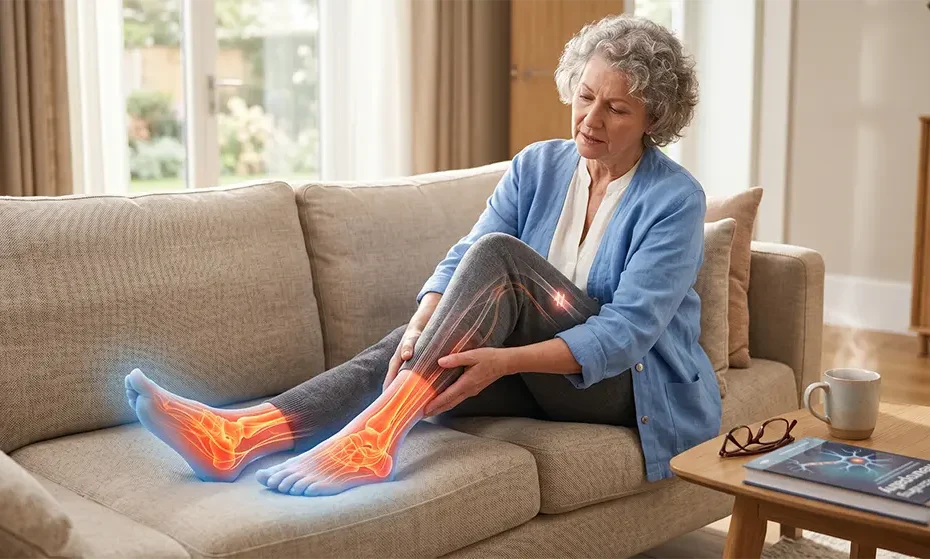
Some neuropathy patients feel like their feet are burning inside even when the skin feels cool to the touch. This confusing mismatch can happen when sensory nerves misfire and temperature signals become distorted. The pattern matters because it can affect sleep, footwear choices, and safety with heat or cold exposure.
- Neuropathy can distort temperature perception, creating “cold outside, burning inside” sensations.
- Hot/cold mismatch often worsens at night, with stillness, swelling, and blood sugar swings.
- Treatment should address nerve signaling, microcirculation, skin safety, and daily triggers.
Last updated: April 14, 2026
Reviewed by: Neuropathy Relief Center of Miami team
One of the strangest neuropathy descriptions is this: “My feet feel like they’re burning inside, but when I touch them, they feel cold.”
Patients may also say:
- “My toes feel frozen and on fire at the same time.”
- “I can’t tell whether I should warm them or cool them.”
- “My feet feel cold in the air conditioning, then burn when I get into bed.”
- “The skin feels normal, but the nerves feel like they are overheating.”
This is confusing, but it is not unusual in neuropathy.
At the Neuropathy Relief Center of Miami, we hear this from patients across Miami, Fort Lauderdale, Miami-Dade County, Broward County, and the Florida Keys. We also see visitors from the USA, Colombia, Chile, Argentina, Mexico, and the Caribbean who report temperature confusion during travel, long sitting, air conditioning, hot weather, and nighttime flares.
This blog is educational. Severe color change, wounds, sudden one-sided symptoms, or major circulation concerns should be evaluated medically.
Why temperature mismatch happens
Sensory nerves carry temperature information
Temperature is not just a skin issue. Your nerves detect and report temperature to the brain. If those nerves are irritated or damaged, the message can become distorted. The brain may interpret abnormal nerve firing as burning, cold, pressure, or a combination.
Skin temperature and nerve sensation are not the same
A foot can feel cool to the touch while the nerves generate burning sensations. That does not mean the symptom is imaginary. It means the nerve signal and the tissue temperature are not matching.
Small fiber involvement can create burning
Small sensory fibers help carry pain and temperature signals. When these fibers misfire, symptoms often include burning, heat sensitivity, cold sensitivity, electric zaps, and allodynia, which means discomfort from light touch.
Why it often gets worse at night
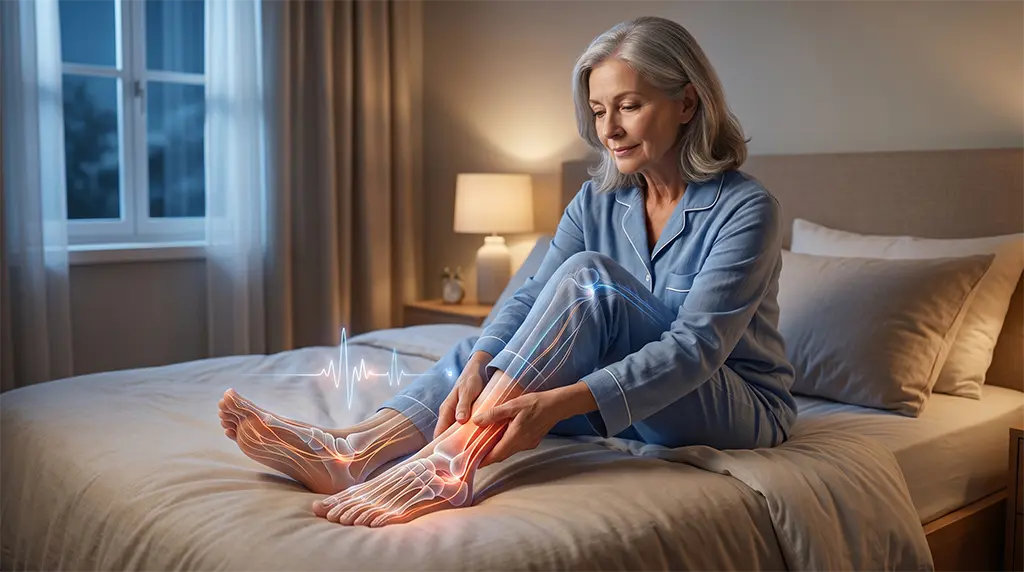
Nighttime is the perfect setting for temperature confusion:
- You are still, so nerve signals feel louder
- Bedding changes foot temperature
- Swelling may peak after the day
- Late meals or sugar swings may amplify nerve sensitivity
- Poor sleep increases pain sensitivity
Many patients notice that feet feel cold at first, then burn after they get under blankets. Others uncover the feet because they feel hot, then the feet feel too cold. The nervous system struggles to find a comfortable middle.
Why Miami air conditioning can trigger the pattern
In South Florida, patients move constantly between hot outdoor environments and cold indoor air conditioning. That rapid contrast can make abnormal temperature signals more noticeable.
Common triggers include:
- Cold tile floors
- Strong AC vents
- Grocery stores
- Offices
- Movie theaters
- Long car rides with air blowing toward the feet
In the Florida Keys, long outdoor days can produce the opposite sequence: heat and swelling during the day, then cold AC at night, followed by burning in bed.
Safety warning: be careful with heating pads and ice
When temperature perception is distorted, it is easy to overcorrect. A heating pad can burn skin that cannot accurately feel heat. Ice can irritate nerves or damage skin if used too aggressively. Avoid extreme temperature exposure unless your provider gives you specific guidance.
A 10-day temperature trigger map
For 10 days, track:
- Whether feet feel cold, hot, or both
- Whether skin feels cold to touch or normal
- Symptoms worse in AC, heat, or bed
- Dinner timing and sugar/carb load
- Swelling level at night
- Sleep quality
- Whether walking helps or worsens symptoms
Patterns often appear quickly. Some people discover AC is the biggest driver. Others discover late meals, swelling, or bedding heat are stronger triggers.
Practical strategies
Avoid extremes
Use gentle warmth or cooling of the room, not direct high heat or ice.
Keep bedding flexible
Use a lighter blanket or keep feet partly uncovered if heat triggers burning. Avoid heavy compression from tight sheets.
Wear low-compression socks when cold is the trigger
Warmth can help if it is gentle and not tight. Tight socks can worsen the “tight sock” feeling and pressure sensitivity.
Use movement to normalize sensation
Ankle pumps, gentle walking, and short movement breaks often help more than extreme temperatures.
Protect skin daily
If sensation is unreliable, inspect feet daily for redness, cracks, blisters, and pressure marks.
How the Dr. Alfonso Neuropathy Treatment Protocol helps
The Dr. Alfonso Neuropathy Treatment Protocol is designed to support:
- Microcirculation
- Nerve signaling stability
- Inflammation and oxidative stress reduction
- Metabolic foundations that influence nerve recovery
As nerve signaling becomes more stable, many patients report fewer dramatic hot/cold swings and better nighttime comfort.
When temperature symptoms need evaluation
Seek evaluation if you notice:
- Blue, pale, or red color changes
- Non-healing wounds
- Sudden one-sided coldness or pain
- Worsening numbness or balance changes
- Symptoms spreading upward
FAQs
Can neuropathy make feet feel hot and cold at the same time?
Yes. Neuropathy can distort temperature signals and create mixed sensations.
Why do my feet feel cold to touch but burn inside?
Skin temperature and nerve signaling are different. Irritated nerves can create burning even when the skin feels cool.
Should I use a heating pad?
Use caution. Reduced sensation increases burn risk. Discuss safe options with your provider.
Can this improve with treatment?
Many patients improve as nerve signaling, microcirculation, and metabolic stability improve.
References
- NINDS: Peripheral Neuropathy overview
- American Diabetes Association: Peripheral neuropathy symptoms and foot safety education
Clinic: Neuropathy Relief Center of Miami
Address: 8585 Sunset Drive, Suite 104, Miami, FL 33143
Call: 305-274-7475
Learn more: Neuropathy Treatment Miami
Book your consultation today: Appointments

Sincerely Yours for Health,
Dr. Rodolfo Alfonso, D.C.
8585 Sunset Drive,
STE 104
Miami, FL 33143
Ph: 305-275.7475
www.neuropathyreliefmia