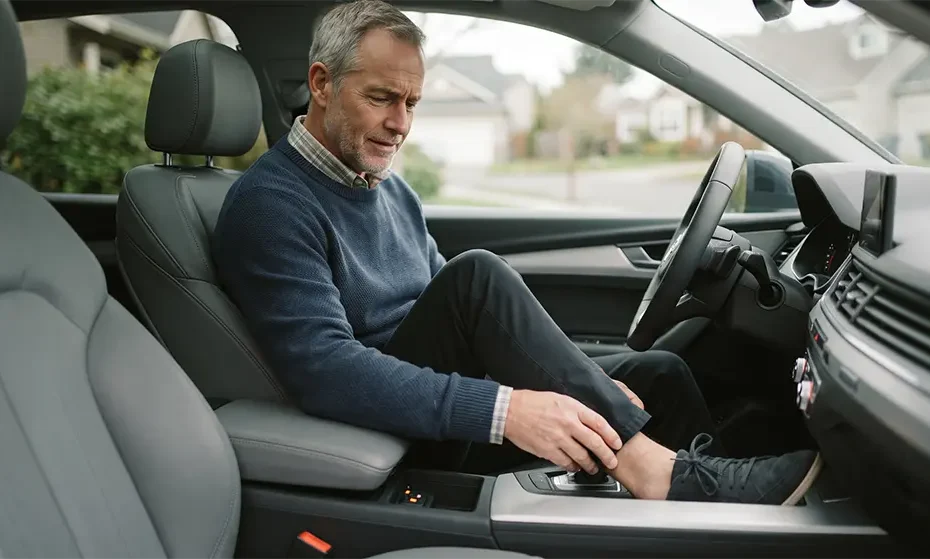
Seat heaters can feel relaxing, but heat can worsen burning, tingling, swelling, and nerve sensitivity in some neuropathy patients. Long drives already combine sitting, pressure, reduced circulation, and foot swelling. Adding heat may increase symptoms during the ride or create a delayed flare later that night. If your feet burn after warm car rides, heat sensitivity may be part of your neuropathy pattern.
- Heat can amplify nerve sensitivity and swelling in some neuropathy patients.
- Driving already increases neuropathy risk through sitting, shoe pressure, and reduced calf-pump activity.
- Tracking heat exposure, drive time, and nighttime symptoms can reveal whether seat heaters are a trigger.
Last updated: April 14, 2026
Reviewed by: Neuropathy Relief Center of Miami team
Many neuropathy patients notice that heat affects their symptoms. Hot showers, hot tubs, warm bedding, and hot pavement can all increase burning in sensitive feet. But one overlooked heat trigger is the car seat heater.
Patients often say:
- “My feet burn after long car rides.”
- “The seat heater feels good at first, then my legs buzz.”
- “Driving makes my neuropathy worse at night.”
- “My feet feel tight in my shoes after sitting in the car.”
- “Warmth helps my back, but my feet flare later.”
At the Neuropathy Relief Center of Miami, we see this pattern in patients throughout Miami, Fort Lauderdale, Miami-Dade County, Broward County, and the Florida Keys, and in visitors from the USA, Colombia, Chile, Argentina, Mexico, and the Caribbean. Even in South Florida, people use heated seats in cooler weather, after workouts, after spa visits, during rental car travel, or for back comfort.
This blog is educational. If you have burns, skin changes, severe swelling, or worsening neurological symptoms, seek medical care.
Why heat can flare neuropathy
Neuropathy involves irritated or damaged nerves. Heat can make those nerves more reactive in some patients. While mild warmth may feel soothing temporarily, too much heat or too long of an exposure can increase symptoms.
Heat may contribute to:
- burning
- tingling
- buzzing
- internal vibration
- hot/cold confusion
- swelling
- skin sensitivity
- nighttime flares
The reaction varies. Some patients tolerate warmth well. Others flare quickly.
Why car rides already trigger neuropathy
Driving combines several neuropathy triggers:
- prolonged sitting
- reduced calf-pump movement
- foot position on pedals
- tight shoes during swelling
- vibration from the road
- stress and traffic
- dehydration during travel
- delayed meals
A seat heater adds heat to an already loaded situation.
The delayed seat-heater flare
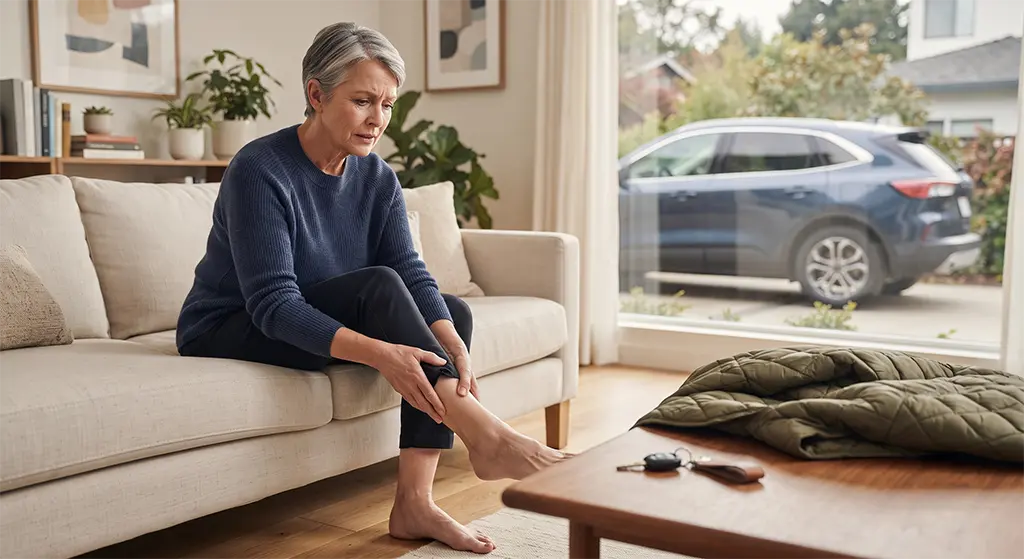
A common pattern looks like this:
- Seat heater feels comfortable during the drive
- Sitting reduces circulation movement in the legs
- Feet swell slightly in shoes
- Heat increases nerve sensitivity
- Patient gets home and sits again or goes to bed
- Burning or buzzing increases at night
The flare may appear hours later, which makes it easy to miss the connection.
Why South Florida patients still need this warning
Even though Miami is warm, seat heaters are still relevant. Patients may use them:
- after cold air conditioning
- during cooler winter mornings
- in rental cars
- after gym soreness
- for back tightness
- during travel outside Florida
- after hot/cold spa routines
The issue is total heat load. If a patient has already been exposed to hot weather, hot baths, or heavy walking, adding seat heat can push symptoms over the threshold.
How to know if seat heaters are a trigger
For 10 days, track:
- drive length
- seat heater use
- heat level
- foot burning during drive
- foot swelling after drive
- shoe tightness
- bedtime burning score
- leg buzzing or cramps
- whether symptoms improve when heat is avoided
Patterns often become obvious quickly.
Safer driving habits
Use heat briefly, not continuously
If heat helps your back, use the lowest level for a short time rather than staying on high heat for the full drive.
Keep feet moving when safe
At stops, move ankles and toes gently. During longer trips, take walking breaks when possible.
Wear shoes that allow swelling
Avoid tight shoes for long drives. Tight footwear plus swelling can worsen toe numbness and burning.
Avoid stacking heat triggers
If you used a hot tub, hot bath, or sauna, be cautious about heated seats later the same day.
Inspect skin
If sensation is reduced, make sure heat has not irritated the skin.
How the Dr. Alfonso Neuropathy Treatment Protocol helps
The Dr. Alfonso Neuropathy Treatment Protocol supports the nerve environment through:
- 🩸 Microcirculation to the feet and legs
- ⚡ Nerve signaling stability and repair support
- 🌿 Inflammation and oxidative stress reduction
- 🧠 Metabolic foundations that influence nerve sensitivity
As nerve function improves, many patients become less reactive to heat, pressure, and travel triggers. The goal is better resilience, not fear of normal daily activity.
When to seek evaluation
Seek evaluation if:
- heat consistently worsens symptoms
- burning disrupts sleep
- numbness is spreading
- feet change color
- swelling becomes severe
- wounds, redness, or blisters appear
- driving tolerance is declining
FAQs
Can seat heaters worsen neuropathy?
Yes. Heat can increase nerve sensitivity and swelling in some patients, leading to burning or delayed flares.
Why do my feet burn after driving?
Driving combines sitting, reduced circulation movement, shoe pressure, road vibration, and sometimes heat.
Should neuropathy patients avoid heated seats completely?
Not always, but use caution. Track your response and avoid prolonged high heat if it triggers symptoms.
Can treatment improve heat tolerance?
Many patients improve as nerve signaling, microcirculation, and inflammation patterns become more stable.
References
- NINDS: Peripheral Neuropathy overview
- CDC: Foot inspection and skin safety guidance
Clinic: Neuropathy Relief Center of Miami
Address: 8585 Sunset Drive, Suite 104, Miami, FL 33143
Call: 305-274-7475
Learn more: Neuropathy Treatment Miami
Book your consultation today: Appointments

Sincerely Yours for Health,
Dr. Rodolfo Alfonso, D.C.
8585 Sunset Drive,
STE 104
Miami, FL 33143
Ph: 305-275.7475
www.neuropathyreliefmia