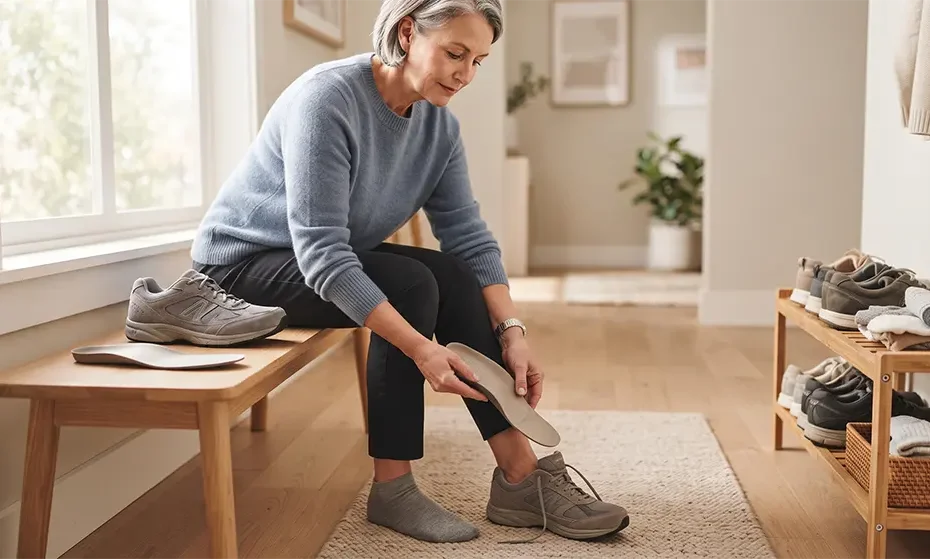
Orthotics and shoe inserts can help some neuropathy patients by improving pressure distribution, stability, and walking comfort. But if inserts are too firm, poorly fitted, or create new pressure points, they can worsen burning, numbness, calluses, blisters, or balance problems. The key is matching support to the patient’s sensation, foot shape, footwear, walking tolerance, and skin safety.
- Orthotics may reduce pressure and improve stability, but they must be monitored carefully in neuropathy patients.
- Reduced sensation can hide rubbing, pressure marks, or skin damage from an insert.
- The Dr. Alfonso Neuropathy Treatment Protocol supports nerve health while footwear and pressure issues are corrected.
Last updated: April 14, 2026
Reviewed by: Neuropathy Relief Center of Miami team
Many neuropathy patients ask whether they should wear orthotics or shoe inserts. Some patients feel better with support. Others buy inserts and quickly notice more burning, numbness, pressure, or discomfort.
Patients often say:
- “My inserts help my arches, but my toes feel numb.”
- “The orthotics feel too hard.”
- “My feet burn more when I wear them.”
- “My balance feels better with support.”
- “I got a blister from the insert and didn’t feel it.”
- “Should neuropathy patients wear custom orthotics?”
At the Neuropathy Relief Center of Miami, we see this often in patients across Miami, Fort Lauderdale, Miami-Dade County, Broward County, and the Florida Keys, as well as visitors from the USA, Colombia, Chile, Argentina, Mexico, and the Caribbean. In South Florida, patients walk on tile, sidewalks, beach paths, parking garages, and hard floors. Foot support matters but it has to be done safely.
This blog is educational. If you have diabetes, wounds, severe numbness, circulation problems, or foot deformity, ask a qualified provider before changing inserts or footwear.
Why orthotics may help neuropathy patients
Orthotics may help by changing how pressure is distributed across the foot. For some patients, this can reduce irritation in the heel, arch, ball of the foot, or toes.
Possible benefits include:
- less pressure under the forefoot
- improved arch support
- improved walking stability
- less toe gripping
- better shock absorption
- reduced callus pressure
- better alignment in shoes
- improved confidence on hard floors
When neuropathy reduces feedback from the feet, a stable shoe and supportive insert can give the body a better base.
Why orthotics can also hurt
The problem is that neuropathy patients may not feel early warning signs. An insert that creates pressure may cause damage before the patient notices.
Orthotics can worsen symptoms if they:
- are too hard
- crowd the toes
- raise the foot too high in the shoe
- create arch pressure
- cause heel rubbing
- increase pressure under a callus
- make the shoe too tight
- change gait too quickly
- are worn too long before being broken in
More support is not always better. The right support is better.
The “new pressure point” problem
Every insert changes pressure. If the new pressure is helpful, the patient may walk better. If the new pressure lands on a sensitive nerve, callus, bunion, toe, or heel crack, symptoms can flare.
Warning signs include:
- new burning in one specific spot
- redness after wearing inserts
- pressure marks
- blisters
- callus irritation
- toe numbness
- shoe tightness
- balance feeling worse
- symptoms that improve when inserts are removed
If you have reduced sensation, you must inspect your feet visually. Do not rely only on pain.
Custom orthotics vs over-the-counter inserts
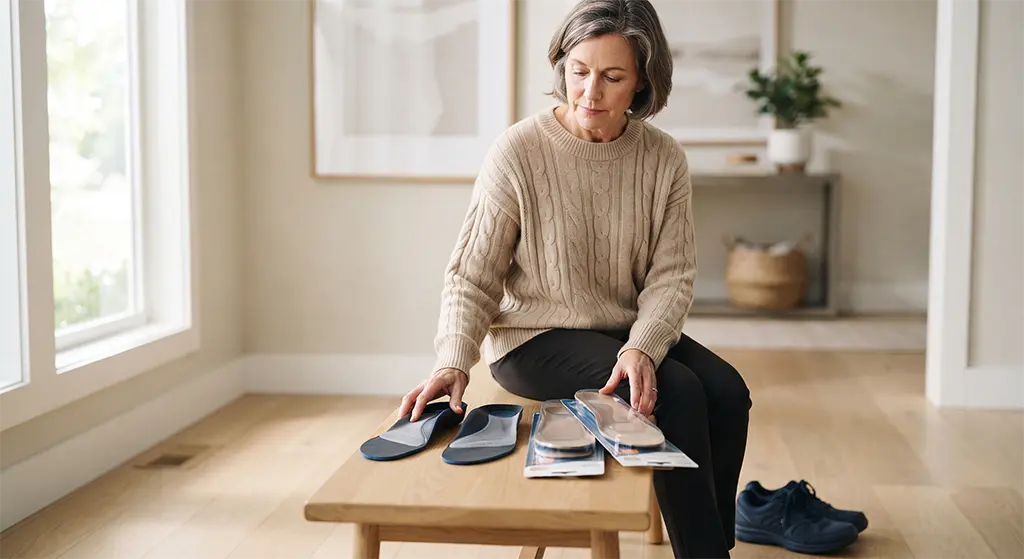
Custom orthotics may be helpful for specific foot mechanics, deformity, pressure problems, or gait issues. Over-the-counter inserts may help mild support needs. Neither is automatically right or wrong.
The question is:
Does the insert reduce pressure safely without creating new problems?
For neuropathy patients, the best insert is not just the one that feels comfortable in the store. It is the one that remains safe after hours of walking, standing, swelling, heat, and daily use.
Break-in rules for neuropathy patients
Do not wear new inserts all day immediately.
A safer break-in pattern may include:
- short trial periods
- checking skin after each use
- increasing time gradually
- avoiding long walks on day one
- not using new inserts during travel days
- watching for redness or pressure marks
- bringing old footwear as backup
This is especially important in Miami and Fort Lauderdale, where heat and swelling can change how shoes fit by late afternoon.
Shoes and orthotics must work together
An orthotic placed inside the wrong shoe may fail. If the shoe is too narrow, shallow, worn out, or unstable, the insert can crowd the foot and increase pressure.
A good shoe for inserts usually has:
- enough depth
- roomy toe box
- stable heel counter
- removable factory insole
- supportive sole
- traction
- secure fit
Avoid forcing an orthotic into a shoe that becomes too tight.
How the Dr. Alfonso Neuropathy Treatment Protocol helps
Orthotics manage mechanical pressure. They do not repair nerves by themselves. That is why neuropathy care must address both the foot environment and the nerve environment.
The Dr. Alfonso Neuropathy Treatment Protocol supports:
- 🩸 Microcirculation to the feet and legs
- ⚡ Nerve signaling stability and repair support
- 🌿 Inflammation and oxidative stress reduction
- 🧠 Metabolic foundations that influence nerve recovery
When nerve signaling improves and pressure is reduced, patients often report better walking comfort, fewer flares, and greater confidence.
When to seek evaluation
Seek evaluation if:
- inserts increase burning or numbness
- you develop pressure marks or blisters
- calluses worsen
- shoes feel tighter with inserts
- balance feels worse
- symptoms are different on one side
- you have wounds or reduced protective sensation
FAQs
Are orthotics good for neuropathy?
They can help some patients by improving pressure distribution and stability, but they must be fitted and monitored carefully.
Can inserts make neuropathy worse?
Yes. Inserts that are too hard, too high, or poorly fitted can create pressure points and worsen burning or numbness.
Should neuropathy patients break in orthotics slowly?
Yes. Short trial periods and daily foot checks are important because reduced sensation can hide skin irritation.
Do orthotics replace neuropathy treatment?
No. Orthotics manage pressure. Neuropathy treatment addresses nerve signaling, circulation, inflammation, and metabolic support.
References
- NINDS: Peripheral Neuropathy overview
- CDC: Foot care and daily inspection guidance
Clinic: Neuropathy Relief Center of Miami
Address: 8585 Sunset Drive, Suite 104, Miami, FL 33143
Call: 305-274-7475
Learn more: Neuropathy Treatment Miami
Book your consultation today: Appointments

Sincerely Yours for Health,
Dr. Rodolfo Alfonso, D.C.
8585 Sunset Drive,
STE 104
Miami, FL 33143
Ph: 305-275.7475
www.neuropathyreliefmia