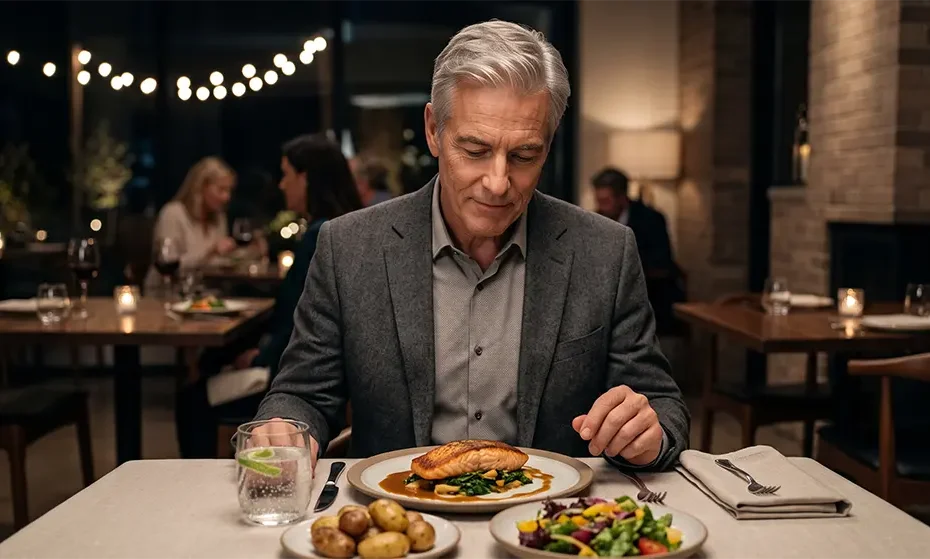
Restaurant meals can trigger neuropathy flares because they often combine late eating, higher sodium, refined carbohydrates, alcohol, long sitting, and swelling. Many patients feel fine during dinner but develop burning, tingling, or cramps later that night. Tracking meal timing and symptoms can reveal which restaurant habits are most likely to flare your nerves.
- Restaurant flares often come from a combination of late meals, sodium, sugar, alcohol, and sitting.
- Symptoms may spike hours later, especially at bedtime.
- Meal timing, walking after dinner, hydration, and nerve-focused care can reduce flare intensity.
Last updated: April 14, 2026
Reviewed by: Neuropathy Relief Center of Miami team
Eating out should be enjoyable. But many neuropathy patients notice a pattern after restaurant meals:
- “My feet burn after dinner out.”
- “If I eat late, I can’t sleep.”
- “Restaurant food makes my feet feel swollen.”
- “Dessert or drinks make the tingling worse.”
- “I’m okay at the table, but bedtime is bad.”
At the Neuropathy Relief Center of Miami, we see this across Miami, Fort Lauderdale, Miami-Dade County, Broward County, and the Florida Keys, where late dinners, social events, beach restaurants, and travel meals are common. We also see visitors from the USA, Colombia, Chile, Argentina, Mexico, and the Caribbean who flare during vacations because their routine changes.
This blog is educational. If you have diabetes, kidney disease, heart disease, medication restrictions, or severe swelling, follow your physician’s advice.
Why restaurant meals can flare neuropathy
A restaurant meal is not just food. It is a full trigger stack:
- Later dinner time
- More sodium
- More refined carbohydrates
- Alcohol or sugary drinks
- Longer sitting
- Larger portions
- Dessert
- Less sleep afterward
Any single factor may be tolerable. Combined, they can increase nerve sensitivity.
Sodium and swelling
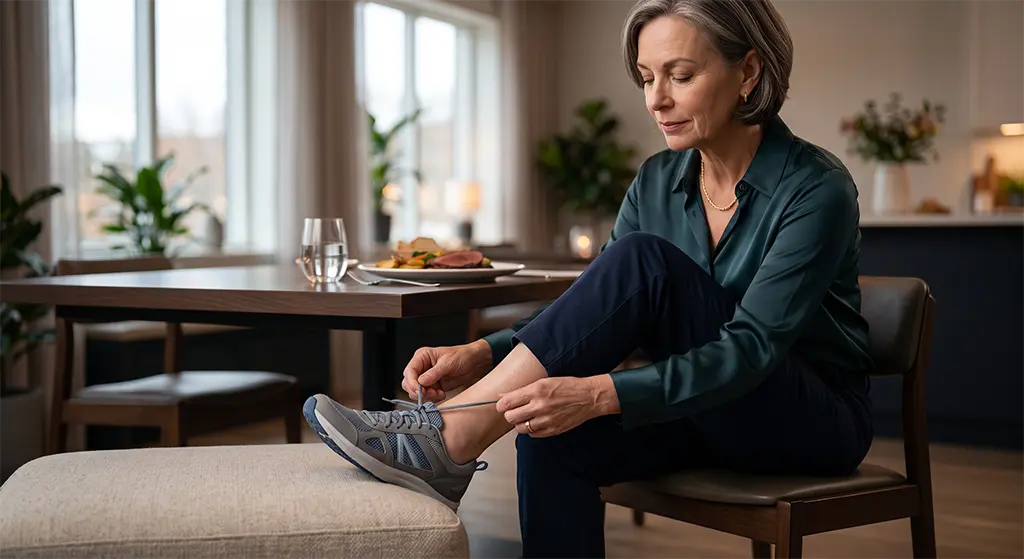
Restaurant meals are often higher in sodium than home meals. Some patients retain more fluid after salty meals. Swelling increases tissue pressure around nerves, which can worsen:
- Burning
- Tight sock sensation
- Tingling
- Cramping
- Shoe pressure
- Nighttime discomfort
This does not mean sodium is always the enemy. It means your personal swelling response matters.
Sugar and blood sugar swings
Desserts, bread, pasta, rice, sweet drinks, and alcohol mixers can create blood sugar swings in some people. If you have insulin resistance, prediabetes, or diabetes risk, these swings may amplify nerve irritation.
Symptoms may appear:
- Two hours after dinner
- At bedtime
- After waking during the night
- The next morning
Late eating and sleep disruption
Late meals keep digestion active when the body should be winding down. If the meal also includes alcohol, dessert, or heavy portions, sleep quality may drop. Poor sleep increases pain sensitivity and makes neuropathy symptoms feel louder.
Sitting at dinner matters too
A long dinner means prolonged sitting. Sitting reduces the calf pump and increases pooling in the lower legs. If shoes are tight and feet are swelling, nerve pressure can build quietly.
The “restaurant flare” timeline
A common sequence:
- Dinner starts later than usual
- Sitting lasts 90–120 minutes
- Sodium and carbs increase swelling and metabolic load
- Alcohol or dessert worsens sleep quality
- Feet feel tight or hot in shoes
- Burning spikes in bed
If this happens repeatedly, the meal pattern is worth tracking.
A 14-day restaurant trigger map
Track:
- Dinner time
- Meal type
- Bread/pasta/rice/dessert
- Alcohol
- Sodium-heavy foods
- Sitting duration
- Foot swelling after dinner
- Burning score at bedtime
- Wakeups overnight
You may find one major trigger or a combination.
Practical strategies
Eat earlier when possible
Even moving dinner earlier by 60–90 minutes may reduce night flares.
Walk briefly after dinner
A 5–10 minute gentle walk can help circulation and glucose handling.
Hydrate earlier
Do not wait until late night to drink water, or you may disrupt sleep with bathroom trips.
Choose footwear for swelling
If you are going out at night, wear shoes that tolerate late-day swelling.
Pick your trigger
You may not need to restrict everything. If bread plus dessert plus alcohol flares you, choose one instead of stacking all three.
How the Dr. Alfonso Neuropathy Treatment Protocol helps
The Dr. Alfonso Neuropathy Treatment Protocol supports:
- Microcirculation
- Nerve signaling stability and repair support
- Inflammation and oxidative stress reduction
- Metabolic foundations that influence nerve irritation
As nerve stability improves, many patients become less reactive to occasional restaurant meals. The goal is not fear of food. The goal is understanding your triggers and building resilience.
When restaurant flares need evaluation
Seek evaluation if:
- Flares are becoming more frequent
- Burning is disrupting sleep consistently
- Numbness is spreading
- Swelling is severe or one-sided
- You have diabetes or prediabetes risk
- You develop wounds or hot spots
FAQs
Can restaurant food worsen neuropathy?
Yes. Late meals, sodium, sugar, alcohol, and long sitting can stack triggers and worsen symptoms.
Why do symptoms flare at bedtime after dinner out?
Swelling, blood sugar swings, heat, and poor sleep quality often peak later at night.
Do I have to stop eating out?
Not necessarily. Timing, meal choices, walking after dinner, and trigger tracking can reduce flares.
Can treatment make me less reactive to food triggers?
Many patients improve as nerve signaling, microcirculation, and metabolic stability improve.
References
- American Diabetes Association: Neuropathy and metabolic health education
- NINDS: Peripheral Neuropathy overview
Clinic: Neuropathy Relief Center of Miami
Address: 8585 Sunset Drive, Suite 104, Miami, FL 33143
Call: 305-274-7475
Learn more: Neuropathy Treatment Miami
Book your consultation today: Appointments

Sincerely Yours for Health,
Dr. Rodolfo Alfonso, D.C.
8585 Sunset Drive,
STE 104
Miami, FL 33143
Ph: 305-275.7475
www.neuropathyreliefmia