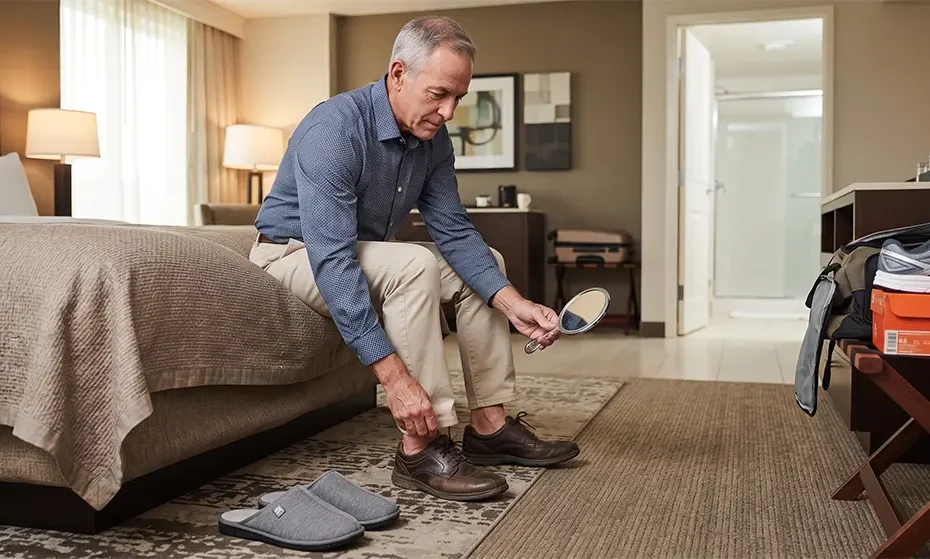
Hotel rooms and vacation rentals can increase neuropathy risk because the floors are unfamiliar, bathrooms may be slippery, lighting is different, shoes may be new, and travel days often cause swelling and fatigue. Reduced sensation makes it easier to miss cuts, blisters, burns, and pressure marks. A travel foot-safety routine can prevent small problems from becoming big setbacks.
- Neuropathy patients are more vulnerable in unfamiliar rooms and bathrooms.
- Travel stacks swelling, fatigue, shoe pressure, dehydration, and walking on hard floors.
- Daily foot checks and the Dr. Alfonso Neuropathy Treatment Protocol help protect mobility during travel.
Last updated: April 14, 2026
Reviewed by: Neuropathy Relief Center of Miami team
Travel should be enjoyable, but neuropathy patients often discover that symptoms flare in hotels, vacation rentals, cruise cabins, and unfamiliar condos.
Patients often say:
- “My feet burned after the first travel day.”
- “I almost slipped in the hotel bathroom.”
- “The tile floor made my feet hurt.”
- “I wore new shoes on vacation and got a blister.”
- “I stepped on something in the room and did not feel it.”
- “My balance felt worse in the hotel at night.”
At the Neuropathy Relief Center of Miami, we see this in patients visiting Miami, Fort Lauderdale, Miami-Dade County, Broward County, and the Florida Keys from the USA, Colombia, Chile, Argentina, Mexico, and the Caribbean. We also see local patients who flare during trips away from their normal routine.
This blog is educational. If you have open wounds, severe swelling, spreading redness, fever, drainage, falls, or sudden neurological symptoms during travel, seek medical care.
Why hotels increase neuropathy risk
Hotels are unfamiliar environments. Neuropathy already reduces foot feedback and balance confidence. When the environment changes, the nervous system has to work harder.
Hotel risks include:
- unfamiliar floor layout
- slippery bathrooms
- hard tile or marble floors
- dim lighting
- loose rugs
- raised thresholds
- new shoes
- long walking days
- swollen feet after flights
- luggage in the walking path
Each factor may seem small. Together, they increase risk.
Travel swelling and shoe pressure
Travel often increases foot and ankle swelling. Long sitting, flights, car rides, restaurant meals, alcohol, heat, and schedule changes can all contribute.
Swollen feet inside shoes can lead to:
- toe numbness
- forefoot burning
- heel rubbing
- strap marks
- blisters
- pressure lines
- callus irritation
Shoes that are normally safe may feel too tight during travel.
Hotel bathroom hazards
Bathrooms are one of the most important safety zones for neuropathy patients. Wet tile, low lighting, and urgency can create fall risk.
Before the first night:
- identify the light switch
- remove loose towels from the floor
- keep shoes or stable slippers near the bed
- check for slippery mats
- know the path to the bathroom
- keep your phone or light nearby
Do not wait until 3 a.m. to learn the room layout.
The barefoot hotel mistake
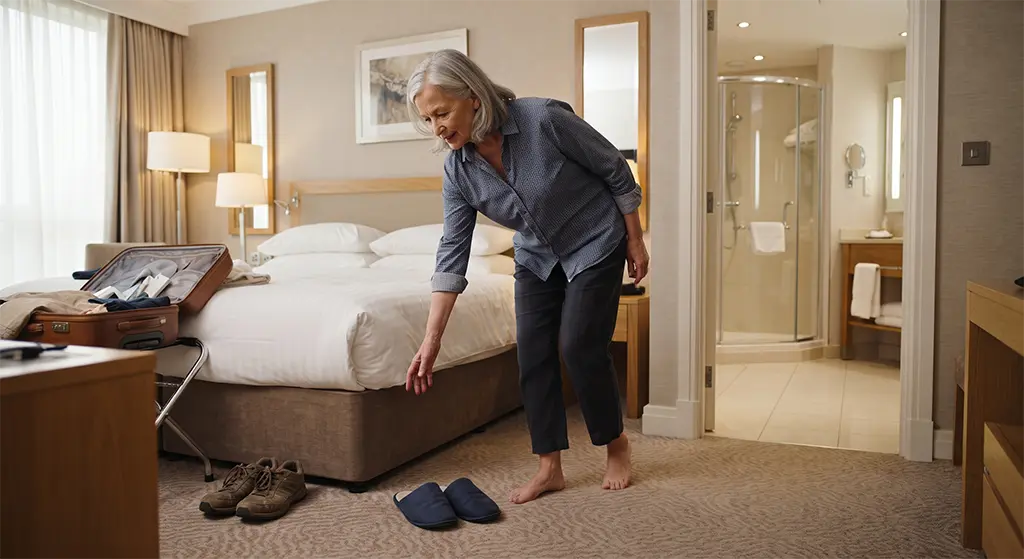
Many people walk barefoot in hotel rooms. Neuropathy patients should be careful. You may not feel small debris, rough flooring, hot surfaces, or sharp objects.
Protective indoor footwear can reduce:
- cuts
- friction
- cold floor numbness
- pressure on hard tile
- slipping
- nighttime instability
Choose stable house shoes or travel slippers with traction, not loose flip-flops.
New-shoe vacation risk
Do not wear new shoes for the first time on vacation. Travel days are long, feet swell, and walking distances increase. New shoes can create blisters or pressure injuries before you feel them.
Test shoes at home before travel.
Hotel foot-safety routine
Every evening:
- wash and dry feet
- inspect toes, heels, and soles
- check between toes
- look for redness or blisters
- check nail edges
- inspect pressure marks from shoes or socks
- change into dry socks
- elevate briefly if swollen
This routine can prevent a small irritation from becoming a wound.
How the Dr. Alfonso Neuropathy Treatment Protocol helps
The Dr. Alfonso Neuropathy Treatment Protocol supports nerve recovery and resilience by focusing on:
- 🩸 Microcirculation to the feet and legs
- ⚡ Nerve signaling stability and repair support
- 🌿 Inflammation and oxidative stress reduction
- 🧠 Metabolic foundations that influence nerve function, balance, and healing
As nerve signaling improves, many patients report better ground awareness and travel confidence. But environmental safety is still essential.
When to seek evaluation
Seek evaluation if travel causes:
- repeated blisters
- worsening numbness
- balance loss
- falls or near-falls
- wounds or redness
- foot swelling that does not improve
- nighttime burning that lasts for days
FAQs
Why does neuropathy get worse in hotels?
Travel combines hard floors, unfamiliar layouts, swelling, long walking, new shoes, and disrupted routines.
Should neuropathy patients walk barefoot in hotel rooms?
It is safer to wear protective footwear with traction, especially if sensation is reduced.
What should I check after a travel day?
Check toes, soles, heels, nail edges, between toes, and any pressure marks from shoes or socks.
Can treatment improve travel confidence?
Many patients improve as nerve signaling, microcirculation, and balance awareness improve.
References
- CDC: Foot care and daily inspection guidance
- NINDS: Peripheral Neuropathy overview
Clinic: Neuropathy Relief Center of Miami
Address: 8585 Sunset Drive, Suite 104, Miami, FL 33143
Call: 305-274-7475
Learn more: Neuropathy Treatment Miami
Book your consultation today: Appointments

Sincerely Yours for Health,
Dr. Rodolfo Alfonso, D.C.
8585 Sunset Drive,
STE 104
Miami, FL 33143
Ph: 305-275.7475
www.neuropathyreliefmia