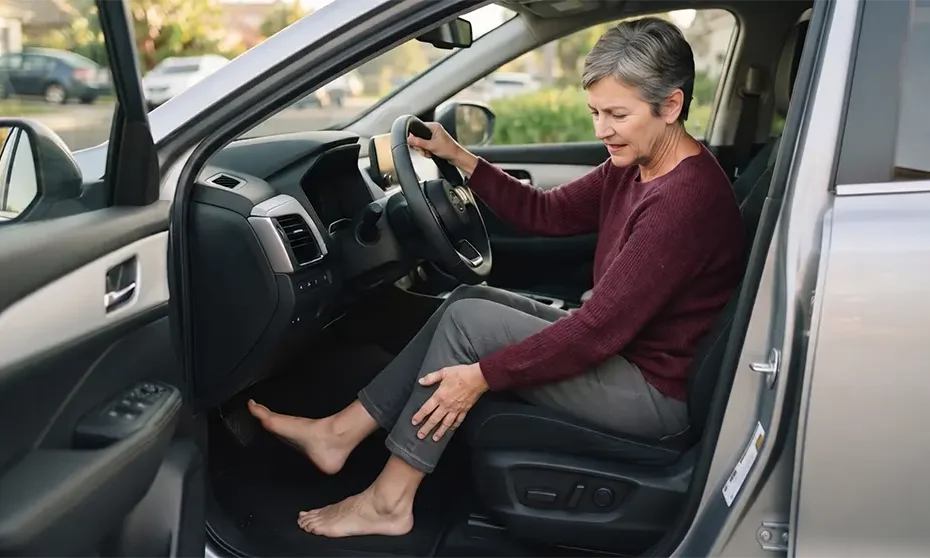
Driving can reveal neuropathy problems because the feet must sense pedal pressure, hold positions, react quickly, and tolerate vibration. If your foot goes numb on the pedals, cramps while driving, or struggles to feel the brake or gas, that is a safety issue not just discomfort. Neuropathy care should address nerve signaling, foot strength, circulation, and driving confidence.
- Neuropathy can affect pedal sensation, reaction confidence, and foot control.
- Long drives increase numbness through sitting, vibration, shoe pressure, and reduced circulation movement.
- The Dr. Alfonso Neuropathy Treatment Protocol supports nerve function while patients address driving safety.
Last updated: April 14, 2026
Reviewed by: Neuropathy Relief Center of Miami team
Driving requires more foot control than most people realize. The foot has to feel the pedal, apply the right pressure, move quickly, and maintain position without cramping. Neuropathy can interfere with every part of that process.
Patients often say:
- “My foot goes numb while driving.”
- “I can’t feel the pedal as clearly.”
- “My toes cramp on long drives.”
- “My foot buzzes after traffic.”
- “I worry about reacting fast enough.”
- “Driving makes my neuropathy flare at night.”
At the Neuropathy Relief Center of Miami, we see this in patients throughout Miami, Fort Lauderdale, Miami-Dade County, Broward County, and the Florida Keys, where driving, traffic, bridges, parking garages, and long commutes are common. We also see visitors from the USA, Colombia, Chile, Argentina, Mexico, and the Caribbean who rent cars or drive unfamiliar roads during travel.
This blog is educational. If you do not feel safe driving, do not drive until evaluated.
Why neuropathy affects driving
Neuropathy can reduce or distort foot sensation. Driving depends on accurate feedback from the foot. You need to know where your foot is, how much pressure you are applying, and how quickly you can move.
Neuropathy may affect:
- pedal pressure awareness
- toe position
- ankle control
- reaction confidence
- cramp tendency
- vibration sensitivity
- foot fatigue
- shoe fit during long sitting
This can become a safety issue.
Pedal sensation matters
The brake and gas pedal require precise pressure. If the foot feels numb, “cottony,” or disconnected, the brain receives less accurate information.
Patients may notice:
- over-pressing the pedal
- feeling unsure where the foot is
- needing to look down
- delayed confidence switching pedals
- foot sliding or gripping inside the shoe
- anxiety in stop-and-go traffic
These are important warning signs.
Why long drives worsen symptoms
Long drives combine several triggers:
- sitting reduces calf-pump activity
- feet stay in one position
- shoes may become tighter as feet swell
- road vibration irritates nerves
- stress increases nervous system sensitivity
- pedals require repeated small movements
- hydration and meal timing may change
This is why short drives may feel okay while longer drives trigger burning or numbness.
Cramping while driving
Toe, arch, or calf cramps can occur when the foot holds one position too long. Neuropathy can disrupt nerve-muscle timing, making cramps more likely.
Driving cramps may be worse with:
- tight shoes
- dehydration
- long sitting
- caffeine excess
- heat
- stress
- poor foot position
- weak intrinsic foot muscles
A cramp while driving can be dangerous because it distracts the driver and may interfere with pedal control.
Driving safety questions
Ask yourself:
- Can I clearly feel the brake and gas pedal?
- Do my feet go numb during drives?
- Do I get cramps while driving?
- Do I avoid certain roads because of foot control?
- Do I feel delayed switching pedals?
- Do symptoms worsen with traffic?
- Have I had a near-miss because of foot symptoms?
If yes, you need an evaluation and a safety plan.
Practical strategies
Wear proper driving shoes
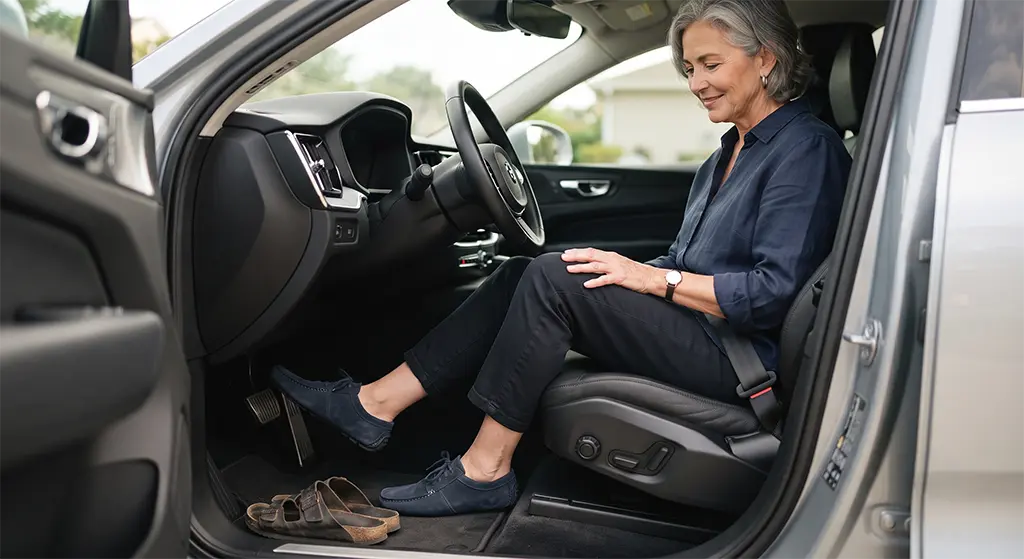
Avoid thick unstable soles, loose sandals, flip-flops, or shoes that reduce pedal feel. Choose secure shoes with stable fit.
Adjust seat position
Your foot should reach pedals without excessive stretching or crowding. Poor position can increase cramping.
Take breaks on long drives
On longer trips, stop safely, walk briefly, and move the ankles.
Avoid driving during severe flares
If sensation is significantly reduced, postpone driving or use transportation support.
Track symptom timing
Know whether symptoms begin after 10 minutes, 30 minutes, or longer. This helps guide safety decisions.
How the Dr. Alfonso Neuropathy Treatment Protocol helps
The Dr. Alfonso Neuropathy Treatment Protocol supports the nerve environment by focusing on:
- 🩸 Microcirculation to the feet and legs
- ⚡ Nerve signaling stability and repair support
- 🌿 Inflammation and oxidative stress reduction
- 🧠 Metabolic foundations that influence nerve-muscle control
As nerve function improves, many patients report better foot awareness, fewer cramps, and improved confidence during daily activities. Driving safety should always come first.
When to seek evaluation
Seek evaluation if:
- you cannot clearly feel pedals
- numbness occurs during drives
- cramps interfere with driving
- foot weakness appears
- balance or walking also worsens
- symptoms are progressing
- you feel unsafe behind the wheel
FAQs
Can neuropathy affect driving?
Yes. Neuropathy can reduce pedal sensation, foot control, reaction confidence, and cramp tolerance.
Why does my foot go numb while driving?
Sitting, vibration, shoe pressure, and fixed foot position can worsen neuropathy symptoms.
What shoes are safest for driving with neuropathy?
Secure shoes with stable fit and good pedal feel are safer than flip-flops, loose sandals, or overly thick soles.
Should I drive if I cannot feel the pedals clearly?
No. If pedal sensation is unreliable, driving safety should be evaluated immediately.
References
- NINDS: Peripheral Neuropathy overview
- CDC: Foot safety and fall-prevention principles
Clinic: Neuropathy Relief Center of Miami
Address: 8585 Sunset Drive, Suite 104, Miami, FL 33143
Call: 305-274-7475
Learn more: Neuropathy Treatment Miami
Book your consultation today: Appointments

Sincerely Yours for Health,
Dr. Rodolfo Alfonso, D.C.
8585 Sunset Drive,
STE 104
Miami, FL 33143
Ph: 305-275.7475
www.neuropathyreliefmia