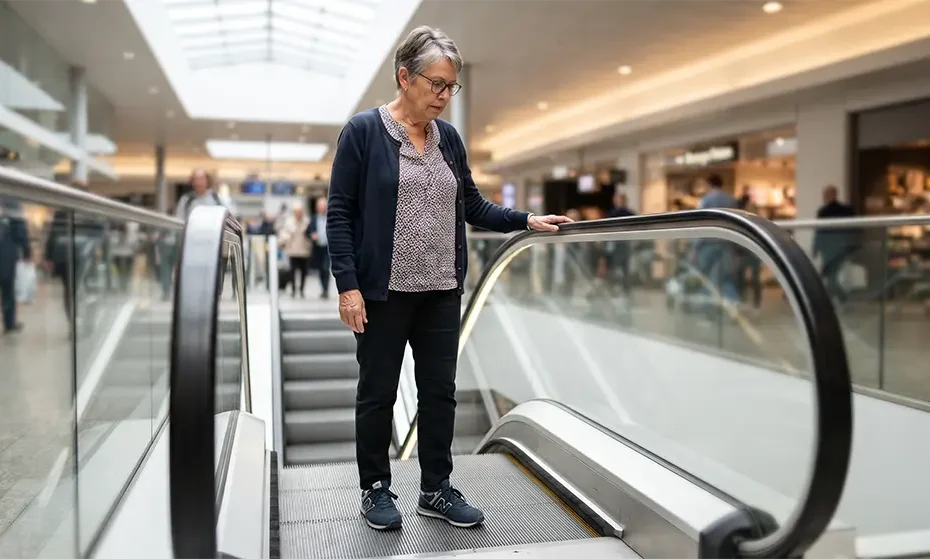
Neuropathy can make escalators, elevators, moving walkways, and airport travel feel unstable because these surfaces challenge balance, timing, vision, and foot feedback. When the feet do not clearly sense the ground, moving surfaces become stressful. With safety strategies, better footwear, and nerve-focused care, many patients can improve confidence in public places.
- Moving surfaces require fast balance adjustments and accurate foot feedback.
- Neuropathy can make escalators, airport walkways, and elevators feel disorienting.
- The right footwear, pacing, hand support, and Dr. Alfonso Neuropathy Treatment Protocol can reduce fall risk and improve confidence.
Last updated: April 14, 2026
Reviewed by: Neuropathy Relief Center of Miami team
Some neuropathy patients do well on flat ground but become nervous around escalators, elevators, moving walkways, airport terminals, and cruise terminals.
They may say:
- “Escalators scare me now.”
- “I feel unstable stepping on moving walkways.”
- “Elevators make me feel off balance.”
- “Airports make my feet numb and my balance worse.”
- “I avoid crowded places because I don’t trust my feet.”
At the Neuropathy Relief Center of Miami, we see this in patients across Miami, Fort Lauderdale, Miami-Dade County, Broward County, and the Florida Keys, and in visitors traveling from the USA, Colombia, Chile, Argentina, Mexico, and the Caribbean. South Florida is a major travel hub, so airports, hotels, cruise terminals, elevators, and public spaces are part of real life.
This blog is educational. If you have frequent falls, severe dizziness, sudden weakness, fainting, or rapidly worsening balance, seek medical evaluation.
Why moving surfaces are difficult with neuropathy
Balance depends on three major systems:
- vision
- inner ear
- body position feedback from muscles, joints, and feet
Neuropathy reduces feedback from the feet. That means the brain has less reliable information about pressure, motion, and surface changes.
When the ground starts moving, the brain has to adapt quickly. If foot feedback is unclear, the patient may feel delayed, unstable, or disoriented.
Why escalators are a special challenge
Escalators require timing. You must step onto a moving surface, maintain balance, and step off at the right moment. With reduced sensation, it may be harder to feel exactly where the foot lands.
Common escalator problems include:
- hesitation stepping on
- toe catching
- feeling pulled forward
- instability stepping off
- needing to grab the rail quickly
- fear of crowds behind you
This fear is understandable. Escalators are fast, narrow, and unforgiving.
Why airports trigger neuropathy symptoms
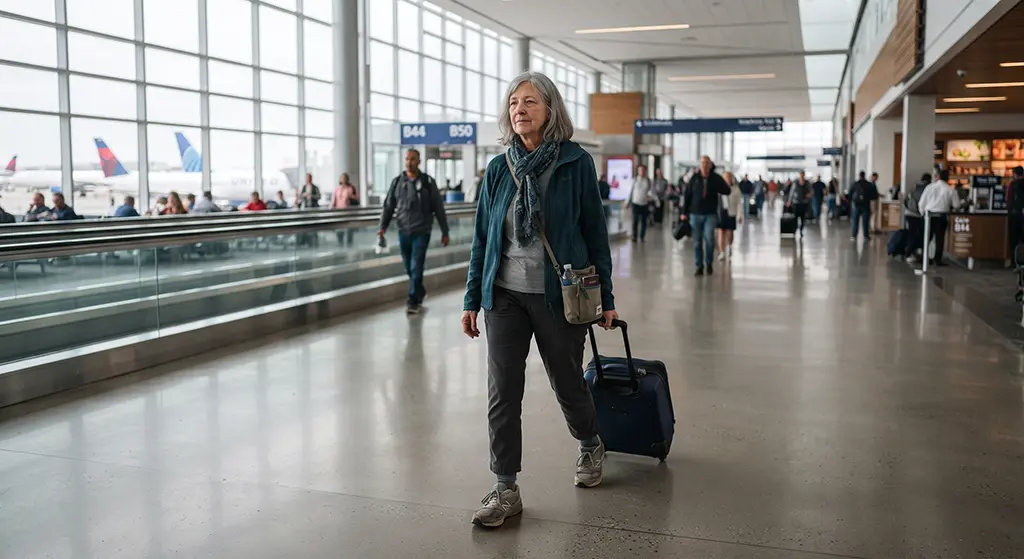
Airports combine several neuropathy triggers:
- long walking distances
- hard floors
- standing in security lines
- moving walkways
- luggage carrying
- dehydration
- disrupted sleep
- sitting on flights
- tight shoes after swelling
By the time a patient reaches an escalator or moving walkway, the nervous system may already be fatigued.
Elevator imbalance
Some patients feel “off” in elevators because elevators challenge the vestibular and balance systems. The floor moves vertically, visual reference is limited, and the feet may not provide clear feedback. If neuropathy is combined with vestibular sensitivity, elevator rides can feel unsettling.
Practical strategies for escalators and moving walkways
Use handrails
Always use the handrail if balance is uncertain. It provides extra sensory input and support.
Step with intention
Do not rush. Watch the step, time your movement, and step fully onto the surface.
Avoid carrying too much
Luggage, bags, or groceries reduce balance reactions. Use rolling bags when possible.
Choose elevators when fatigued
There is no shame in choosing the safer option. Fatigue increases fall risk.
Stand to the side when possible
Give yourself time and reduce pressure from people behind you.
Wear stable shoes
Loose sandals and flip-flops are risky on moving surfaces. Use shoes with traction, secure heel support, and stable soles.
Travel planning for neuropathy
For patients traveling through Miami International Airport, Fort Lauderdale, cruise ports, or hotels:
- arrive early to avoid rushing
- use elevators when needed
- request assistance if walking tolerance is limited
- hydrate earlier in the day
- wear travel shoes that allow swelling
- inspect feet after long travel days
- avoid new shoes on travel days
How the Dr. Alfonso Neuropathy Treatment Protocol helps
The Dr. Alfonso Neuropathy Treatment Protocol supports:
- 🩸 Microcirculation to the feet and legs
- ⚡ Nerve signaling stability and repair support
- 🌿 Inflammation and oxidative stress reduction
- 🧠 Metabolic foundations that influence balance and nerve function
As nerve function improves, many patients report better ground awareness and more confidence in public environments.
When to seek evaluation
Seek evaluation if:
- you avoid public places due to balance fear
- you have near-falls on escalators or curbs
- numbness is spreading
- foot slapping appears
- dizziness occurs with elevators or moving surfaces
- you need to look down constantly to walk safely
FAQs
Why do escalators feel unsafe with neuropathy?
Escalators require timing, balance, and accurate foot feedback. Neuropathy reduces the feedback needed for safe stepping.
Can neuropathy affect elevator balance?
It can contribute to feeling unstable because the feet provide less reliable surface information.
What shoes are safest for moving walkways?
Stable shoes with traction, secure heel support, and a roomy toe box are safer than flip-flops or loose sandals.
Can treatment improve public-walking confidence?
Many patients improve as nerve signaling, circulation, and balance confidence improve.
References
- CDC: Fall prevention and foot safety guidance
- NINDS: Peripheral Neuropathy overview
Clinic: Neuropathy Relief Center of Miami
Address: 8585 Sunset Drive, Suite 104, Miami, FL 33143
Call: 305-274-7475
Learn more: Neuropathy Treatment Miami
Book your consultation today: Appointments

Sincerely Yours for Health,
Dr. Rodolfo Alfonso, D.C.
8585 Sunset Drive,
STE 104
Miami, FL 33143
Ph: 305-275.7475
www.neuropathyreliefmia