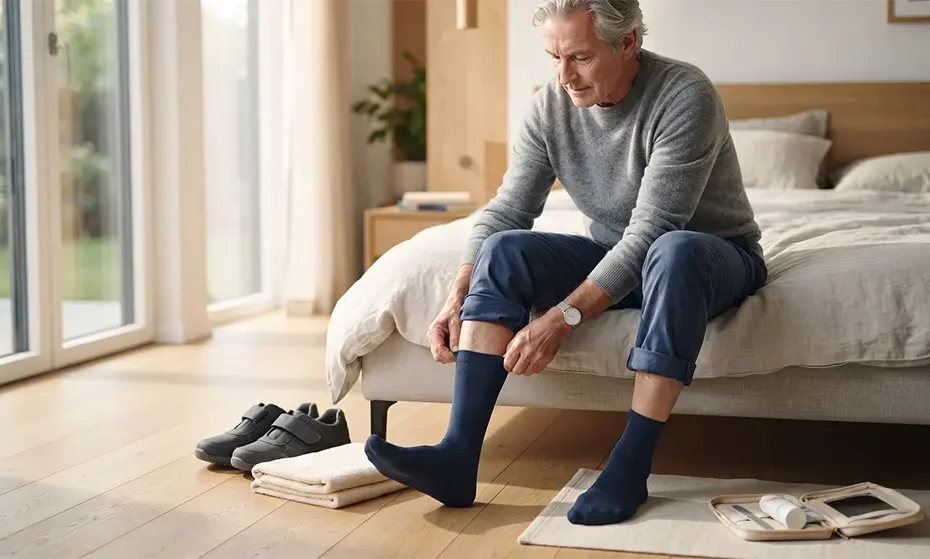
Compression socks can help some neuropathy patients with swelling and circulation support, but they can worsen symptoms in others if they are too tight, poorly fitted, or used when sensation is reduced. The key is understanding why you are using them, watching pressure marks, and making sure compression does not increase numbness, burning, or skin risk.
- Compression socks may help swelling, but pressure can worsen neuropathy symptoms in some patients.
- Fit, compression level, skin checks, and medical guidance matter.
- The Dr. Alfonso Neuropathy Treatment Protocol supports nerve health while pressure triggers are managed safely.
Last updated: April 14, 2026
Reviewed by: Neuropathy Relief Center of Miami team
Compression socks are one of the most common questions neuropathy patients ask:
- “Should I wear compression socks?”
- “They help my swelling, but my toes feel numb.”
- “My socks leave deep marks.”
- “Are compression socks safe if I have neuropathy?”
- “Can they help burning feet?”
The answer is not the same for everyone.
At the Neuropathy Relief Center of Miami, we see patients across Miami, Fort Lauderdale, Miami-Dade County, Broward County, and the Florida Keys, as well as visitors from the USA, Colombia, Chile, Argentina, Mexico, and the Caribbean. In South Florida, heat, humidity, travel, long sitting, and swelling make this topic especially important.
This blog is educational. If you have circulation disease, diabetes, wounds, severe swelling, skin color changes, or reduced sensation, ask your provider before using compression.
Why compression socks may help
Compression socks apply graduated pressure to the lower leg. In some people, that pressure helps reduce pooling and swelling.
Swelling can worsen neuropathy by increasing tissue pressure around sensitive nerves. If compression safely reduces swelling, some patients feel:
- less tightness
- less heaviness
- less late-day swelling
- better walking comfort
- fewer nighttime flares
This is why compression can be helpful for select patients.
Why compression socks may hurt
Compression is pressure. Neuropathy already makes pressure signals unreliable.
If socks are too tight or poorly fitted, they can cause:
- more numbness
- more burning
- toe discoloration
- deep pressure marks
- skin irritation
- worsened “tight sock” sensation
- hidden pressure injury
This is especially concerning when protective sensation is reduced. You may not feel the problem early.
The “pressure mark” warning sign
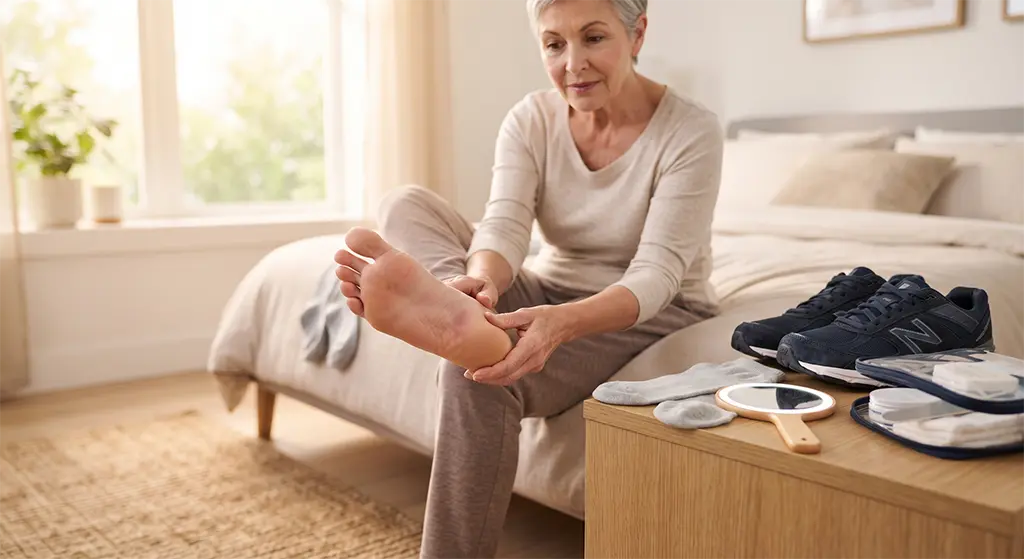
After removing compression socks, look at your skin. Mild temporary impressions can happen, but deep marks, redness, pain, numbness, or color changes are warning signs.
Watch for:
- deep sock band marks
- red lines around the ankle or calf
- toe swelling beyond the sock
- new numbness
- increased burning
- skin irritation
- blisters or open areas
If symptoms worsen with compression, stop and ask your provider.
Compression level matters
Not all compression socks are the same. Some are mild. Others are medical-grade. More compression is not automatically better.
High compression can be risky if:
- circulation is poor
- sensation is reduced
- socks are improperly sized
- swelling changes throughout the day
- skin is fragile
- wounds are present
Professional fitting may be needed for certain patients.
Why South Florida makes compression tricky
In Miami, Fort Lauderdale, Broward, Miami-Dade, and the Florida Keys, compression socks can feel hot. Heat can worsen burning and sweating. Moisture can increase skin irritation and fungal risk.
Patients often face a tradeoff:
- Compression may reduce swelling
- Heat from the sock may increase burning
- Tightness may worsen numbness
- Moisture may irritate skin
This is why tracking your personal response matters.
How to test compression safely
If your provider says compression is appropriate, track:
- swelling before and after
- burning before and after
- toe color
- skin marks
- numbness level
- comfort during heat exposure
- symptoms at bedtime
Try them during a low-risk time first, not during a long travel day or full workday.
When compression may be useful
Compression may be worth discussing if you have:
- mild-to-moderate swelling
- late-day heaviness
- long sitting/travel swelling
- standing-related pooling
- no wounds or major circulation concerns
Again, provider guidance matters.
When to avoid or pause compression
Pause and ask your provider if you have:
- open wounds
- severe circulation disease
- sudden one-sided swelling
- toe discoloration
- worsening numbness
- severe pain
- skin breakdown
- compression that increases burning
How the Dr. Alfonso Neuropathy Treatment Protocol helps
Compression socks manage pressure and swelling. They do not repair nerves by themselves.
The Dr. Alfonso Neuropathy Treatment Protocol supports:
- 🩸 Microcirculation
- ⚡ Nerve signaling stability and repair support
- 🌿 Inflammation and oxidative stress reduction
- 🧠 Metabolic foundations that influence nerve recovery
When nerve signaling improves, many patients become less reactive to pressure and swelling triggers. The goal is better nerve resilience, not dependence on compression alone.
Practical tips
- Do not sleep in compression unless directed by a provider
- Do not use tight socks to “push through” swelling
- Remove socks and inspect skin daily
- Make sure toes are not crowded
- Use breathable materials when possible
- Avoid rolling the top down, which creates a tight band
FAQs
Are compression socks good for neuropathy?
They can help some patients with swelling, but they may worsen symptoms if too tight or poorly fitted.
Can compression socks make numbness worse?
Yes. Excess pressure can worsen numbness or burning in some neuropathy patients.
Should I wear compression socks at night?
Only if your provider recommends it. Many people should not sleep in compression.
What should I watch for?
Deep marks, toe color changes, new numbness, increased burning, redness, blisters, or skin breakdown.
References
- CDC: Foot care and daily inspection guidance for reduced sensation
- NINDS: Peripheral Neuropathy overview
Clinic: Neuropathy Relief Center of Miami
Address: 8585 Sunset Drive, Suite 104, Miami, FL 33143
Call: 305-274-7475
Learn more: Neuropathy Treatment Miami
Book your consultation today: Appointments

Sincerely Yours for Health,
Dr. Rodolfo Alfonso, D.C.
8585 Sunset Drive,
STE 104
Miami, FL 33143
Ph: 305-275.7475
www.neuropathyreliefmia