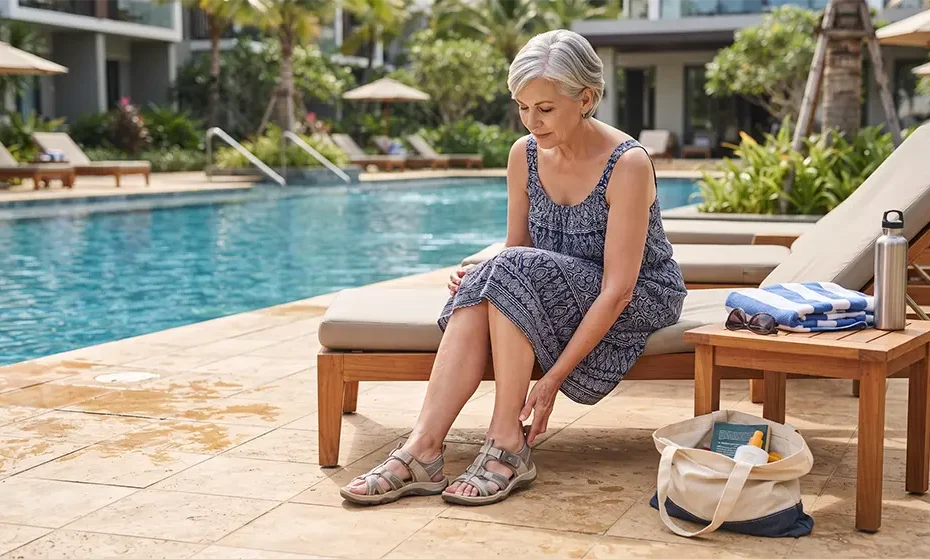
Pool decks can be risky for neuropathy patients because they combine wet surfaces, heat, barefoot walking, slick tile, hidden debris, and reduced foot sensation. A patient may not feel hot ground, small cuts, slipping, or pressure irritation until later. Pool safety for neuropathy is not just about swimming it is about protecting the feet before and after getting in the water.
- Pool decks combine slipping risk, hot surfaces, and hidden foot injuries.
- Neuropathy can reduce warning signals for burns, cuts, and pressure damage.
- Protective footwear, daily inspection, and the Dr. Alfonso Neuropathy Treatment Protocol help reduce risk.
Last updated: April 14, 2026
Reviewed by: Neuropathy Relief Center of Miami team
Pools are everywhere in South Florida. Condos, hotels, gyms, spas, cruise ships, and vacation rentals throughout Miami, Fort Lauderdale, Miami-Dade County, Broward County, and the Florida Keys often have tile pool decks and wet walking areas.
For neuropathy patients, pool decks create a special risk.
Patients often say:
- “I slipped near the pool.”
- “The deck was hot, but I barely felt it.”
- “My feet burned after walking barefoot.”
- “I stepped on something small and did not know.”
- “Wet tile makes me feel unstable.”
- “After the pool, my feet flared at night.”
At the Neuropathy Relief Center of Miami, we also see visitors from the USA, Colombia, Chile, Argentina, Mexico, and the Caribbean who develop symptoms during hotel stays, resort trips, cruises, or beach vacations.
This blog is educational. If you have burns, cuts, open wounds, spreading redness, drainage, fever, severe swelling, or repeated falls, seek medical care.
Why pool decks are risky with neuropathy
Pool decks combine multiple triggers:
- wet tile
- slippery surfaces
- hot ground
- barefoot walking
- sandals that slide
- small debris
- chlorine exposure
- skin softening from water
- reduced protective sensation
Any one of these can create problems. Together, they can increase fall risk and skin injury risk.
Hot surface risk
Pool decks can become very hot in direct sun. Neuropathy can reduce accurate temperature sensation. That means the surface may be damaging before it feels dangerous.
Warning signs after hot surface exposure include:
- redness
- burning
- blistering
- swelling
- skin tenderness
- color changes
- increased nighttime pain
Do not rely only on how hot the ground feels to your feet. Use footwear.
Wet tile and slipping
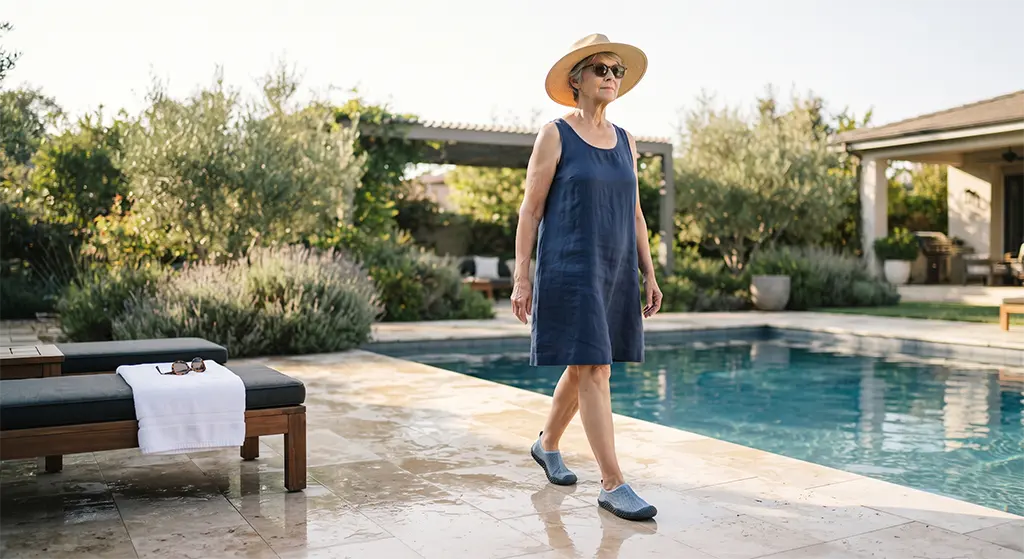
Wet tile requires fast balance reactions. Neuropathy reduces feedback from the feet, making it harder to sense slipping early.
Slip risk increases with:
- numb feet
- loose flip-flops
- rushing
- poor lighting
- pool water on tile
- uneven surfaces
- fatigue
- alcohol use
- carrying towels or bags
A fall near a pool can cause serious injury.
Skin softening after swimming
Water softens skin. Softened skin can blister or tear more easily, especially if the patient walks afterward in sandals, wet shoes, or on rough surfaces.
After swimming:
- dry feet carefully
- check between toes
- inspect soles and heels
- change out of wet footwear
- avoid long barefoot walks
- moisturize dry areas later if appropriate
Chlorine and skin irritation
Chlorine may dry or irritate skin. If the skin is already cracked, callused, or fragile, irritation may worsen. Neuropathy can hide early discomfort.
Check for:
- peeling
- cracking
- redness
- itching
- burning with visible skin changes
- irritation between toes
Safer pool habits
Wear protective footwear
Choose pool shoes or sandals with traction and secure fit. Avoid loose flip-flops that slide.
Avoid hot barefoot walking
Do not cross hot pool decks barefoot.
Move slowly
Wet surfaces require more attention.
Inspect feet after swimming
Look for cuts, burns, blisters, and redness.
Keep feet dry afterward
Dry between toes to reduce skin irritation and fungal risk.
How the Dr. Alfonso Neuropathy Treatment Protocol helps
The Dr. Alfonso Neuropathy Treatment Protocol supports the nerve environment through:
- 🩸 Microcirculation to the feet and legs
- ⚡ Nerve signaling stability and repair support
- 🌿 Inflammation and oxidative stress reduction
- 🧠 Metabolic foundations that influence nerve function and tissue resilience
Better nerve signaling may improve protective awareness over time. But pool-deck protection should begin immediately.
When to seek evaluation
Seek evaluation if:
- you cannot feel hot surfaces clearly
- you have slipped or nearly fallen
- pool days cause repeated burning
- cuts or blisters appear without pain
- skin irritation persists
- balance feels worse after swimming
- wounds are slow to heal
FAQs
Are pool decks dangerous with neuropathy?
They can be because wet tile, heat, barefoot walking, and reduced sensation increase fall and skin-injury risk.
Should neuropathy patients walk barefoot at the pool?
Protective footwear is usually safer, especially on hot or wet surfaces.
Why do my feet burn after pool days?
Heat, water exposure, skin softening, friction, and barefoot walking can all amplify neuropathy symptoms.
Can treatment improve foot safety?
Many patients improve as nerve signaling, microcirculation, and protective awareness improve.
References
- CDC: Foot care and skin inspection guidance
- NINDS: Peripheral Neuropathy overview
Clinic: Neuropathy Relief Center of Miami
Address: 8585 Sunset Drive, Suite 104, Miami, FL 33143
Call: 305-274-7475
Learn more: Neuropathy Treatment Miami
Book your consultation today: Appointments

Sincerely Yours for Health,
Dr. Rodolfo Alfonso, D.C.
8585 Sunset Drive,
STE 104
Miami, FL 33143
Ph: 305-275.7475
www.neuropathyreliefmia