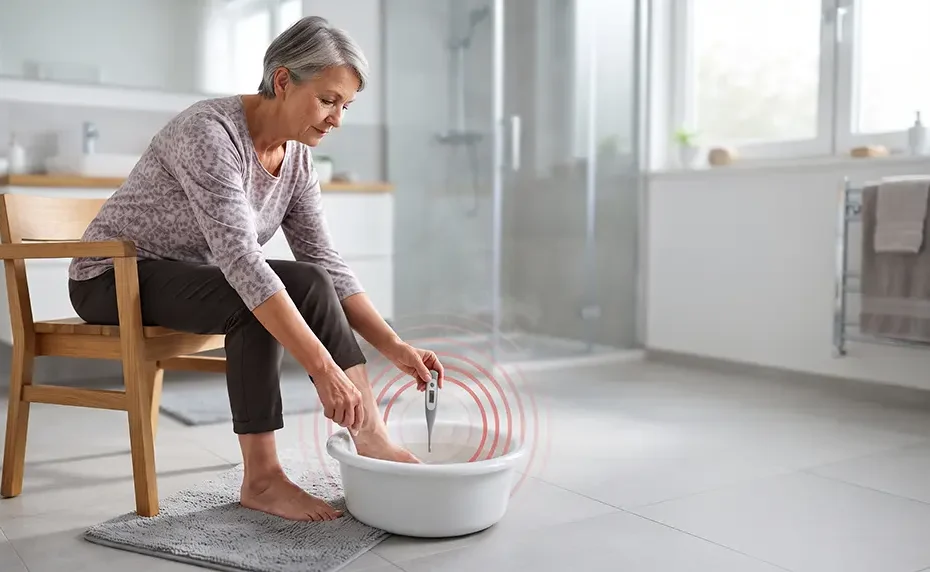
Hot showers, baths, foot spas, and long foot soaks can be risky for neuropathy patients because damaged peripheral nerves may not accurately detect heat. Water that feels comfortable or barely feels hot at all may still irritate or burn the skin. Long soaking can also soften the skin and make it more vulnerable to cracking, friction, and wounds. Safer temperature habits and daily foot inspection are especially important when sensation is reduced.
- Neuropathy can reduce the ability to accurately feel heat and cold.
- Hot water may injure skin before normal warning pain appears.
- Long foot soaking can soften skin and create additional foot-care problems.
- The Dr. Alfonso Neuropathy Treatment Protocol supports damaged peripheral nerves while safer daily habits reduce avoidable injuries.
Last updated: September 15, 2026
Reviewed by: Neuropathy Relief Center of Miami team
A hot shower or foot soak can feel relaxing after a long day. For someone with neuropathy, however, temperature deserves more attention.
Patients often tell us:
- “My feet always feel cold, so I use very hot water.”
- “I barely feel the temperature with my feet.”
- “My feet burn more after a hot shower.”
- “I soak my feet because they feel stiff.”
- “The water did not feel that hot, but my skin was red afterward.”
- “My feet feel better in warm water and then burn later at night.”
At the Neuropathy Relief Center of Miami, we see these patterns in patients throughout Miami, Fort Lauderdale, Miami-Dade County, Broward County, and the Florida Keys, as well as patients visiting from the USA, Colombia, Chile, Argentina, Mexico, and the Caribbean.
Neuropathy changes how the feet communicate with the brain. That includes temperature information.
Why neuropathy changes temperature awareness
Peripheral nerves help the brain recognize:
- heat
- cold
- pain
- pressure
- vibration
- touch
When those nerves are damaged, temperature signals may become inaccurate.
A patient may experience:
- feet that feel freezing when the skin is warm
- burning feet without an external heat source
- inability to tell how hot bath water is
- different temperature sensation between the two feet
- delayed awareness of excessive heat
This is why relying only on how the water feels to the feet can be risky.
The hot-water problem
Normally, excessive heat quickly creates discomfort and encourages a person to move away.
With reduced protective sensation, that warning system may be delayed.
Potential sources include:
- hot showers
- bathtubs
- foot spas
- whirlpools
- hot tubs
- heated pools
- buckets used for foot soaking
A patient may leave the feet exposed longer because the heat does not feel dangerous.
Why a foot soak can create another problem
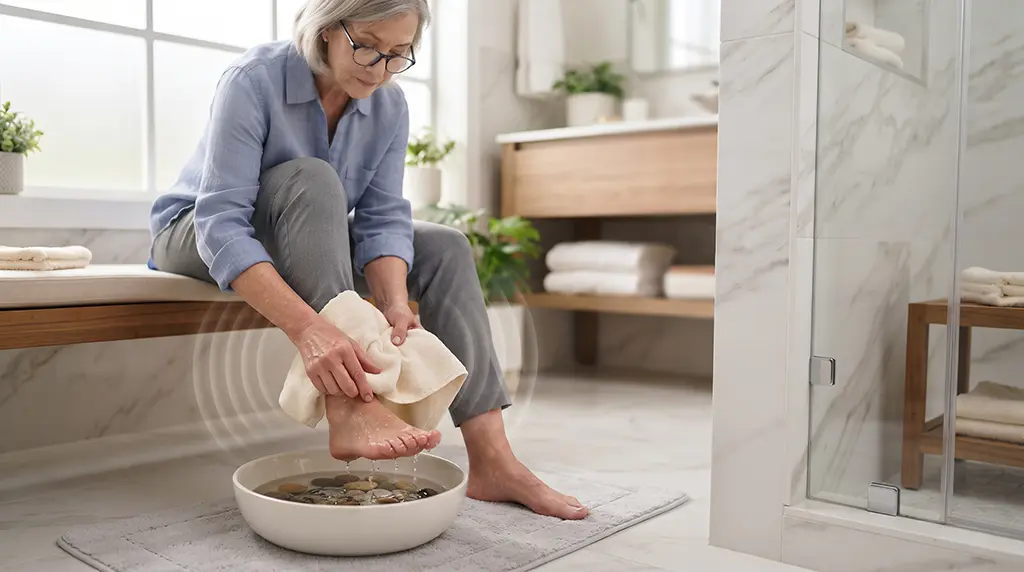
Temperature is not the only consideration.
Prolonged soaking can soften the skin. Excessively softened skin may become more vulnerable to:
- rubbing
- peeling
- cracking
- friction from shoes
- irritation between the toes
- skin breakdown
For a patient who already has reduced sensation, damaged skin may not hurt enough to provide an early warning.
That is why routine long foot soaking is generally not the same thing as good neuropathy foot care.
Why feet can burn after a hot shower
Some neuropathy patients notice an interesting pattern:
- Feet feel cold or numb.
- Patient takes a hot shower.
- Warmth feels temporarily comforting.
- Feet become red or warmer.
- Patient gets into bed.
- Burning, buzzing, or tingling becomes more intense.
Heat can change local circulation and sensory input. In an already irritated nervous system, that may temporarily amplify symptoms.
The key is to recognize your pattern.
Safer shower habits
Consider these practical steps:
- Use warm rather than very hot water.
- Test water temperature with an area of the body that has normal sensation.
- Avoid prolonged foot soaking.
- Check feet after bathing.
- Dry carefully, especially between the toes.
- Avoid standing barefoot on slippery bathroom tile.
- Use a secure non-slip surface.
- Moisturize dry skin appropriately while avoiding excessive moisture between the toes.
- Never assume the absence of pain means the water was safe.
What should you inspect after bathing?
Look at:
- heels
- soles
- toes
- between the toes
- around toenails
- the top of the foot
Watch for:
- unusual redness
- blisters
- peeling
- cracks
- swelling
- burns
- color changes
- open skin
Neuropathy foot safety depends on looking at the feet, not simply waiting until something hurts.
How the Dr. Alfonso Neuropathy Treatment Protocol helps
Avoiding hot water protects the outside of the foot. Our larger objective is supporting the damaged peripheral nerves themselves.
The Dr. Alfonso Neuropathy Treatment Protocol focuses on:
- 🩸 Microcirculation to peripheral tissues
- ⚡ Nerve signaling stability and repair support
- 🌿 Inflammation and oxidative stress reduction
- 🧠 Metabolic foundations that influence nerve health and recovery
The goal is to improve the environment surrounding damaged nerves while simultaneously reducing avoidable daily triggers.
When to seek medical evaluation
Seek evaluation if you notice:
- a blister or burn
- open skin
- worsening redness
- drainage
- significant swelling
- unusual foot color
- inability to distinguish hot from cold
- worsening numbness
- wounds that are not healing
FAQs
Can neuropathy make it difficult to feel hot water?
Yes. Damage to sensory nerves can reduce normal heat and cold perception.
Are hot foot baths good for neuropathy?
Not necessarily. Excessive heat can increase burn risk when sensation is reduced, and prolonged soaking can soften the skin.
Why do my feet burn after a hot shower?
Heat can temporarily change sensory input and circulation, which may amplify symptoms in sensitive peripheral nerves.
Should neuropathy patients soak their feet?
Routine prolonged soaking is generally not necessary for foot hygiene and may create skin problems. Individual medical recommendations may differ.
References
- CDC: Foot care and daily foot inspection guidance
- NINDS/NIH: Peripheral Neuropathy
- MedlinePlus: Peripheral Neuropathy
Clinic: Neuropathy Relief Center of Miami
Address: 8585 Sunset Drive, Suite 104, Miami, FL 33143
Call: 305-274-7475
Learn more: Neuropathy Treatment Miami
Book your consultation today: Appointments

Sincerely Yours for Health,
Dr. Rodolfo Alfonso, D.C.
8585 Sunset Drive,
STE 104
Miami, FL 33143
Ph: 305-275.7475
www.neuropathyreliefmia