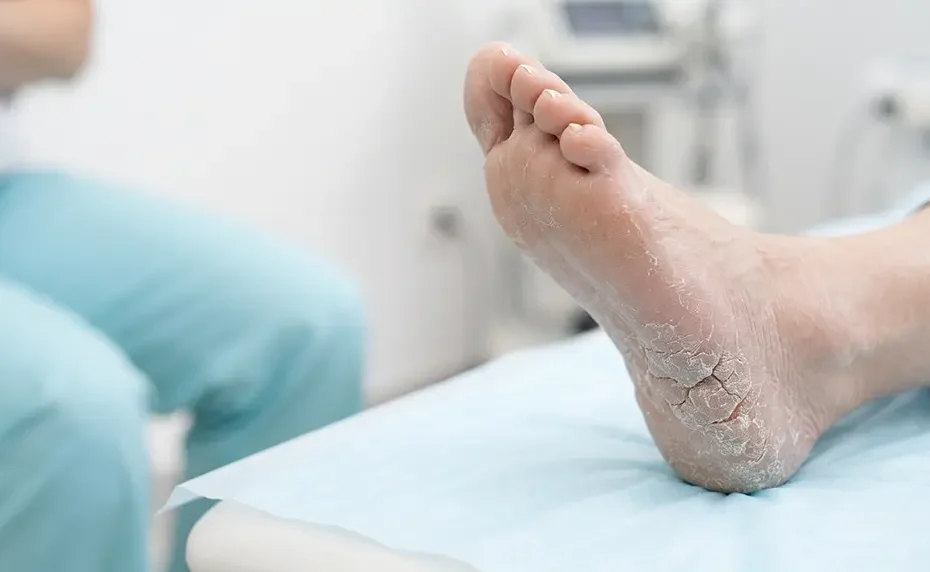
Cracked heels may seem like a dry-skin problem, but for neuropathy patients they can become a serious foot-safety issue. Reduced sensation can make cracks, bleeding, infection, and pressure irritation harder to notice early. When damaged peripheral nerves reduce protective pain signals, daily foot inspection, skin care, footwear choices, and timely evaluation become essential.
- Cracked heels can create openings in the skin that may worsen without strong pain signals.
- Neuropathy can reduce protective sensation, making skin damage easier to miss.
- The Dr. Alfonso Neuropathy Treatment Protocol supports damaged peripheral nerves while patients protect the skin barrier.
Last updated: September 9, 2026
Reviewed by: Neuropathy Relief Center of Miami team
Dry, cracked heels are common. Many people ignore them until they become painful. But neuropathy patients cannot rely on pain as the main warning system.
Patients often say:
- “My heels are cracked, but they do not hurt much.”
- “I saw blood on my sock and did not know I had a crack.”
- “My heel feels numb but the skin looks bad.”
- “My sandals make the cracks worse.”
- “My feet burn more when my skin is dry.”
- “I did not realize the crack was getting deeper.”
At the Neuropathy Relief Center of Miami, we see this in patients throughout Miami, Fort Lauderdale, Miami-Dade County, Broward County, and the Florida Keys, as well as visitors from the USA, Colombia, Chile, Argentina, Mexico, and the Caribbean.
This blog is educational. If you have bleeding cracks, open wounds, drainage, spreading redness, swelling, fever, odor, diabetes-related foot risk, or signs of infection, seek medical care promptly.
Why cracked heels matter with neuropathy
The skin is the foot’s protective barrier. When the heel cracks, that barrier is weakened. If sensation is reduced, the patient may not notice how deep or irritated the crack has become.
Cracked heels can lead to:
- bleeding
- pain or pressure
- open skin
- infection risk
- difficulty walking
- sandal irritation
- callus buildup
- delayed healing
- worsening burning from skin irritation
For neuropathy patients, dry skin is not only cosmetic.
Why neuropathy makes cracks harder to detect
Neuropathy can reduce pain, pressure, and temperature awareness. A crack may deepen before it feels painful. Shoes or sandals may continue rubbing the area because the warning signals are muted.
This is why daily visual inspection matters.
Do not judge heel safety only by pain level. Look at the skin.
South Florida factors
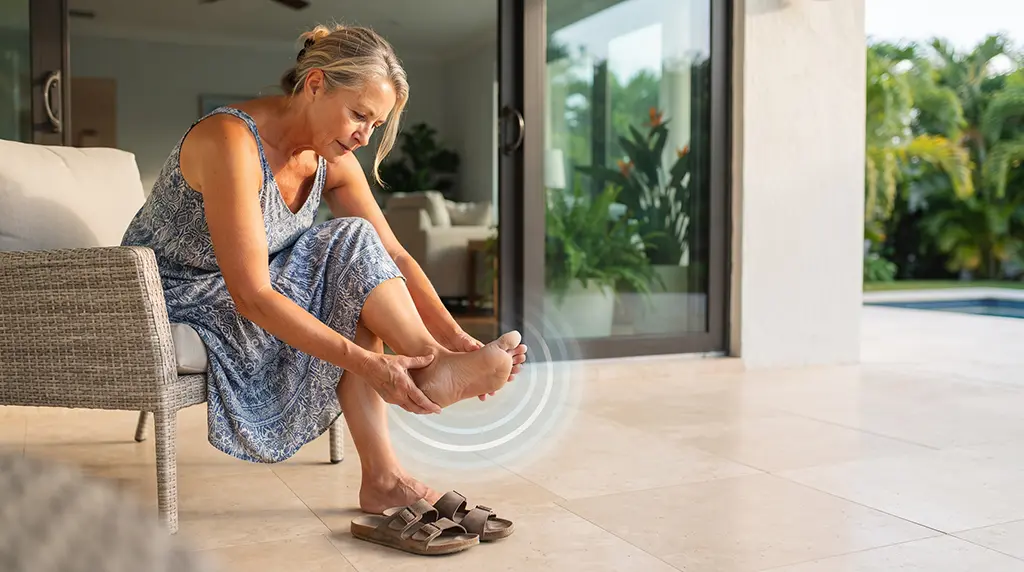
South Florida lifestyle can affect heel skin:
- sandals
- beach walking
- pool decks
- tile floors
- air conditioning
- sun exposure
- humidity followed by dryness
- barefoot walking at home
- long walking days
Patients in Miami, Fort Lauderdale, Miami-Dade, Broward, and the Florida Keys may expose their heels more often than patients in colder climates.
Callus plus cracking
Cracked heels often appear with thick callus. Callus can create pressure and reduce skin flexibility. When the heel expands during walking, dry callused skin may split.
Do not aggressively cut or shave calluses yourself if sensation is reduced. A small cut can become a serious issue.
Safer skin-care habits
- Inspect heels daily
- Wash and dry feet gently
- Moisturize dry skin, but avoid lotion between toes unless directed
- Avoid walking barefoot on hard floors
- Use supportive shoes or sandals
- Do not cut calluses yourself
- Protect cracks with appropriate bandaging if advised
- Seek professional care for deep cracks or bleeding
Warning signs
Seek evaluation if cracked heels show:
- bleeding
- open skin
- drainage
- odor
- warmth
- redness
- swelling
- increasing pain
- worsening numbness
- black, blue, or unusual color changes
A crack should not be ignored when protective sensation is reduced.
How the Dr. Alfonso Neuropathy Treatment Protocol helps
Skin care protects the outside of the foot. The Dr. Alfonso Neuropathy Treatment Protocol supports the internal nerve environment by focusing on:
- 🩸 Microcirculation to the feet and legs
- ⚡ Nerve signaling stability and repair support
- 🌿 Inflammation and oxidative stress reduction
- 🧠 Metabolic foundations that influence tissue recovery and nerve sensitivity
Better nerve support can improve awareness and recovery capacity, but the skin barrier still needs daily protection.
When to seek evaluation
Seek evaluation if:
- cracks keep returning
- heels bleed
- you cannot feel heel irritation
- sandals worsen cracking
- skin changes are spreading
- calluses are thick or painful
- wounds are slow to heal
FAQs
Are cracked heels dangerous with neuropathy?
They can be because cracks may become open skin and neuropathy may reduce warning pain.
Why do my cracked heels not hurt much?
Reduced sensation from neuropathy can make skin injury feel less painful than expected.
Should I shave calluses myself?
No. If sensation is reduced, cutting or shaving calluses can create wounds.
Can treatment help foot awareness?
Many patients improve as nerve signaling, microcirculation, and tissue support improve.
References
- CDC: Foot care and daily inspection guidance
- NINDS: Peripheral Neuropathy overview
- Mayo Clinic: Peripheral neuropathy symptom and foot injury education
Clinic: Neuropathy Relief Center of Miami
Address: 8585 Sunset Drive, Suite 104, Miami, FL 33143
Call: 305-274-7475
Learn more: Neuropathy Treatment Miami
Book your consultation today: Appointments

Sincerely Yours for Health,
Dr. Rodolfo Alfonso, D.C.
8585 Sunset Drive,
STE 104
Miami, FL 33143
Ph: 305-275.7475
www.neuropathyreliefmia