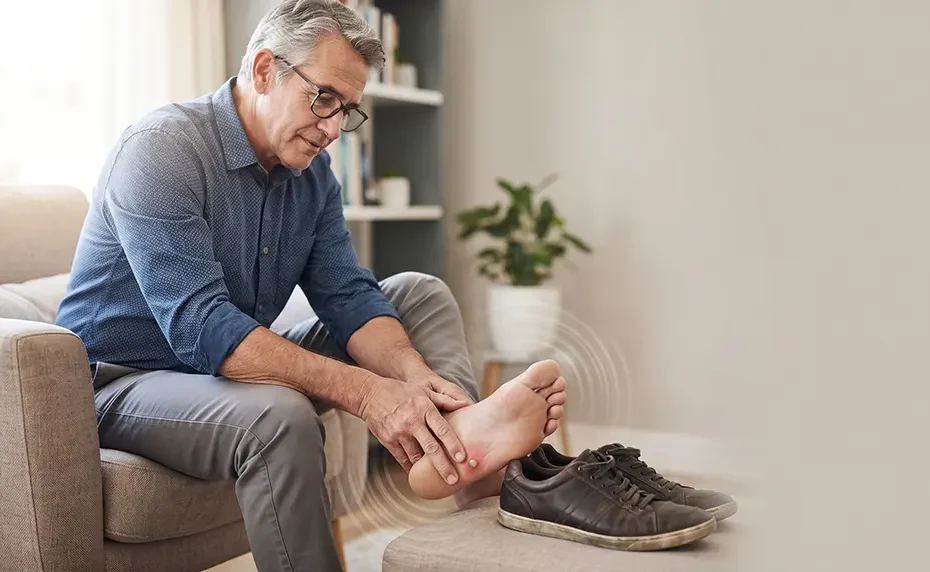
Blisters can become serious for neuropathy patients because reduced sensation may hide rubbing, pressure, heat, and skin damage until the blister is already formed or open. New shoes, sandals, long walks, wet socks, travel days, and swelling can all increase blister risk. Daily inspection and early care are essential when damaged peripheral nerves reduce protective warning signals.
- Neuropathy can reduce warning pain from shoe rubbing and pressure.
- Blisters may become wounds if ignored, especially when sensation is reduced.
- The Dr. Alfonso Neuropathy Treatment Protocol supports damaged peripheral nerves while foot protection reduces daily injury risk.
Last updated: September 9, 2026
Reviewed by: Neuropathy Relief Center of Miami team
A blister may seem small, but for a neuropathy patient it deserves attention. When peripheral nerves are damaged, the foot may not feel rubbing, heat, pressure, or skin irritation clearly. By the time the patient notices a problem, the blister may already be open.
Patients often say:
- “I did not feel the blister forming.”
- “My new shoes rubbed my heel raw.”
- “My sandal strap caused a blister.”
- “I saw fluid under the skin but it did not hurt much.”
- “My sock was wet and my foot rubbed all day.”
- “The blister turned into a wound.”
At the Neuropathy Relief Center of Miami, we see this in patients across Miami, Fort Lauderdale, Miami-Dade County, Broward County, and the Florida Keys, along with visitors from the USA, Colombia, Chile, Argentina, Mexico, and the Caribbean.
This blog is educational. Seek medical care promptly for open blisters, spreading redness, drainage, odor, fever, swelling, diabetes-related foot risk, or wounds that do not improve.
Why blisters matter with neuropathy
Blisters form when friction, pressure, or heat separates layers of skin. In a healthy foot, pain usually warns the person to stop. In a neuropathy foot, that warning may be weak or absent.
Blister triggers include:
- new shoes
- tight shoes
- sandals
- wet socks
- long walks
- hot pavement
- swelling
- sock wrinkles
- orthotics that rub
- foot deformities or pressure points
A blister can become dangerous if the skin opens and infection develops.
The new-shoe blister problem
New shoes are one of the most common blister triggers. They may feel fine in the store but create pressure during longer walking.
Neuropathy patients should avoid wearing new shoes for:
- airport travel
- cruises
- theme parks
- concerts
- long grocery trips
- beach days
- work shifts
- long errands
Test shoes gradually before relying on them.
Wet socks and friction
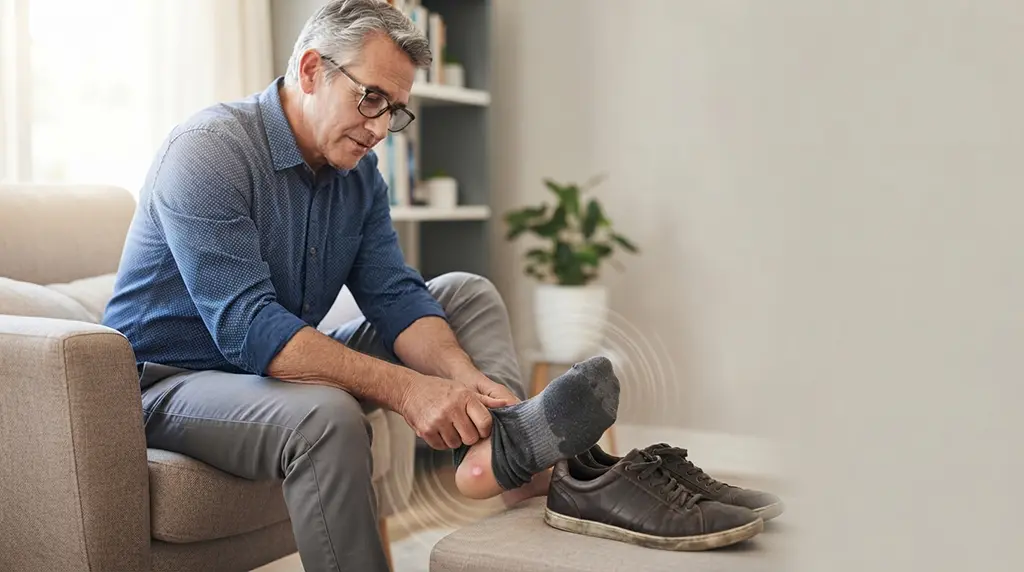
Wet socks increase friction. In South Florida, socks may become wet from sweat, rain, humidity, beach activity, or pool areas.
Wet fabric can rub the skin and soften the foot surface. This makes blisters more likely.
Carry dry socks when needed, especially for long days.
Sandal strap blisters
Sandals can create blisters across the heel, toes, top of the foot, or between the toes. Strap pressure may be worse when feet swell.
Check for:
- red lines
- hot spots
- skin peeling
- fluid-filled blisters
- tenderness
- rubbing at the same location
- worsening burning later
If a sandal repeatedly rubs the same spot, it is not safe footwear for long walking.
What to do if you find a blister
Do not ignore it just because it does not hurt.
General safety steps:
- stop the rubbing source
- keep the area clean
- protect the blister from more pressure
- avoid popping it unnecessarily
- monitor for redness, drainage, odor, swelling, or warmth
- seek professional care if you have diabetes, poor circulation, or reduced sensation
If the blister opens, it should be treated like a wound risk.
Daily blister-prevention routine
Before activity:
- check shoes for rubbing areas
- smooth socks
- avoid wet socks
- inspect sandals
- avoid new shoes for long walking
- make sure toes have room
After activity:
- inspect heels
- inspect toes
- inspect the ball of the foot
- check strap areas
- look between toes
- check for redness or fluid pockets
- note any new burning location
How the Dr. Alfonso Neuropathy Treatment Protocol helps
Blister prevention protects the skin. The Dr. Alfonso Neuropathy Treatment Protocol supports damaged peripheral nerves internally through:
- 🩸 Microcirculation to the feet and legs
- ⚡ Nerve signaling stability and repair support
- 🌿 Inflammation and oxidative stress reduction
- 🧠 Metabolic foundations that influence healing, awareness, and recovery
As nerve signaling improves, many patients report better awareness of pressure and less reactivity to daily triggers.
When to seek evaluation
Seek evaluation if:
- blisters form without much pain
- wounds open or drain
- redness spreads
- swelling increases
- shoes repeatedly create hot spots
- numbness is worsening
- foot shape or walking pattern is changing
- blisters do not heal normally
FAQs
Are blisters dangerous with neuropathy?
They can be because reduced sensation may hide rubbing or skin damage until the blister becomes open or infected.
Should I pop a blister if I have neuropathy?
Do not pop blisters unnecessarily. If you have reduced sensation, diabetes, poor circulation, or signs of infection, seek professional guidance.
Why do new shoes cause neuropathy flares?
New shoes can create pressure and friction that irritate damaged peripheral nerves and skin.
Can treatment improve pressure awareness?
Many patients improve as microcirculation, nerve signaling stability, and tissue recovery improve.
References
- CDC: Foot care and daily inspection guidance
- NINDS: Peripheral Neuropathy overview
- Mayo Clinic: Peripheral neuropathy symptom and foot injury education
Clinic: Neuropathy Relief Center of Miami
Address: 8585 Sunset Drive, Suite 104, Miami, FL 33143
Call: 305-274-7475
Learn more: Neuropathy Treatment Miami
Book your consultation today: Appointments

Sincerely Yours for Health,
Dr. Rodolfo Alfonso, D.C.
8585 Sunset Drive,
STE 104
Miami, FL 33143
Ph: 305-275.7475
www.neuropathyreliefmia