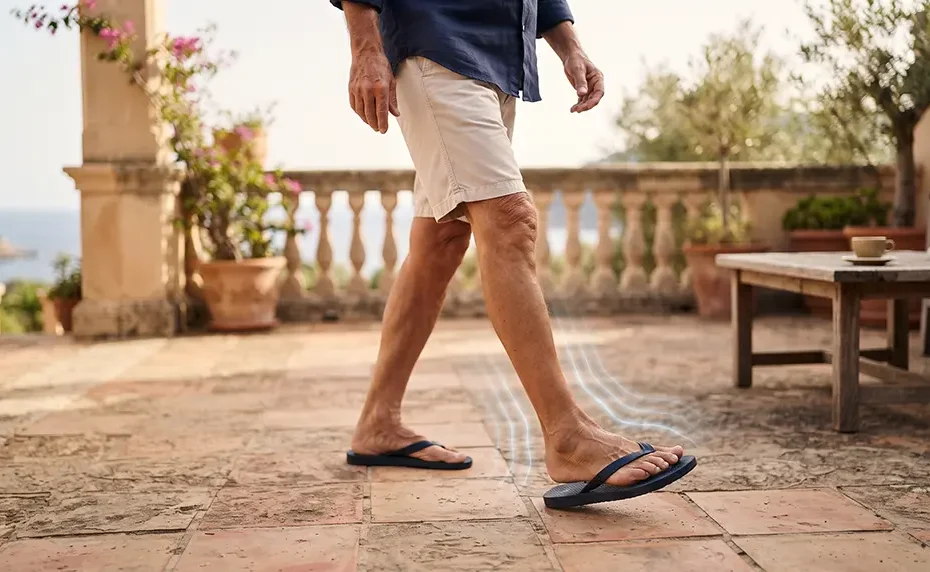
Flip-flops and loose sandals are common in South Florida, but they can be risky for neuropathy patients. They may increase toe gripping, reduce stability, expose the skin, rub between the toes, and make it harder to feel the ground safely. If flip-flops trigger burning, numbness, foot fatigue, balance insecurity, or skin irritation, footwear may be worsening the problem.
- Flip-flops often provide poor support and can increase toe gripping.
- Neuropathy reduces protective sensation, making rubbing, cuts, and pressure harder to detect.
- The Dr. Alfonso Neuropathy Treatment Protocol supports damaged peripheral nerves while better footwear reduces daily triggers.
Last updated: September 9, 2026
Reviewed by: Neuropathy Relief Center of Miami team
In Miami, Fort Lauderdale, Miami-Dade County, Broward County, and the Florida Keys, flip-flops are everywhere. They are easy, inexpensive, lightweight, and convenient for beach days, pool decks, errands, condo buildings, and casual restaurants.
But for neuropathy patients, flip-flops can create problems.
Patients often say:
- “My feet burn when I wear flip-flops too long.”
- “I feel unstable in sandals.”
- “My toes grip when I walk.”
- “The strap rubs between my toes.”
- “I stepped on something and did not feel it.”
- “My sandals feel fine at first, then my feet flare later.”
At the Neuropathy Relief Center of Miami, we see this in local patients and visitors from the USA, Colombia, Chile, Argentina, Mexico, and the Caribbean who spend time in warm climates where sandals are part of daily life.
This blog is educational. If sandals cause wounds, blisters, redness, drainage, infection signs, repeated falls, or worsening numbness, seek evaluation.
Why flip-flops can be risky with neuropathy
Neuropathy can damage the peripheral nerves that help the feet feel pressure, temperature, pain, and position. Flip-flops reduce support and increase exposure.
Common risks include:
- poor arch support
- minimal cushioning
- toe gripping
- unstable heel contact
- strap rubbing
- exposed toes
- hot pavement exposure
- slipping on wet surfaces
- increased fall risk
For patients with reduced sensation, the feet may not warn them early enough.
The toe-gripping problem
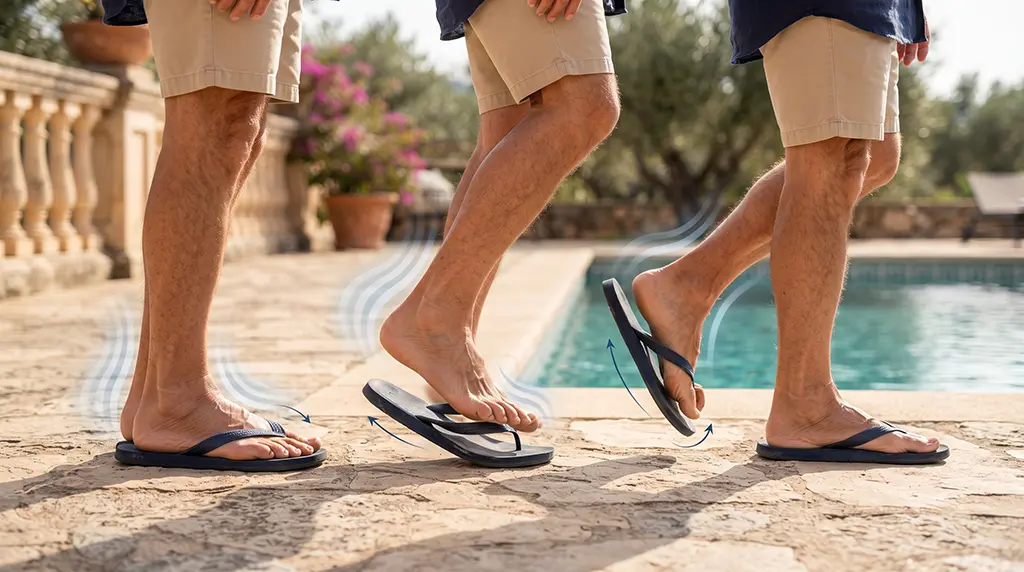
Flip-flops often require the toes to grip to keep the sandal on the foot. This repeated gripping can fatigue the small muscles of the foot and increase pressure under the toes and ball of the foot.
Patients may notice:
- burning under the forefoot
- toe cramps
- arch fatigue
- calf tightness
- numbness after walking
- foot fatigue later in the day
Toe gripping also changes walking mechanics, which may increase instability.
Strap rubbing and skin irritation
The thong strap between the toes can rub skin repeatedly. A patient with normal sensation may stop when the rubbing becomes painful. A neuropathy patient may not notice until redness, blistering, or skin breakdown appears.
Check carefully for:
- redness between toes
- blisters
- skin peeling
- pressure marks
- soreness after removal
- odor or drainage
- irritated nail edges
Do not keep wearing sandals that create the same hot spot.
Wet surfaces and slipping
Flip-flops can slide on pool decks, hotel floors, patios, bathrooms, and rain-slick sidewalks. Neuropathy already reduces ground feedback. A loose sandal adds another layer of instability.
Fall risk increases when:
- floors are wet
- lighting is low
- sandals are loose
- the patient is tired
- alcohol is involved
- stairs or curbs are present
- feet are numb from sitting
Better sandal features
For neuropathy patients, better sandals usually have:
- secure heel strap
- wider base
- cushioning
- arch support
- traction
- protective toe coverage when needed
- adjustable straps
- no rubbing between toes
- enough depth to avoid pressure
A sandal should stay on the foot without toe gripping.
Flip-flop safety rules
- Avoid long walks in flimsy flip-flops
- Do not wear them if balance is poor
- Inspect skin after wearing
- Avoid hot pavement barefoot or in thin sandals
- Use secure sandals for errands
- Replace worn-out soles
- Avoid sandals that rub between toes
- Wear supportive shoes during flares
How the Dr. Alfonso Neuropathy Treatment Protocol helps
Footwear reduces outside irritation. The Dr. Alfonso Neuropathy Treatment Protocol supports damaged peripheral nerves internally by focusing on:
- 🩸 Microcirculation to the feet and legs
- ⚡ Nerve signaling stability and repair support
- 🌿 Inflammation and oxidative stress reduction
- 🧠 Metabolic foundations that influence foot comfort, balance, and recovery
As nerve signaling improves, many patients report better confidence walking and fewer flares from daily activity.
When to seek evaluation
Seek evaluation if:
- flip-flops trigger burning
- sandals cause blisters or red marks
- balance feels unsafe
- toes cramp from gripping
- numbness is worsening
- feet swell in sandals
- you have near-falls in wet areas
FAQs
Are flip-flops bad for neuropathy?
They can be risky because they often provide poor support, increase toe gripping, and expose the foot to injury.
Why do my feet burn after wearing sandals?
Thin soles, strap pressure, toe gripping, hard floors, heat, and swelling can irritate damaged peripheral nerves.
What sandals are safer for neuropathy?
A secure sandal with support, cushioning, traction, and no rubbing areas is usually safer than a loose flip-flop.
Can treatment improve walking comfort?
Many patients improve as microcirculation, nerve signaling stability, and tissue recovery improve.
References
- NINDS: Peripheral Neuropathy overview
- CDC: Foot care and daily inspection guidance
- Mayo Clinic: Peripheral neuropathy safety and fall-risk education
Clinic: Neuropathy Relief Center of Miami
Address: 8585 Sunset Drive, Suite 104, Miami, FL 33143
Call: 305-274-7475
Learn more: Neuropathy Treatment Miami
Book your consultation today: Appointments

Sincerely Yours for Health,
Dr. Rodolfo Alfonso, D.C.
8585 Sunset Drive,
STE 104
Miami, FL 33143
Ph: 305-275.7475
www.neuropathyreliefmia