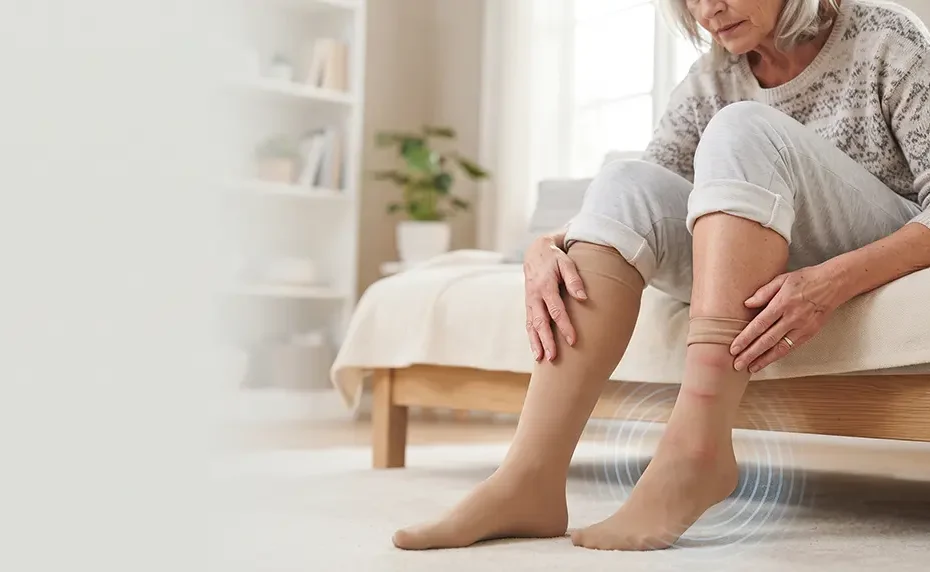
Compression socks may help some patients with swelling or circulation support, but they can also create problems if they are too tight, poorly fitted, rolled down, wrinkled, or worn over irritated skin. Neuropathy can make it harder to feel excess pressure. If compression socks leave deep marks, worsen burning, increase numbness, or create skin irritation, they need to be reassessed.
- Compression socks should fit properly and should not cause pain, numbness, or skin damage.
- Neuropathy may reduce protective sensation, making pressure injury harder to detect.
- The Dr. Alfonso Neuropathy Treatment Protocol supports damaged peripheral nerves while patients reduce pressure triggers.
Last updated: September 9, 2026
Reviewed by: Neuropathy Relief Center of Miami team
Compression socks are commonly recommended for swelling, travel, long standing, or circulation support. Many neuropathy patients try them because their feet feel swollen, tight, heavy, or uncomfortable.
But compression is not automatically safe for every patient.
Patients often say:
- “Compression socks help my swelling but make my feet burn.”
- “The band leaves a deep mark.”
- “My toes go numb when I wear them.”
- “They roll down and cut into my calf.”
- “I wore compression socks on a flight and my feet flared.”
- “I do not know how tight they should feel.”
At the Neuropathy Relief Center of Miami, we see this in patients throughout Miami, Fort Lauderdale, Miami-Dade County, Broward County, and the Florida Keys, along with visitors from the USA, Colombia, Chile, Argentina, Mexico, and the Caribbean.
This blog is educational. Ask a qualified provider before using compression socks if you have diabetes-related foot risk, poor circulation, wounds, severe swelling, skin changes, vascular disease, or unclear leg pain.
Why compression socks can help
Compression socks may support fluid movement in the lower legs. For some patients, that can reduce swelling and leg heaviness.
They may be used during:
- travel days
- long sitting
- long standing
- flights
- work shifts
- recovery after activity
- mild swelling patterns
But the fit and patient risk profile matter.
Why compression can backfire with neuropathy
Neuropathy can reduce the ability to feel pressure accurately. A sock may be too tight, folded, wrinkled, or rolled down without strong warning pain.
Compression problems can include:
- deep band marks
- toe numbness
- increased burning
- calf discomfort
- skin indentation
- redness
- blisters
- pressure points
- swelling above the band
If compression increases symptoms, it should not be ignored.
The rolled-down sock problem
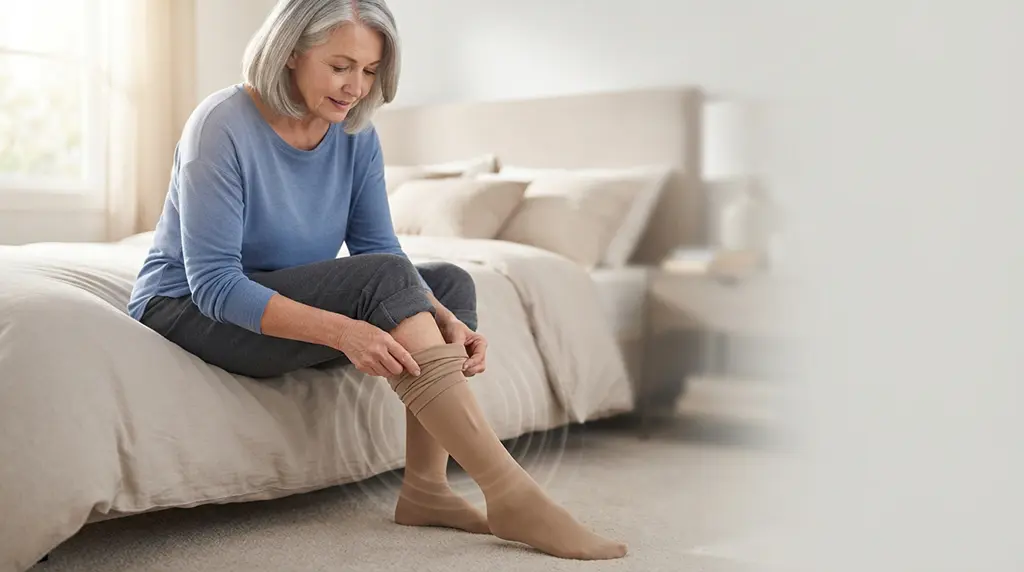
When compression socks roll down, they can create a tight band around the leg. This focal pressure may be worse than the original swelling.
Watch for:
- a ring mark around the calf
- swelling above the rolled area
- discomfort behind the knee
- numbness or tingling below the band
- skin color changes
- burning after removal
Rolled compression is not proper compression.
Compression during flights
Many patients wear compression socks during airport travel or flights. This may help some people, but socks must be properly fitted. A long flight with tight shoes, swelling, and compression that is too tight can trigger a flare.
Travel-day safety:
- test compression before the trip
- avoid first-time use on a flight
- smooth wrinkles
- check toe comfort
- move ankles during sitting
- remove socks if they worsen symptoms
- inspect skin after travel
Signs compression socks may be too tight
Compression socks may be too tight if you notice:
- numbness
- increased burning
- blue, purple, pale, or cold toes
- deep marks
- skin irritation
- pain behind the knee
- swelling above the sock
- tingling that worsens after wearing
- difficulty removing the sock
Seek medical advice if color changes, severe pain, wounds, or circulation concerns appear.
Safer compression principles
- Get the right size
- Avoid wrinkles
- Do not roll the top down
- Check skin after wearing
- Avoid wearing over wounds
- Do not assume tighter is better
- Test before travel
- Ask a provider if you have circulation concerns
- Stop if symptoms worsen
How the Dr. Alfonso Neuropathy Treatment Protocol helps
Compression may manage swelling in some situations. It does not replace care directed at damaged peripheral nerves.
The Dr. Alfonso Neuropathy Treatment Protocol supports:
- 🩸 Microcirculation to the feet and legs
- ⚡ Nerve signaling stability and repair support
- 🌿 Inflammation and oxidative stress reduction
- 🧠 Metabolic foundations that influence nerve sensitivity, tissue recovery, and swelling response
The goal is to improve the internal nerve environment while reducing external pressure triggers.
When to seek evaluation
Seek evaluation if:
- compression worsens burning
- toes become more numb
- socks leave deep marks
- swelling is worsening
- one leg is more swollen than the other
- wounds or skin irritation appear
- symptoms flare after flights or long standing
FAQs
Are compression socks safe for neuropathy?
They may be helpful for some patients, but they must fit properly and should not cause numbness, burning, or skin damage.
Why do compression socks make my feet burn?
Excess pressure, poor fit, wrinkles, rolling, swelling, or nerve sensitivity may irritate damaged peripheral nerves.
Should neuropathy patients wear compression socks on flights?
Some may benefit, but compression should be tested before travel and discussed with a provider when risk factors exist.
Is tighter compression better?
No. Excessive compression can create pressure problems, especially when sensation is reduced.
References
- NINDS: Peripheral Neuropathy overview
- CDC: Foot care and daily inspection guidance
- Mayo Clinic: Peripheral neuropathy safety and fall-risk education
Clinic: Neuropathy Relief Center of Miami
Address: 8585 Sunset Drive, Suite 104, Miami, FL 33143
Call: 305-274-7475
Learn more: Neuropathy Treatment Miami
Book your consultation today: Appointments

Sincerely Yours for Health,
Dr. Rodolfo Alfonso, D.C.
8585 Sunset Drive,
STE 104
Miami, FL 33143
Ph: 305-275.7475
www.neuropathyreliefmia