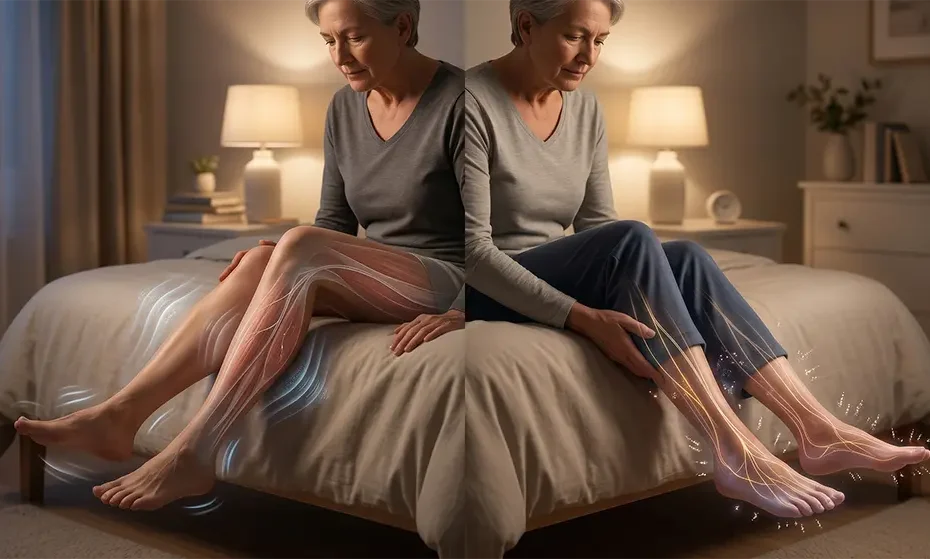
Nighttime leg symptoms can come from neuropathy, Restless Legs Syndrome (RLS), or both. Neuropathy often causes burning, tingling, buzzing, numbness, and “electric” sensations. RLS is more of an urge-to-move discomfort that improves with movement. Differentiating the pattern helps you choose the right plan and improves sleep—one of the biggest drivers of nerve recovery.
- Neuropathy and RLS can look similar at night, but triggers and relief patterns differ.
- Poor sleep amplifies nerve sensitivity; addressing nighttime symptoms is high-leverage.
- A targeted neuropathy plan plus lifestyle timing often reduces nighttime flare cycles.
Last updated: April 14, 2026
Reviewed by: Neuropathy Relief Center of Miami team
If you’ve ever said, “My legs drive me crazy at night,” you’re not alone. In our clinic we hear this constantly:
- “My feet burn when I try to fall asleep.”
- “I get tingling and I can’t relax.”
- “I feel like I have to move my legs.”
- “It’s worst at night and better during the day.”
At the Neuropathy Relief Center of Miami, we see these nighttime patterns in patients across Miami, Fort Lauderdale, Miami-Dade County, Broward County, and the Florida Keys, and also in visitors traveling from the USA, Colombia, Chile, Argentina, Mexico, and the Caribbean. Many are surprised to learn there may be more than one explanation for the same “can’t stop moving” sensation.
This blog is educational and not a medical diagnosis. If symptoms are severe, progressive, or affecting balance, professional evaluation is important.
Why it matters to tell the difference
Nighttime symptoms do more than annoy you they can disrupt deep sleep. And deep sleep is where the nervous system and tissues recover. When you don’t sleep well, the nervous system becomes more reactive. Many people notice:
- more burning and buzzing.
- more cramps.
- worse symptoms the next day.
- lower tolerance to heat, standing, and normal activity.
So yes getting your nighttime symptoms under control can meaningfully improve neuropathy outcomes.
What neuropathy at night typically feels like
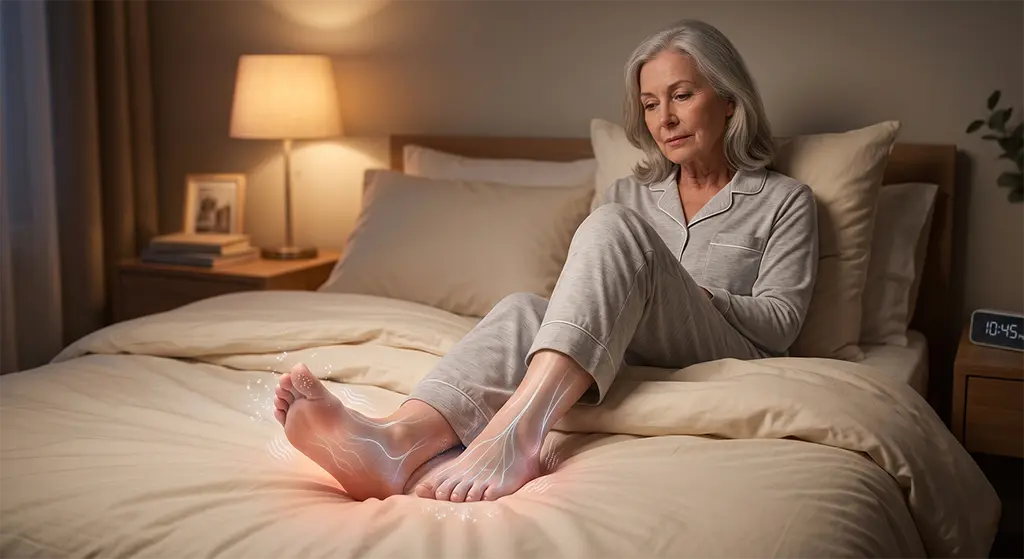
Neuropathy symptoms are often described as:
- burning feet
- tingling or “pins and needles”
- buzzing/vibration feeling
- numbness or “cotton feet”
- electric zaps/shocks
- sensitivity to sheets or socks (allodynia)
- symptoms that worsen with heat, swelling, or late meals in some patients
A big clue: neuropathy is often a sensory signal problem. The nerve is misfiring, and your brain experiences it as burning, tingling, or numbness.
What Restless Legs Syndrome typically feels like
RLS is often described as:
- an urge to move the legs.
- uncomfortable crawling, pulling, or “itchy deep inside” feeling.
- symptoms that increase when resting.
- symptoms that improve (often quickly) with movement.
- symptoms that are worse in the evening or night.
A big clue: RLS is often about urge-to-move relief. You move because it temporarily quiets the sensation.
The fastest “pattern test” (general guidance)
Ask yourself these three questions:
1) Do symptoms improve quickly when I move?
- If you get strong relief just by standing, pacing, or moving your legs, RLS is more likely involved.
- If movement helps only a little or your feet still burn intensely neuropathy is more likely involved.
2) Do I have clear sensory symptoms in the feet during the day?
- Daytime numbness, altered ground feel, toe tingling, or balance changes strongly suggest neuropathy involvement.
3) Is heat a major trigger?
- If heat from bedding makes symptoms spike, neuropathy patterns are common.
Many patients have both: neuropathy plus an RLS-like urge-to-move pattern layered on top.
Why symptoms are worse in Miami / Florida climates
In South Florida, we see unique flare drivers:
- humidity and heat increase swelling and nerve sensitivity.
- sandals and barefoot tile increase friction and pressure hot spots.
- long standing (kitchen, events, lines, travel days) builds end-of-day swelling.
- late dinners, desserts, and alcohol can worsen night patterns in some people.
In the Florida Keys, long walking days and heat can stack triggers and lead to nighttime flares even when the daytime felt okay.
A 7-day tracking method that actually works
For one week, track:
- bedtime.
- number of wakeups.
- symptom type: burning / tingling / urge-to-move.
- severity (1–10) at bedtime and during wakeups.
- heat exposure (hot shower, heavy blankets).
- dinner timing and sugar/carb load.
- standing/walking volume that day.
This isn’t busy work patterns become obvious quickly, and that clarity helps you fix the biggest driver first.
What to try tonight (general guidance)
These are general strategies that are safe for many people but still should be personalized.
If neuropathy pattern is dominant
- Reduce overheating: lighter blanket, cooler room, avoid direct heat.
- Reduce friction: seamless socks (not tight), avoid rough bedding on sensitive feet.
- Elevate earlier: 5–10 minutes before symptoms peak can reduce swelling load.
- Add micro-movement earlier in the evening: a short walk after dinner can help circulation and reduce pooling.
If RLS pattern is dominant
- Movement “dose”: short gentle movement before bed can reduce the urge-to-move cycle.
- Avoid late stimulants: caffeine late in the day commonly worsens RLS-like patterns.
- Improve wind-down: the nervous system needs a consistent downshift routine.
How the Dr. Alfonso Neuropathy Treatment Protocol helps
The Dr. Alfonso Neuropathy Treatment Protocol is designed to improve the nerve environment by supporting:
- 🩸 microcirculation (delivery of oxygen/nutrients to nerves).
- ⚡ nerve signaling stability and repair support.
- 🌿 inflammation and oxidative stress reduction.
- 🧠 metabolic stability (when glucose/insulin issues play a role).
As nerves become healthier and less reactive, nighttime spikes often reduce especially when paired with better evening timing and reduced swelling/heat triggers.
When to seek evaluation sooner
- symptoms are worsening month to month.
- you’re losing balance confidence.
- numbness is spreading upward.
- sleep disruption is severe.
- you have diabetes or metabolic risk factors and symptoms are progressing.
FAQs
How do I know if it’s restless legs or neuropathy?
RLS is usually an urge-to-move that improves quickly with movement. Neuropathy often includes burning/tingling/numbness that may not resolve with movement.
Can I have both?
Yes. Many patients have neuropathy plus an RLS-like pattern at night.
Why is it worse at night?
Stillness increases awareness of nerve signals, swelling often peaks late, and heat from bedding can intensify symptoms.
Can treatment improve sleep?
Many patients sleep better as nerve signaling stabilizes and triggers are reduced.
References
- NINDS: Peripheral Neuropathy overview
- NIH/MedlinePlus: Restless Legs Syndrome education
Clinic: Neuropathy Relief Center of Miami
Address: 8585 Sunset Drive, Suite 104, Miami, FL 33143
Call: 305-274-7475
Learn more: Neuropathy Treatment Miami
Book your consultation today: Appointments

Sincerely Yours for Health,
Dr. Rodolfo Alfonso, D.C.
8585 Sunset Drive,
STE 104
Miami, FL 33143
Ph: 305-275.7475
www.neuropathyreliefmia