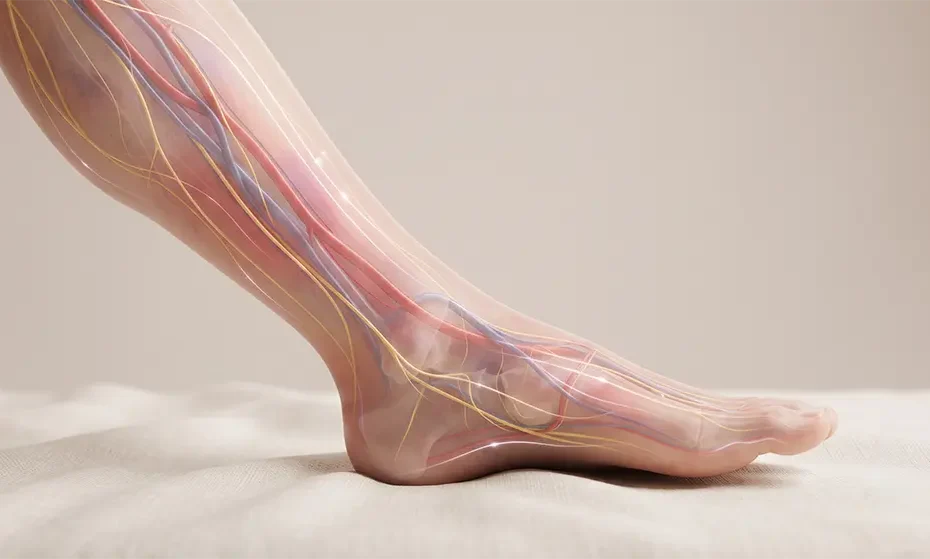
Foot color changes can be important in neuropathy patients. Red, purple, pale, blue, or blotchy feet may reflect circulation changes, temperature sensitivity, swelling, pressure, autonomic nerve involvement, or a medical issue that needs evaluation. Tracking when color changes happen and whether they come with pain, swelling, wounds, or temperature changes helps guide the next step.
- Neuropathy can affect sensation and sometimes autonomic regulation, including temperature and blood flow patterns.
- Color changes should not be ignored, especially if they are new, one-sided, painful, or associated with wounds.
- The Dr. Alfonso Neuropathy Treatment Protocol supports microcirculation and nerve stability, but medical evaluation is important when warning signs appear.
Last updated: April 14, 2026
Reviewed by: Neuropathy Relief Center of Miami team
Many neuropathy patients notice that their feet do not always look the same. They may become red after a shower, purple after sitting, pale in air conditioning, or blotchy at night.
Patients often say:
- “My feet turn red and burn.”
- “My toes look purple after sitting.”
- “One foot looks different than the other.”
- “My feet look pale and feel cold.”
- “The color changes scare me.”
At the Neuropathy Relief Center of Miami, we see this in patients across Miami, Fort Lauderdale, Miami-Dade County, Broward County, and the Florida Keys, and in visitors from the USA, Colombia, Chile, Argentina, Mexico, and the Caribbean.
This blog is educational. Sudden color change, one-sided swelling, severe pain, cold blue toes, wounds, or signs of infection require medical evaluation.
Why foot color changes happen

Foot color can change for many reasons. Some are mild and temporary. Others are more serious.
Common contributors include:
- heat exposure
- cold exposure
- swelling
- pressure from shoes or socks
- circulation changes
- autonomic nerve involvement
- inflammation
- infection
- vascular disease
- wounds or skin breakdown
Neuropathy makes color changes more important because pain may not warn you early.
Red feet with burning
Redness with burning may occur after heat exposure, showers, activity, or swelling. When nerves are irritated, heat and increased blood flow can make symptoms feel more intense.
Ask:
- Does redness appear after hot water?
- Does it happen after walking?
- Does it improve with elevation?
- Is it both feet or one foot?
- Is there warmth, swelling, or infection concern?
Bilateral redness after heat may be less concerning than sudden one-sided redness with swelling and pain, but any persistent change should be evaluated.
Purple feet after sitting
Feet may look purple or darker after prolonged sitting because blood and fluid pool in the lower legs. This can be worse during flights, long car rides, or desk work.
However, purple color that is new, severe, one-sided, painful, or associated with coldness should be checked.
Pale or cold-looking feet
Pale feet may reflect cold exposure, reduced blood flow, or vascular response. In Miami, many patients notice this in strong air conditioning, grocery stores, offices, or cold tile floors.
If feet become pale, cold, painful, or numb in a new way, evaluation is important.
Why one-sided color changes matter
Color changes in both feet can happen with temperature, swelling, or autonomic patterns. One-sided changes may be more concerning, especially if associated with:
- swelling
- pain
- warmth
- wounds
- sudden onset
- calf tenderness
- skin breakdown
- color that does not improve
Do not ignore one-sided changes.
Autonomic nerves and color regulation
Some neuropathy patterns can affect autonomic nerves. These nerves help regulate sweating, blood vessel tone, and temperature response. When autonomic regulation is altered, feet may look blotchy, red, pale, or temperature-sensitive.
This does not mean every color change is autonomic neuropathy. It means the pattern should be documented and evaluated.
What to track
For 10–14 days, track:
- color: red, purple, blue, pale, blotchy
- both feet or one foot
- time of day
- activity before color change
- sitting duration
- heat/cold exposure
- swelling level
- pain or burning score
- wounds, cracks, or skin changes
- whether elevation changes color
Photos can help. Take pictures in the same lighting if possible.
How the Dr. Alfonso Neuropathy Treatment Protocol helps
The Dr. Alfonso Neuropathy Treatment Protocol supports:
- 🩸 Microcirculation to the feet and legs
- ⚡ Nerve signaling stability and repair support
- 🌿 Inflammation and oxidative stress reduction
- 🧠 Metabolic foundations that influence nerve and vascular response
For patients whose color changes are related to nerve sensitivity, swelling, and circulation support, improving the nerve environment may help reduce flare intensity. However, color changes with warning signs must be medically evaluated.
When to seek urgent care
Seek urgent care if you notice:
- sudden one-sided swelling
- blue or black toes
- severe pain
- cold foot that does not warm
- spreading redness
- fever
- drainage or odor
- open wounds
- calf pain after travel
- sudden weakness or numbness
FAQs
Can neuropathy cause foot color changes?
Neuropathy can contribute to temperature and autonomic changes in some patients, but circulation, swelling, infection, and vascular issues must also be considered.
Why do my feet turn purple after sitting?
Pooling and reduced circulation pumping can make feet look darker after sitting, especially during travel or long desk periods.
Are red burning feet serious?
They can be a neuropathy flare pattern, but persistent, one-sided, swollen, or infected-looking redness needs evaluation.
Should I take pictures of color changes?
Yes. Photos help providers see patterns that may not be present during the appointment.
References
- NINDS: Peripheral Neuropathy overview
- CDC: Foot inspection and skin safety guidance for reduced sensation
Clinic: Neuropathy Relief Center of Miami
Address: 8585 Sunset Drive, Suite 104, Miami, FL 33143
Call: 305-274-7475
Learn more: Neuropathy Treatment Miami
Book your consultation today: Appointments

Sincerely Yours for Health,
Dr. Rodolfo Alfonso, D.C.
8585 Sunset Drive,
STE 104
Miami, FL 33143
Ph: 305-275.7475
www.neuropathyreliefmia