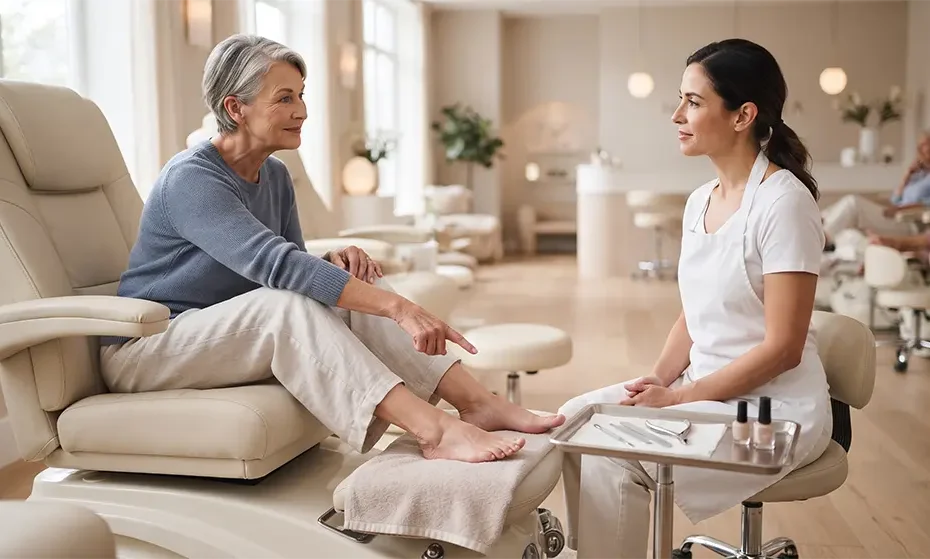
Pedicures can be risky for neuropathy patients because reduced sensation can hide cuts, burns, aggressive filing, ingrown nail irritation, and infection risk. This does not mean every patient must avoid nail care, but it does mean foot safety comes first. Patients should communicate clearly, avoid aggressive trimming, protect skin, and inspect feet afterward.
- Neuropathy can make nail and skin injuries less painful, so damage may go unnoticed.
- Aggressive callus removal, hot water, sharp tools, and cuticle cutting can increase risk.
- Safer foot care plus the Dr. Alfonso Neuropathy Treatment Protocol can help protect long-term foot health.
Last updated: April 14, 2026
Reviewed by: Neuropathy Relief Center of Miami team
Pedicures are common in South Florida. In Miami, Fort Lauderdale, Miami-Dade County, Broward County, and the Florida Keys, people wear sandals year-round, go to the beach, and want their feet to look clean and healthy. Visitors from the USA, Colombia, Chile, Argentina, Mexico, and the Caribbean often get pedicures before or during travel.
But neuropathy changes the safety rules.
Patients often say:
- “They cut too close and I didn’t feel it.”
- “The water was too hot.”
- “They filed my callus too deep.”
- “My toe got red after a pedicure.”
- “I didn’t notice a cut until later.”
This blog is educational. If you have diabetes, circulation problems, open wounds, infection, ingrown toenails, or severe numbness, ask your provider or podiatrist before getting salon foot care.
Why pedicures can be risky with neuropathy
Neuropathy reduces protective sensation. That means the normal warning signals pain, heat, pressure, sharpness may not work properly.
You may not feel a cut

A small nick from clippers, a file, or cuticle tools can become a bigger problem if sensation is reduced.
You may not feel water temperature accurately
Hot foot baths can burn skin if your feet cannot accurately sense temperature.
Callus removal can go too far
Calluses are pressure signs. Aggressive removal can expose fragile skin, create soreness, or cause an open area.
Infection risk matters
Tools, foot baths, and skin breaks can increase infection risk, especially for patients with diabetes or impaired healing.
What to tell the nail salon
Before the pedicure begins, say clearly:
“I have reduced sensation in my feet. Please do not cut my skin, cut my cuticles, use sharp tools on calluses, or make the water hot.”
This simple statement matters.
Also ask:
- Please keep the water warm, not hot.
- Please do not cut cuticles.
- Please trim nails straight across.
- Please do not dig into corners.
- Please do not shave calluses.
- Please stop if skin becomes red.
What to avoid during pedicures
Avoid sharp callus blades
Callus razors or blades can be dangerous for neuropathy patients.
Avoid aggressive cuticle cutting
Cuticles protect the nail fold. Cutting them can create entry points for infection.
Avoid deep corner digging
Digging into nail corners may trigger ingrown nail problems or skin injury.
Avoid very hot water
Temperature safety is essential when sensation is reduced.
Avoid pedicures if skin is open
Do not get a pedicure over cracks, wounds, blisters, drainage, or infection signs.
Safer nail care habits
If you trim nails yourself:
- trim after washing when nails are softer
- cut straight across
- avoid cutting too short
- use good lighting
- use a mirror if needed
- do not dig into corners
- ask for professional help if vision, mobility, or sensation is poor
For some neuropathy patients, medical foot care is safer than salon foot care.
Why calluses should not be aggressively removed
A callus tells you pressure is happening. Removing the callus without correcting the pressure is like removing the warning light without fixing the problem.
If calluses return quickly, evaluate:
- shoes
- toe box width
- gait pattern
- swelling
- sandal straps
- barefoot walking
- pressure points
After-pedicure foot check
After a pedicure, inspect:
- around toenails
- cuticle areas
- heels
- callus areas
- between toes
- under toes
- any red or tender spots
Check again the next day. Some irritation appears later.
How the Dr. Alfonso Neuropathy Treatment Protocol helps
The Dr. Alfonso Neuropathy Treatment Protocol supports:
- 🩸 Microcirculation and tissue resilience
- ⚡ Nerve signaling stability and repair support
- 🌿 Inflammation and oxidative stress reduction
- 🧠 Metabolic foundations that influence healing
Improving nerve function may help restore better protective awareness over time. But salon safety must start immediately because cuts, burns, and pressure injuries can occur quickly.
When to seek medical care
Seek care if you notice:
- redness spreading
- swelling
- warmth
- drainage
- odor
- open skin
- bleeding
- increasing pain
- a nail corner becoming infected
Do not wait for severe pain. Neuropathy may reduce pain even when the problem is serious.
FAQs
Are pedicures safe with neuropathy?
They can be risky. Patients need to avoid sharp tools, hot water, aggressive callus removal, and cuticle cutting.
What should I tell the nail salon?
Tell them you have reduced sensation and ask them not to cut skin, cut cuticles, use hot water, or shave calluses.
Should neuropathy patients remove calluses?
Calluses should be managed carefully, preferably by a trained professional if sensation is reduced.
Can neuropathy treatment improve foot safety?
Many patients improve as nerve signaling and microcirculation improve, but safe foot-care habits remain essential.
References
- CDC: Foot care and daily inspection guidance for reduced sensation
- American Diabetes Association: Foot care and neuropathy education
Clinic: Neuropathy Relief Center of Miami
Address: 8585 Sunset Drive, Suite 104, Miami, FL 33143
Call: 305-274-7475
Learn more: Neuropathy Treatment Miami
Book your consultation today: Appointments

Sincerely Yours for Health,
Dr. Rodolfo Alfonso, D.C.
8585 Sunset Drive,
STE 104
Miami, FL 33143
Ph: 305-275.7475
www.neuropathyreliefmia