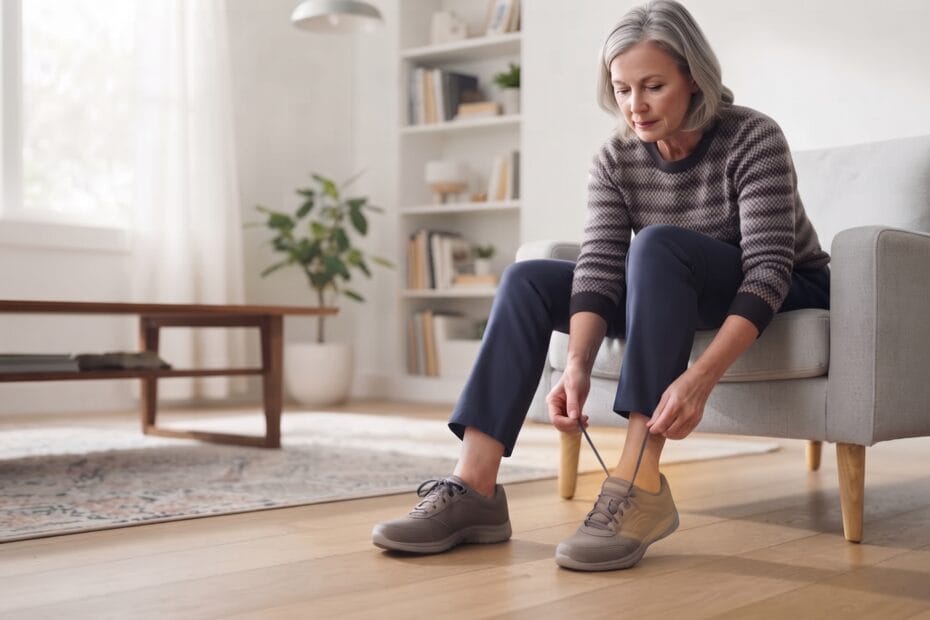
Shoes can fit correctly in length and width yet still create problems if the laces are pulled too tightly across the top of the foot. Neuropathy patients may be particularly sensitive to pressure or may have reduced sensation and fail to notice excessive pressure until redness, numbness, or irritation appears. Swelling during the day can make the same lacing pattern progressively tighter. Adjusting how shoes are laced may reduce an unnecessary daily trigger.
- Shoe fit includes lacing pressure, not just shoe size.
- Tight laces may create focal pressure across the top of the foot.
- End-of-day swelling can make morning lacing too restrictive later.
- Neuropathy can either amplify pressure sensations or reduce awareness of excessive pressure.
- Foot inspection remains important even when the shoe does not hurt.
Last updated: September 22, 2026
Reviewed by: Neuropathy Relief Center of Miami clinical team
Sometimes the problem is not the shoe.
It is how the shoe is tied.
Patients often tell us:
- “The top of my foot burns in sneakers.”
- “My foot feels better when I loosen the laces.”
- “I get numbness underneath the laces.”
- “My shoes are the right size, but they still feel tight.”
- “By afternoon I have deep lace marks.”
- “I loosen my shoes and the pressure improves.”
This is a useful clue.
At the Neuropathy Relief Center of Miami, we encourage patients to investigate seemingly small daily triggers because neuropathic feet can respond very differently to pressure.
Why the Top of the Foot Is Sensitive to Lacing
Shoelaces create downward pressure across the upper surface of the foot.
That region contains:
- skin
- tendons
- small nerves
- blood vessels
- bony structures with relatively little padding
Laces that are excessively tight can concentrate pressure over a small area.
If the foot is already sensitive, that pressure may be enough to trigger symptoms.
Neuropathy Can Create Two Opposite Problems
Neuropathy is not always simply “numbness.”
Some patients develop hypersensitivity.
They may experience:
- burning from light pressure
- discomfort from socks
- pain from bed sheets
- intolerance to shoe contact
Other patients have reduced sensation.
They may not realize that laces are creating too much pressure.
Both scenarios matter.
Why Morning Lacing Can Become Too Tight Later
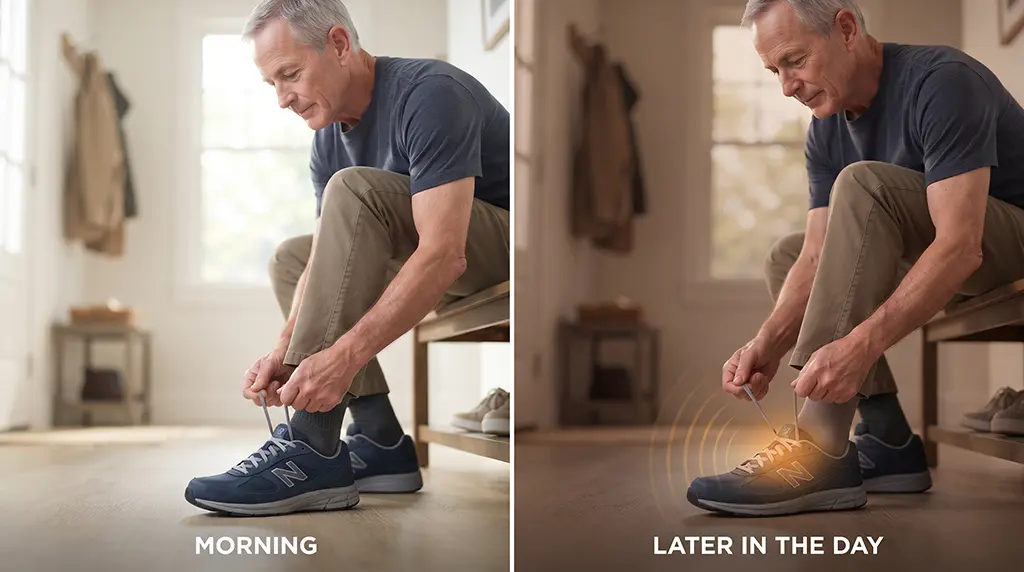
Remember the end-of-day swelling problem.
A patient ties shoes comfortably at 7:00 a.m.
By 3:00 p.m.:
- the feet may be slightly larger
- socks may leave deeper marks
- the shoe upper may press more firmly
- the original lace tension may become excessive
The patient may then experience:
- numbness
- tingling
- burning
- pressure
- visible lace marks
Loosening the shoe may provide relief.
Lacing Should Secure the Foot Without Compressing It
The goal is not loose shoes.
Shoes that move excessively can create:
- friction
- instability
- blisters
- heel movement
- toe gripping
Instead, the goal is appropriate tension.
The shoe should remain attached to the foot without squeezing it.
Alternative Lacing Patterns
Depending on shoe design, certain lacing approaches can reduce pressure over sensitive areas.
Possible strategies include:
- loosening specific eyelets
- skipping an eyelet over a tender area
- using elastic laces
- adjusting tension throughout the day
- choosing shoes with more upper-foot volume
Patients with major foot deformity, swelling, diabetes-related foot risk, or significant sensation loss may benefit from professional footwear assessment.
Look at the Foot After Removing the Shoe
After a long walking day, inspect the top of the foot.
Look for:
- lace-shaped redness
- deep indentations
- swelling
- blisters
- skin irritation
- unusual color
- pressure marks that persist
If you have neuropathy, absence of pain does not guarantee absence of pressure.
A Common Mistake: Tightening Shoes to Improve Balance
A patient who feels unstable may tighten the shoes aggressively because tighter feels more secure.
But there is a difference between:
supportive
and
compressive.
If the foot is becoming numb or visibly marked, tightening further is not the solution.
A more stable shoe design may be necessary.
How the Dr. Alfonso Neuropathy Treatment Protocol Fits In
Footwear changes remove unnecessary external irritation.
The Dr. Alfonso Neuropathy Treatment Protocol is designed to address the underlying peripheral nerve environment by focusing on:
- 🩸 microcirculation
- ⚡ nerve signaling and recovery support
- 🌿 inflammation and oxidative stress
- 🧠 metabolic factors that influence nerve health
This is part of our broader approach:
Support the nerve while reducing the things that repeatedly irritate it.
When to Seek Evaluation
Seek evaluation if:
- footwear increasingly triggers symptoms
- numbness persists after removing shoes
- pressure marks are severe
- swelling is worsening
- one foot behaves differently than the other
- wounds or blisters develop
- walking tolerance is decreasing
- you cannot find footwear that is comfortable
FAQs
Can tight shoelaces make my foot numb?
Excessive pressure from footwear can irritate or compress tissues and may contribute to numbness or tingling.
Why do my shoes become uncomfortable later in the day?
Changes in foot volume and swelling can make the same shoe and lace tension feel tighter later.
Should neuropathy shoes be loose?
No. Footwear should be secure and properly fitted without creating excessive focal pressure.
Can different lacing techniques help?
Yes. Adjusting lace tension or reducing pressure over sensitive areas can help some patients.
References
- Mayo Clinic: Peripheral Neuropathy – Symptoms and Causes
- Mayo Clinic: Peripheral Neuropathy -Diagnosis and Treatment
- CDC: Foot-care and footwear safety guidance
Clinic: Neuropathy Relief Center of Miami
Address: 8585 Sunset Drive, Suite 104, Miami, FL 33143
Call: 305-274-7475
Learn more: Neuropathy Treatment Miami
Book your consultation today: Appointments

Sincerely Yours for Health,
Dr. Rodolfo Alfonso, D.C.
8585 Sunset Drive,
STE 104
Miami, FL 33143
Ph: 305-275.7475
www.neuropathyreliefmia