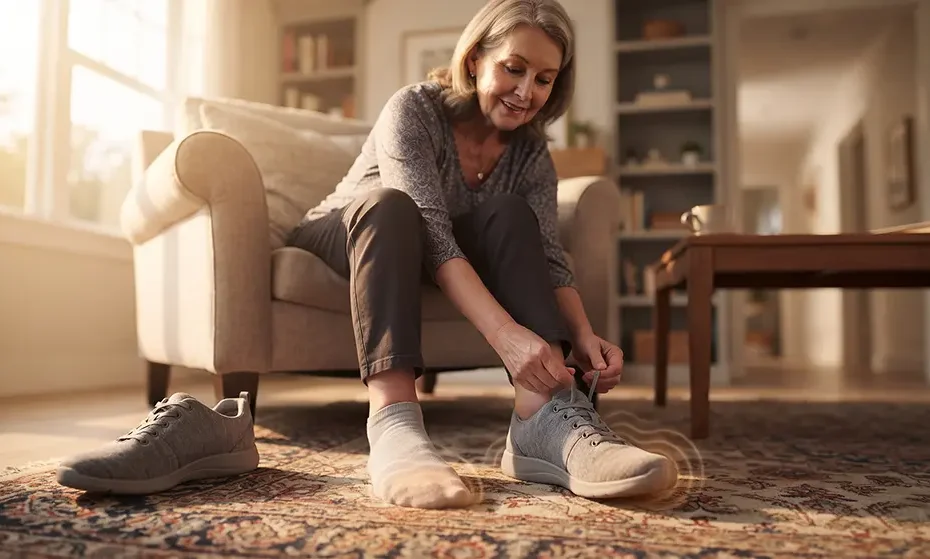
Many neuropathy patients notice that their shoes fit comfortably in the morning but become tighter as the day progresses. By evening, the feet may feel swollen, burning, numb, heavy, or unusually sensitive. Swelling itself does not automatically mean neuropathy is getting worse, but increased tissue pressure can amplify symptoms in already sensitive nerves and make footwear pressure more significant. Understanding what triggers end-of-day swelling can help patients protect their feet and recognize when swelling deserves medical evaluation.
- Feet and ankles may become more swollen after prolonged standing, sitting, travel, heat, or long activity days.
- Swelling can make otherwise comfortable shoes and socks create additional pressure.
- Neuropathy can reduce protective sensation, so pressure marks may be present without significant pain.
- New, severe, one-sided, or unexplained swelling needs medical evaluation rather than being assumed to be neuropathy.
- The Dr. Alfonso Neuropathy Treatment Protocol is designed to support peripheral nerve health while daily habits reduce unnecessary foot stress.
Last updated: September 22, 2026
Reviewed by: Neuropathy Relief Center of Miami clinical team
Your shoes fit perfectly when you leave the house.
By 5:00 p.m., they feel completely different.
Patients often tell us:
- “My feet get bigger by the end of the day.”
- “My shoes start squeezing my toes.”
- “The burning gets worse at night.”
- “My sock marks are much deeper in the evening.”
- “My feet feel heavy after I stand all day.”
- “I wake up better and progressively get worse throughout the day.”
At the Neuropathy Relief Center of Miami, this is a common pattern we discuss with patients from Miami, Miami Beach, Fort Lauderdale, Miami-Dade County, Broward County, and the Florida Keys, as well as patients traveling from elsewhere in Florida, the USA, Colombia, Chile, Argentina, Mexico, and the Caribbean.
The important point is that neuropathy symptoms do not exist in isolation.
What happens to the feet throughout the day can influence how those damaged or irritated peripheral nerves feel.
Why Feet Can Be Different at Night Than in the Morning
The lower legs and feet spend much of the day below the heart.
Depending on the individual, factors such as:
- prolonged standing
- prolonged sitting
- heat
- travel
- reduced movement
- dietary sodium
- certain medications
- vascular or medical conditions
may contribute to fluid accumulation in the lower extremities.
That can change the way shoes fit.
A shoe that provides adequate room at breakfast may create much more pressure after eight or ten hours.
For someone with normal sensation, that pressure usually becomes uncomfortable enough to demand attention.
With neuropathy, the warning system may be less reliable.
Swelling Plus Neuropathy Can Create a Pressure Problem
Neuropathy may produce:
- numbness
- burning
- tingling
- hypersensitivity
- reduced pressure sensation
- tight-sock sensations
Now add swelling.
The foot occupies more space inside the shoe.
Pressure can increase around:
- the toes
- ball of the foot
- sides of the foot
- top of the foot
- heel
- ankle
That may explain why a patient says:
“The shoes didn’t bother me this morning, but by evening I couldn’t wait to take them off.”
Why Burning May Become Worse at Night
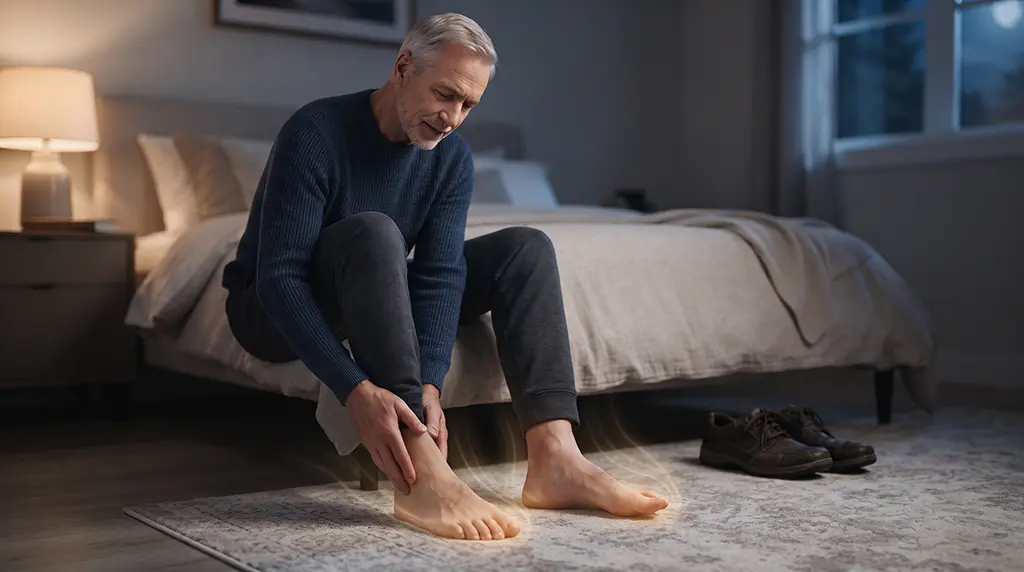
Several factors can stack together throughout the day:
- The patient walks or stands for hours.
- The feet experience repetitive pressure.
- Mild swelling develops.
- Shoes become tighter.
- Nerves receive repeated mechanical stimulation.
- The patient finally sits or lies down.
- Burning becomes much more noticeable.
The evening flare does not necessarily mean the damage suddenly worsened at bedtime.
The symptoms may represent the accumulation of an entire day’s load.
The Sock-Mark Clue
Take your socks off and look at the skin.
Do you see:
- deep elastic lines?
- indentations?
- redness?
- swelling above the sock?
- pressure around the ankle?
- irritated areas?
These can provide useful clues.
A sock can feel “fine” while you are wearing it and still leave significant pressure marks.
For patients with reduced sensation, visual inspection is important.
Shoes Need Enough Room for the Whole Day
When choosing shoes, consider how your feet behave later in the day—not only how they feel when you first put them on.
Helpful features may include:
- adequate toe-box width
- enough depth
- adjustable lacing or straps
- stable soles
- cushioning
- no internal pressure points
- secure fit without excessive compression
A shoe should be secure without squeezing the foot.
South Florida Adds Another Factor: Heat
Patients in Miami, Miami Beach, Fort Lauderdale, Broward, and the Florida Keys spend much of the year in warm conditions.
Heat can change how the legs and feet feel during:
- outdoor walking
- beach activities
- errands
- theme parks
- sporting events
- travel
- outdoor restaurants
A patient may combine heat exposure with long walking and then put swollen feet back into shoes for several more hours.
That can produce a significant nighttime flare.
What You Can Do During the Day
Depending on your medical condition and provider recommendations:
- avoid remaining completely still for very long periods
- move the ankles periodically
- change position throughout the day
- wear properly fitted shoes
- avoid excessively tight socks
- inspect the feet after long activity
- keep track of which activities increase swelling
- avoid forcing swollen feet into tight shoes
If swelling is a regular problem, discuss the cause with your healthcare provider.
Not Every Swollen Foot Is “Just Neuropathy”
This point is important.
Neuropathy can coexist with other medical conditions.
Seek medical evaluation for swelling that is:
- new
- severe
- rapidly increasing
- predominantly on one side
- accompanied by significant redness or warmth
- accompanied by calf pain
- associated with shortness of breath or chest symptoms
- associated with wounds or infection
Do not automatically attribute new swelling to neuropathy.
How the Dr. Alfonso Neuropathy Treatment Protocol Fits In
Footwear and activity modifications reduce external irritation.
The Dr. Alfonso Neuropathy Treatment Protocol is designed to address the broader environment affecting damaged peripheral nerves, with emphasis on:
- 🩸 supporting microcirculation
- ⚡ supporting nerve signaling and nerve recovery
- 🌿 addressing inflammation and oxidative stress
- 🧠 addressing metabolic factors that may influence peripheral nerve health
The goal is not merely to cover up symptoms.
It is to identify the patient’s neuropathy pattern, address contributing factors where possible, and improve function and quality of life.
When to Schedule an Evaluation
Consider an evaluation if:
- burning consistently increases by evening
- footwear tolerance is decreasing
- swelling repeatedly worsens symptoms
- numbness is spreading
- you are developing pressure marks
- balance is changing
- walking tolerance is declining
- symptoms are interfering with sleep
FAQs
Can swelling make neuropathy feel worse?
It can. Increased tissue and footwear pressure may aggravate symptoms in already sensitive feet.
Why do my shoes feel tighter at night?
Foot and ankle volume can change throughout the day, particularly after long periods of sitting, standing, travel, or heat exposure.
Is swelling caused by neuropathy?
Sometimes neuropathy-related factors may contribute, but swelling has many possible causes. Persistent or significant swelling should be evaluated.
Should I buy shoes larger than normal?
Not automatically. Footwear should be properly fitted and secure while providing adequate room without excessive pressure.
References
- Mayo Clinic: Peripheral Neuropathy – Symptoms and Causes
- Mayo Clinic: Peripheral Neuropathy – Diagnosis and Treatment
- NINDS/NIH: Peripheral Neuropathy
Clinic: Neuropathy Relief Center of Miami
Address: 8585 Sunset Drive, Suite 104, Miami, FL 33143
Call: 305-274-7475
Learn more: Neuropathy Treatment Miami
Book your consultation today: Appointments

Sincerely Yours for Health,
Dr. Rodolfo Alfonso, D.C.
8585 Sunset Drive,
STE 104
Miami, FL 33143
Ph: 305-275.7475
www.neuropathyreliefmia