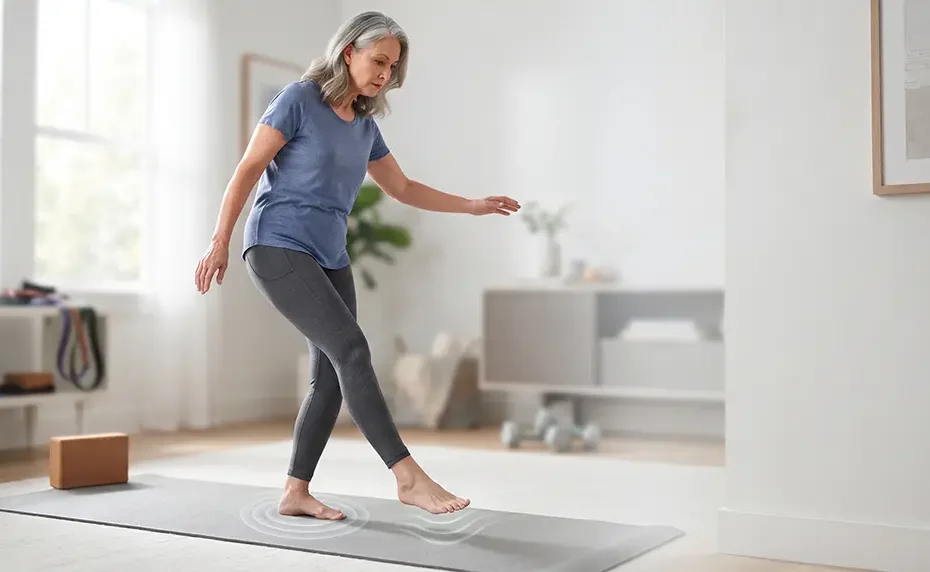
Yoga, stretching, Pilates, balance exercises, and home workouts are often performed barefoot. For neuropathy patients, reduced foot sensation can make it harder to judge pressure, foot placement, temperature, and balance. Barefoot exercise is not automatically unsafe, but the environment, severity of sensation loss, skin condition, and type of exercise matter.
- Barefoot exercise removes a layer of protection between the foot and floor.
- Neuropathy can reduce awareness of foot position and pressure distribution.
- Balance exercises may become significantly harder when visual support is reduced.
- The Dr. Alfonso Neuropathy Treatment Protocol supports damaged peripheral nerves while exercise is adapted to the patient’s functional ability.
Last updated: September 15, 2026
Reviewed by: Neuropathy Relief Center of Miami team
Exercise is important for maintaining strength, mobility, balance, and independence.
But many exercise programs assume the feet have normal sensation.
Yoga, Pilates, stretching, balance work, resistance training, and home workouts are often performed barefoot.
Patients with neuropathy sometimes notice:
- “I can’t tell where my feet are.”
- “My balance is worse barefoot.”
- “I feel every hard spot in the floor.”
- “My feet burn after yoga.”
- “I wobble when I close my eyes.”
- “I don’t know whether I should exercise barefoot.”
At the Neuropathy Relief Center of Miami, we encourage appropriate activity while recognizing that damaged peripheral nerves can change the way exercise needs to be performed.
Why the feet matter for balance
The soles of the feet provide constant sensory information to the brain.
They help tell you:
- where your weight is located
- whether you are leaning
- how much pressure is under each foot
- whether the surface is hard or soft
- whether the body is moving
Neuropathy may reduce this feedback.
The brain then has to rely more heavily on:
- vision
- inner-ear balance
- joint position
- muscle control
This is why some patients are much less stable when they close their eyes.
Barefoot exercise removes protection
Shoes provide more than cushioning.
They can also provide:
- traction
- stability
- protection from dropped objects
- protection from rough surfaces
- temperature protection
- pressure distribution
Removing shoes may increase ground feedback for someone with healthy sensation. For someone with significant numbness, the experience can be very different.
Yoga and balance positions
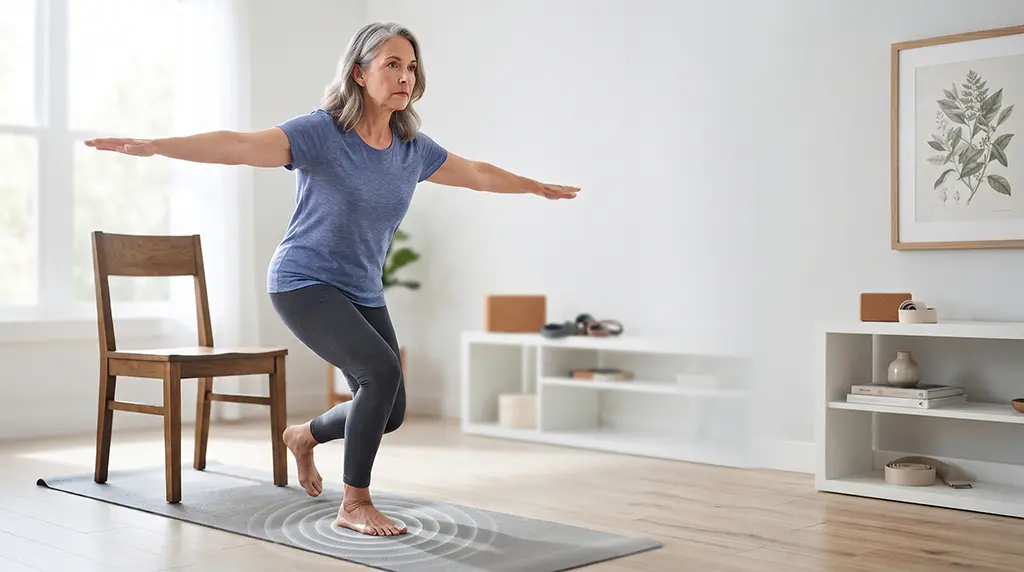
Yoga may involve:
- single-leg standing
- narrow stance positions
- weight through the toes
- prolonged foot pressure
- rapid floor-to-standing transitions
- closed-eye balance
Those movements may be considerably harder when foot sensation is reduced.
Patients do not necessarily need to avoid yoga. They may need to modify it.
Possible modifications include:
- practice near a stable support
- avoid closing the eyes during difficult balance positions
- use a non-slip surface
- shorten single-leg holds
- transition slowly
- inspect feet afterward
Home resistance training
Neuropathy patients should also think about foot safety during resistance training.
Risks include:
- dropping dumbbells
- stepping on equipment
- unstable mats
- resistance bands under the feet
- kettlebells near the toes
- balance loss during loaded movement
Protective footwear may be preferable depending on the exercise.
Hard tile versus exercise mats
South Florida homes commonly have tile floors.
Barefoot exercise on hard tile may increase:
- heel pressure
- forefoot pressure
- discomfort
- slipping
- skin stress
A secure exercise mat may provide cushioning, but a mat with curled edges can itself become a trip hazard.
Check the entire setup.
Exercise is still important
The answer is not simply “stop exercising.”
Appropriately selected activity can support:
- strength
- walking ability
- balance
- metabolic health
- cardiovascular health
- independence
The objective is to make the environment safer.
Before exercising
Check:
- floor for debris
- mat for curled edges
- feet for wounds
- footwear choice
- lighting
- nearby support
- fatigue level
- current balance
After exercising
Inspect:
- heels
- toes
- soles
- pressure areas
- redness
- blisters
- cuts
- new burning locations
Reduced pain does not guarantee that the skin was not stressed.
How the Dr. Alfonso Neuropathy Treatment Protocol helps
Exercise supports the whole body, but neuropathy care should also address the damaged peripheral nerves.
The Dr. Alfonso Neuropathy Treatment Protocol focuses on:
- 🩸 Microcirculation
- ⚡ Nerve signaling stability and repair support
- 🌿 Inflammation and oxidative stress reduction
- 🧠 Metabolic foundations that affect nerve function and recovery
As patients improve, activity can be progressed based on their individual function, balance, and safety.
When to seek evaluation
Seek evaluation if:
- balance is deteriorating
- you cannot feel foot placement
- one foot drags
- you repeatedly stumble
- exercise produces prolonged burning
- wounds develop
- weakness is worsening
- you have falls or near-falls
FAQs
Can I do yoga if I have neuropathy?
Many patients can, but balance and foot-safety modifications may be necessary depending on severity.
Should I exercise barefoot?
That depends on sensation, skin condition, balance, flooring, and the exercise being performed. Significant loss of protective sensation generally warrants additional foot protection.
Why is my balance worse when I close my eyes?
When foot sensation is reduced, the brain often relies more heavily on vision for balance.
Is exercise good for neuropathy?
Appropriate physical activity can support general health, strength, mobility, and metabolic health. Exercise plans should be individualized when weakness, wounds, or significant balance problems are present.
References
- NINDS/NIH: Peripheral Neuropathy
- CDC: Foot protection and daily inspection guidance
- CDC: Physical activity and diabetes health guidance
Clinic: Neuropathy Relief Center of Miami
Address: 8585 Sunset Drive, Suite 104, Miami, FL 33143
Call: 305-274-7475
Learn more: Neuropathy Treatment Miami
Book your consultation today: Appointments

Sincerely Yours for Health,
Dr. Rodolfo Alfonso, D.C.
8585 Sunset Drive,
STE 104
Miami, FL 33143
Ph: 305-275.7475
www.neuropathyreliefmia