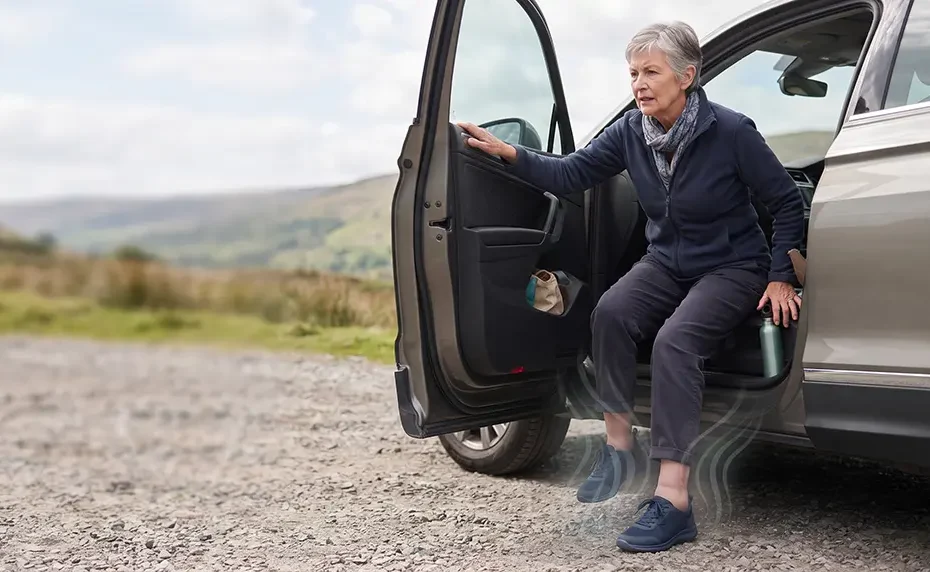
Long car rides can worsen neuropathy symptoms because the legs remain relatively still, the feet may swell inside shoes, the knees and hips stay bent, and nerves are exposed to prolonged pressure. When the trip ends, numb feet and stiff legs may also increase balance risk during the first few steps. Strategic movement breaks, footwear, hydration, and symptom monitoring can make road travel safer.
- Prolonged sitting can increase stiffness, pressure, and swelling in the legs and feet.
- Shoes that fit at the beginning of a trip may feel tighter several hours later.
- Numb feet can make the first steps after a long drive less stable.
- The Dr. Alfonso Neuropathy Treatment Protocol supports nerve function while travel strategies reduce outside triggers.
Last updated: September 15, 2026
Reviewed by: Neuropathy Relief Center of Miami team
Road trips are common throughout Florida.
Patients drive between Miami, Fort Lauderdale, the Florida Keys, Orlando, Naples, Tampa, and other destinations, often remaining in the vehicle for hours.
For someone with neuropathy, the challenge is not only driving.
It is sitting.
Patients often say:
- “My feet go numb in the car.”
- “After two hours my shoes feel tight.”
- “My legs feel heavy when I get out.”
- “My feet burn that night after a road trip.”
- “The first few steps after the car feel unstable.”
- “Long rides make my neuropathy much worse.”
At the Neuropathy Relief Center of Miami, we also see patients traveling from the USA, Colombia, Chile, Argentina, Mexico, and the Caribbean who spend long periods sitting during flights, rideshares, tours, and road travel.
What happens during prolonged sitting?
During a long trip:
- ankle movement decreases
- calf muscle pumping decreases
- knees remain bent
- shoes stay on for extended periods
- the seat places pressure behind the thighs
- posture remains relatively fixed
For some patients, this contributes to swelling and increased nerve symptoms.
The shoe-pressure problem
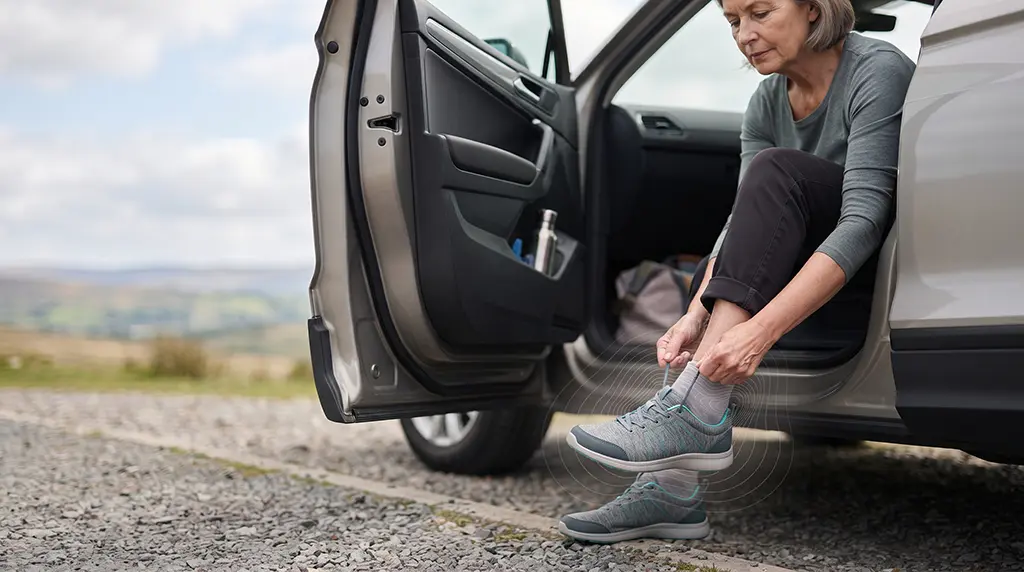
A shoe that fits perfectly at 8 a.m. may not feel the same after hours of sitting.
As the feet swell, the shoe can create additional pressure around:
- toes
- forefoot
- heel
- ankle
- sock bands
This may contribute to:
- burning
- numbness
- tight-sock sensation
- pressure marks
- tingling
Check how shoes feel throughout a long travel day.
Passenger versus driver
Drivers and passengers face slightly different issues.
Drivers
Drivers must continuously use:
- accelerator
- brake
- ankle control
- foot position
Reduced pedal sensation or weakness deserves medical evaluation because driving safety may be affected.
Passengers
Passengers may remain almost completely still for long periods, increasing stiffness and swelling.
Both need movement breaks.
Why the first steps can feel strange
After several hours sitting, patients may stand and immediately start walking.
But the feet may be:
- numb
- swollen
- stiff
- temporarily less responsive
The patient may also feel lightheaded from standing quickly.
A safer sequence is:
- Exit carefully.
- Stand for a moment.
- Confirm your balance.
- Move the ankles.
- Begin walking slowly.
Road-trip strategy
For long drives:
- schedule regular movement breaks
- move ankles periodically
- wear proven footwear
- avoid tight socks
- hydrate appropriately
- avoid excessive alcohol
- inspect feet after long travel
- do not leave shoes on if they are creating significant pressure
- avoid jumping immediately into strenuous activity after arrival
A warning about one-sided swelling
Not every swollen leg after travel is neuropathy.
Prompt medical evaluation is especially important for new or significant one-sided leg swelling, redness, warmth, calf pain, chest pain, or shortness of breath.
Those symptoms require medical assessment rather than assuming they are simply a neuropathy flare.
How the Dr. Alfonso Neuropathy Treatment Protocol helps
Travel modifications reduce the environmental stress placed on the legs and feet.
The Dr. Alfonso Neuropathy Treatment Protocol supports the underlying nerve environment through:
- 🩸 Microcirculation
- ⚡ Nerve signaling stability and repair support
- 🌿 Inflammation and oxidative stress reduction
- 🧠 Metabolic foundations influencing damaged peripheral nerves
As nerve health and functional tolerance improve, many patients report greater confidence during travel and everyday activities.
When to seek evaluation
Seek evaluation if:
- sitting consistently increases numbness
- driving pedal sensation changes
- symptoms last for days after travel
- balance is poor when exiting the car
- swelling is increasing
- numbness is spreading
- weakness appears
- walking tolerance is declining
FAQs
Can long car rides worsen neuropathy?
Yes. Prolonged sitting, reduced movement, swelling, and shoe pressure can worsen symptoms in some patients.
Why are my feet numb when I get out of the car?
Several factors may contribute, including prolonged posture, pressure, existing neuropathy, and reduced movement.
How often should I stop on a road trip?
Individual needs vary. Patients with neuropathy or other medical conditions should discuss appropriate travel-break frequency with their healthcare provider.
Can neuropathy affect driving?
Yes. Significant numbness, weakness, or reduced awareness of pedal position can affect driving safety and deserves evaluation.
References
- NINDS/NIH: Peripheral Neuropathy
- MedlinePlus: Peripheral Neuropathy
- CDC: Foot care and physical activity principles
Clinic: Neuropathy Relief Center of Miami
Address: 8585 Sunset Drive, Suite 104, Miami, FL 33143
Call: 305-274-7475