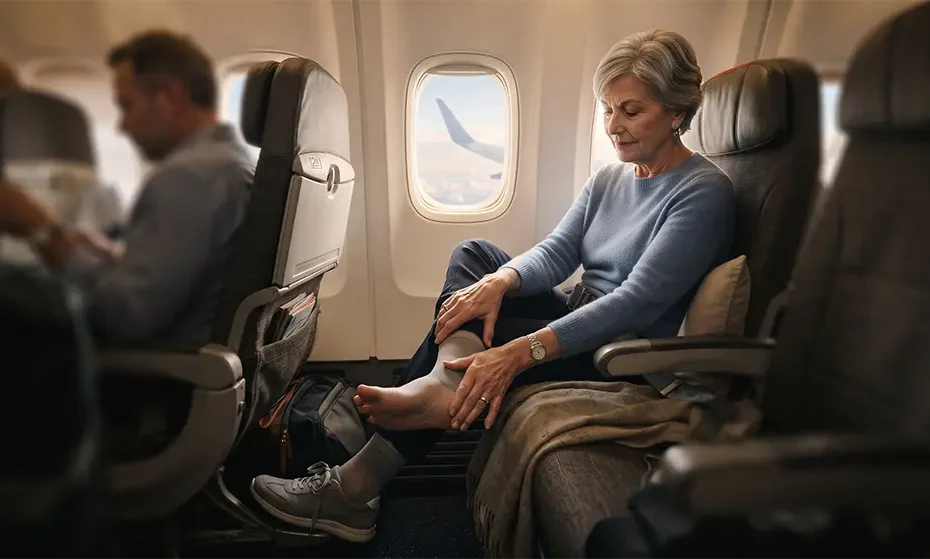
Long flights can trigger neuropathy symptoms because sitting reduces the calf pump, swelling increases pressure around sensitive nerves, cabin air causes dehydration, and travel disrupts sleep and meal timing. Many patients feel fine during the flight but experience burning, tingling, cramps, or numbness later that night. A smart travel plan can reduce flare intensity and protect your feet.
- Flights combine long sitting, swelling, dehydration, footwear pressure, and sleep disruption.
- Neuropathy symptoms may flare after travel, not necessarily during the flight.
- Movement breaks, safer footwear, foot checks, and the Dr. Alfonso Neuropathy Treatment Protocol can improve travel tolerance.
Last updated: April 14, 2026
Reviewed by: Neuropathy Relief Center of Miami team
Air travel can be stressful for anyone, but for neuropathy patients it can create a predictable flare pattern. Patients often say:
- “My feet burn after flights.”
- “My toes go numb on the plane.”
- “My shoes feel tight after travel.”
- “I’m okay during the flight, then I can’t sleep that night.”
- “Travel days make my neuropathy worse for two days.”
At the Neuropathy Relief Center of Miami, we see this in patients traveling through Miami, Fort Lauderdale, Miami-Dade County, Broward County, and the Florida Keys, and in visitors from the USA, Colombia, Chile, Argentina, Mexico, and the Caribbean. Miami is an international travel hub, so flight-related neuropathy flares are common.
This blog is educational. If you have sudden one-sided swelling, calf pain, chest pain, shortness of breath, fainting, or severe symptoms after travel, seek urgent medical evaluation.
Why flights trigger neuropathy symptoms
A flight is not just sitting. It is prolonged sitting, restricted space, altered circulation, dehydration, stress, disrupted routine, and footwear pressure all at once.
Long sitting reduces the calf pump
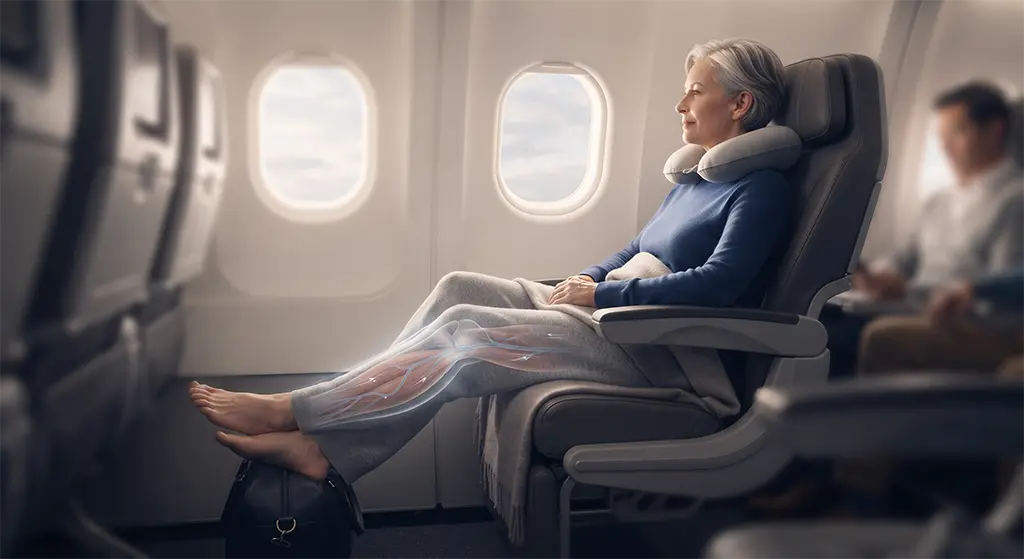
The calf muscles act like a pump. When you walk, they help move fluid and support circulation. On a plane, your feet may stay low and still for hours. That reduces pumping and can increase pooling in the feet and ankles.
For neuropathy patients, pooling and swelling matter because swelling increases tissue pressure around already-sensitive nerves.
Swelling tightens shoes
Feet often swell during flights. Shoes that felt comfortable at the airport may become tight mid-flight or after landing. Tight shoes can worsen:
- burning
- tingling
- toe numbness
- “tight sock” feeling
- forefoot pressure
- cramps
Cabin air and travel stress increase dehydration
Airplanes are dry. Travel also disrupts normal hydration habits. Dehydration can increase cramping and make nerve symptoms feel louder, especially in patients who already have heat sensitivity or muscle irritability.
Sleep disruption worsens nerve sensitivity
Travel days often mean early alarms, late arrivals, missed meals, alcohol, airport stress, and poor sleep. Poor sleep increases pain sensitivity and can make neuropathy symptoms feel worse the next day.
Why symptoms often flare after the flight
Many patients expect symptoms to happen during the flight. But neuropathy flares often show up later.
A typical pattern looks like this:
- Long airport walk
- Sitting at the gate
- Sitting on the plane
- Foot swelling and shoe pressure
- Delayed meal and hydration changes
- Arrival fatigue
- Burning or cramping at bedtime
By the time the patient lies down, swelling, fatigue, and stillness stack together. That is why burning may spike at night.
Flight footwear rules for neuropathy
Travel shoes should protect the foot and allow swelling.
Look for:
- roomy toe box
- stable sole
- secure heel
- breathable material
- no tight straps
- no narrow toe shape
- enough space for late-day swelling
Avoid wearing new shoes on travel days. New shoes plus neuropathy plus swelling is a bad combination.
Should neuropathy patients wear compression socks on flights?
Compression may help some patients with swelling, but it is not automatically right for everyone. If socks are too tight or poorly fitted, they can worsen numbness, burning, skin pressure, or toe discoloration.
Ask your provider if compression is appropriate, especially if you have diabetes, circulation concerns, wounds, severe swelling, or reduced sensation.
In-flight movement strategies
When safe and allowed:
- stand or walk briefly during longer flights
- do ankle pumps in your seat
- move toes gently
- avoid crossing legs for long periods
- shift foot position often
- avoid tight shoe laces or straps
Even small movement helps maintain circulation and reduce pressure buildup.
After-flight recovery routine
After landing:
- walk gently before sitting again
- inspect feet for redness, strap marks, blisters, or swelling
- elevate feet briefly if swollen
- hydrate earlier rather than chugging water at bedtime
- avoid tight socks if swelling is high
- use lighter bedding if heat triggers burning
How the Dr. Alfonso Neuropathy Treatment Protocol helps
The Dr. Alfonso Neuropathy Treatment Protocol supports the nerve environment by focusing on:
- 🩸 Microcirculation to the feet and legs
- ⚡ Nerve signaling stability and repair support
- 🌿 Inflammation and oxidative stress reduction
- 🧠 Metabolic foundations that influence nerve sensitivity and recovery
As nerve signaling and circulation support improve, many patients report better tolerance for travel days, fewer delayed flares, and faster recovery after flights.
When to seek evaluation
Seek evaluation if:
- flights consistently cause severe burning or numbness
- swelling is getting worse
- symptoms last more than 48 hours after travel
- wounds or hot spots appear after flights
- balance is worse after travel
- one leg becomes swollen, red, or painful
FAQs
Why do my feet burn after flying?
Flights combine long sitting, swelling, dehydration, shoe pressure, and sleep disruption, all of which can amplify neuropathy symptoms.
Should I take my shoes off during a flight?
Be careful. Feet may swell, making shoes hard to put back on. If you remove shoes, keep feet protected and inspect them after travel.
Are compression socks safe with neuropathy?
Sometimes, but they must be properly fitted and medically appropriate. Ask your provider if you have circulation issues, wounds, diabetes risk, or reduced sensation.
Can treatment improve travel tolerance?
Many patients improve as nerve signaling, microcirculation, and swelling response become more stable.
References
- NINDS: Peripheral Neuropathy overview
- CDC: Foot care and daily inspection guidance for reduced sensation
Clinic: Neuropathy Relief Center of Miami
Address: 8585 Sunset Drive, Suite 104, Miami, FL 33143
Call: 305-274-7475
Learn more: Neuropathy Treatment Miami
Book your consultation today: Appointments

Sincerely Yours for Health,
Dr. Rodolfo Alfonso, D.C.
8585 Sunset Drive,
STE 104
Miami, FL 33143
Ph: 305-275.7475
www.neuropathyreliefmia