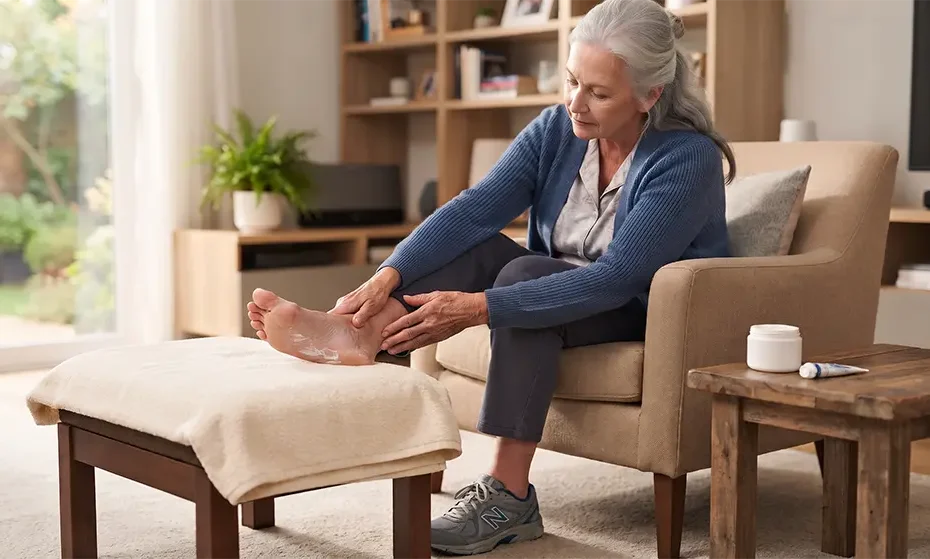
Dry, cracked heels are more than a cosmetic issue when neuropathy reduces protective sensation. Cracks can become entry points for infection, and hard skin can hide pressure damage. In hot, humid climates like Miami and the Florida Keys, daily inspection, safe moisturizing, footwear protection, and nerve-focused care are essential.
- Neuropathy can make skin cracks less painful, so damage may go unnoticed.
- Dry heels, calluses, and fissures can lead to wounds if pressure and skin care are ignored.
- The Dr. Alfonso Neuropathy Treatment Protocol supports nerve health while daily foot protection reduces skin risk.
Last updated: April 14, 2026
Reviewed by: Neuropathy Relief Center of Miami team
Dry heels are common. But when you have neuropathy, dry cracked heels are not just a skin issue. They can become a wound risk.
Patients often say:
- “My heels crack and I barely feel it.”
- “The skin looks dry, but it doesn’t hurt.”
- “I noticed blood on the sock.”
- “My callus split open.”
- “I thought it was just cosmetic.”
At the Neuropathy Relief Center of Miami, we see this in patients throughout Miami, Fort Lauderdale, Miami-Dade County, Broward County, and the Florida Keys, and in visitors from the USA, Colombia, Chile, Argentina, Mexico, and the Caribbean. South Florida creates a unique foot-care challenge because patients often wear sandals, walk barefoot on tile, sweat in humid weather, and expose heels to heat, sand, and friction.
This blog is educational. If you have an open wound, drainage, spreading redness, odor, fever, or diabetes-related foot risk, seek medical care promptly.
Why cracked heels matter with neuropathy
Neuropathy can reduce pain and pressure signals. That means a heel crack may grow deeper before you notice it. A fissure can become a pathway for bacteria, fungus, or inflammation.
Cracks can hide injury
A cracked heel may not hurt if protective sensation is reduced. Lack of pain does not mean lack of risk.
Hard skin increases pressure
Thick callused heel skin may act like a pressure point. When it splits, the crack can deepen with every step.
Humidity and sandals create friction
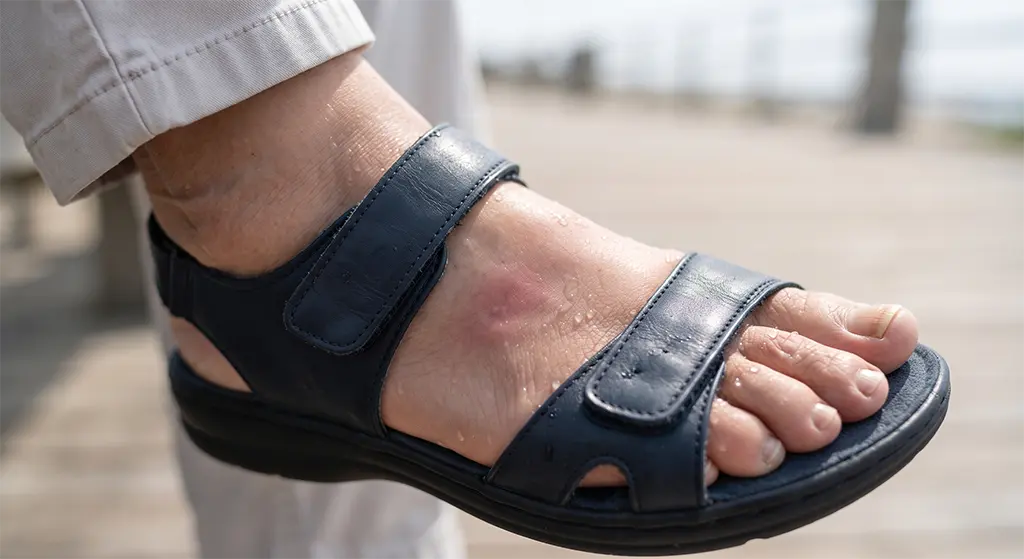
Open-back sandals allow heel skin to dry, thicken, and crack. Sweat and humidity can soften some areas while other areas become dry and brittle.
Why South Florida patients are at risk
In Miami, Fort Lauderdale, Broward, Miami-Dade, and the Florida Keys, daily habits often include:
- flip-flops and sandals
- barefoot tile floors
- beach walking
- hot pavement
- pool decks
- humid shoes
- frequent wet-dry cycles
These conditions make heel skin vulnerable. Visitors from Colombia, Chile, Argentina, Mexico, and the Caribbean may also walk more during travel and spend more time in sandals or at the beach.
Warning signs around cracked heels
Do not ignore:
- bleeding
- deep cracks
- redness around the crack
- warmth or swelling
- drainage
- odor
- increased pain or pressure
- skin turning dark or discolored
- cracks that keep reopening
If you have neuropathy, you should look, not just feel.
The daily heel check
Check your heels every day. Look at:
- outer heel edge
- back of heel
- bottom of heel
- callus areas
- cracks or fissures
- redness from shoes or sandals
Use a mirror or phone camera if needed.
Moisturizing safely
Moisturizing can help dry skin, but it must be done safely.
Apply to dry areas
Use moisturizer on dry heels and callused areas.
Avoid heavy moisture between toes
Moisture trapped between toes can increase fungal risk, especially in humid climates.
Do not aggressively cut skin
Avoid blades, razors, or deep trimming. A small cut can become a serious problem.
Be consistent
One heavy application once a week is less helpful than consistent daily skin care.
Footwear matters
Open-back sandals often worsen heel cracking because the heel slides and strikes with less support. Better options include:
- shoes with secure heel support
- cushioned soles
- breathable material
- stable sandals with a back strap
- socks that reduce friction when appropriate
A shoe that protects the heel can reduce cracking and pressure.
How the Dr. Alfonso Neuropathy Treatment Protocol helps
Skin care protects the surface. Neuropathy treatment supports the nerve environment underneath.
The Dr. Alfonso Neuropathy Treatment Protocol focuses on:
- 🩸 Microcirculation and tissue resilience
- ⚡ Nerve signaling stability and repair support
- 🌿 Inflammation and oxidative stress reduction
- 🧠 Metabolic foundations that influence healing
Improving nerve function can help restore better protective awareness over time. But daily skin protection must begin immediately.
When to seek professional foot care
Seek professional care if:
- heel cracks are deep
- skin bleeds
- cracks recur despite home care
- you have diabetes or circulation problems
- you cannot safely inspect your feet
- there is redness, drainage, odor, or swelling
Professional foot care is often safer than self-cutting thick skin.
FAQs
Are cracked heels dangerous with neuropathy?
They can be. Reduced sensation may hide deep cracks, pressure injury, or infection risk.
Should I cut cracked heel skin myself?
Avoid aggressive self-trimming, especially if you have neuropathy or diabetes risk.
What is the safest first step?
Daily inspection, consistent moisturizing of dry heel skin, and footwear that reduces friction.
Can neuropathy treatment help skin health?
Improved microcirculation and nerve function may support tissue resilience, but daily foot care remains essential.
References
- CDC: Foot care and daily inspection guidance for reduced sensation
- NINDS: Peripheral Neuropathy overview
Clinic: Neuropathy Relief Center of Miami
Address: 8585 Sunset Drive, Suite 104, Miami, FL 33143
Call: 305-274-7475
Learn more: Neuropathy Treatment Miami
Book your consultation today: Appointments

Sincerely Yours for Health,
Dr. Rodolfo Alfonso, D.C.
8585 Sunset Drive,
STE 104
Miami, FL 33143
Ph: 305-275.7475
www.neuropathyreliefmia