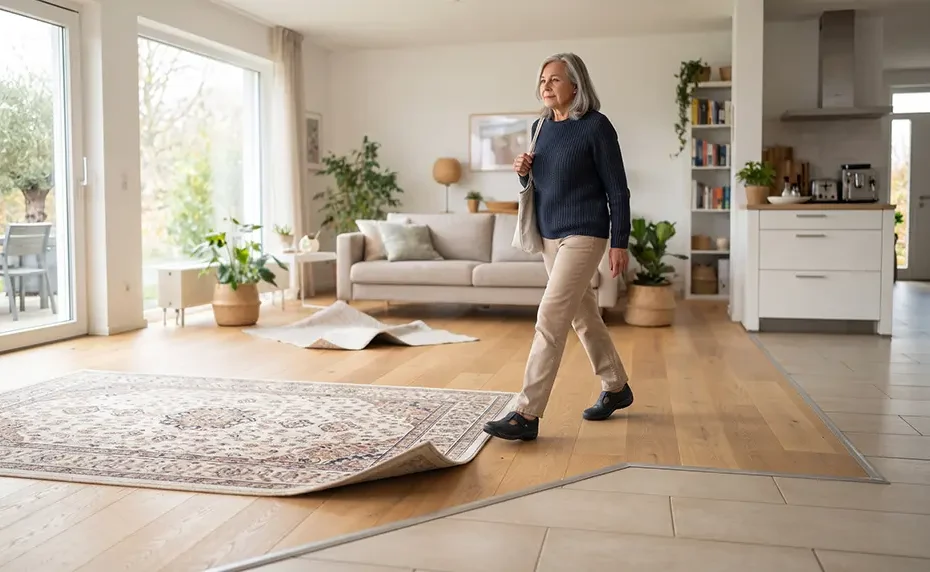
Area rugs, loose mats, bathroom rugs, hallway runners, and floor transitions can be dangerous for neuropathy patients because reduced foot sensation makes it harder to feel edges, folds, and uneven surfaces. A small rug edge can catch the toes and cause a serious fall. Home safety changes are part of neuropathy care because protecting mobility protects independence.
● Neuropathy reduces ground feedback, making rug edges and floor transitions more dangerous.
● Loose rugs and mats are common triggers for toe catching, stumbling, and falls.
● The Dr. Alfonso Neuropathy Treatment Protocol supports damaged peripheral nerves while home safety reduces immediate fall risk.
Last updated: April 14, 2026
Reviewed by: Neuropathy Relief Center of Miami team
A rug may seem harmless. But for neuropathy patients, a small rug edge can become a major fall risk.
Patients often say:
● “I caught my toe on the rug.”
● “I trip on the hallway runner.”
● “Bathroom mats make me nervous.”
● “I do not feel the edge until it is too late.”
● “My foot dragged on the rug.”
● “I almost fell in my own home.”
At the Neuropathy Relief Center of Miami, we see this in patients across Miami, Fort Lauderdale, Miami-Dade County, Broward County, and the Florida Keys, as well as visitors from the USA, Colombia, Chile, Argentina, Mexico, and the Caribbean. In South Florida, many homes and condos have tile floors with area rugs placed for comfort or decoration. That combination can be risky.
This blog is educational. If you have repeated falls, foot drop, sudden weakness, dizziness, or rapidly worsening balance, seek evaluation promptly.
Why rugs are risky with neuropathy
Neuropathy can damage peripheral nerves that tell the brain where the feet are and what the ground feels like. When foot feedback is reduced, small obstacles become more dangerous.
Rugs create risk through:
- raised edges
- curled corners
- loose backing
- sliding movement
- wrinkles
- thick pile
- color blending with the floor
- bathroom moisture
- hallway clutter
- transition strips
A healthy balance system may catch these quickly. A neuropathy patient may not respond in time.
Toe catching and foot drag
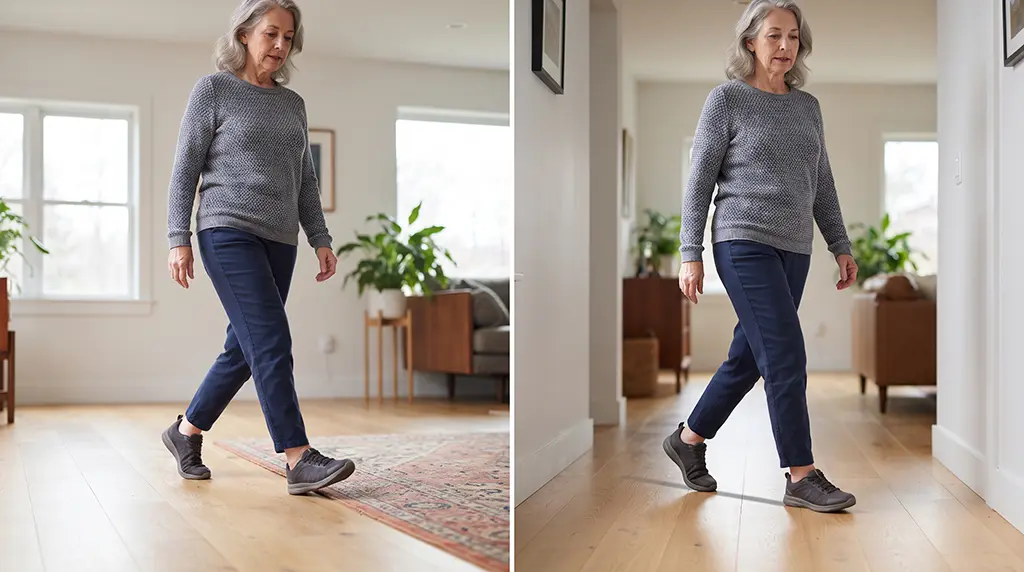
Some patients do not fully clear the toes while walking. This may happen because of numbness, weakness, fatigue, or early foot drop. A rug edge can catch the front of the shoe or toes.
Warning signs include:
● toe catching
● scuffed shoe fronts
● tripping on small edges
● foot slapping
● needing to look down constantly
● worse stumbling when tired
● more problems at night
These signs deserve attention before a serious fall occurs.
Bathroom mats are especially risky
Bathroom mats combine several hazards:
● water
● slippery tile
● loose fabric
● low lighting
● urgency
● barefoot walking
● nighttime trips
For neuropathy patients, bathroom mats should be non-slip, flat, and secure. If a mat moves, bunches, or curls, it should be replaced or removed.
Floor transitions
Many homes have transitions between tile, wood, carpet, rugs, patios, and thresholds. These changes require quick foot feedback.
Common risky areas include:
● bedroom to bathroom
● hallway to living room
● kitchen to laundry room
● patio doorway
● elevator thresholds
● hotel room entries
● balcony doors
If your feet are numb, these small changes can feel bigger than they look.
Home safety checklist
● Remove loose rugs in main walking paths
● Secure edges with proper non-slip backing
● Replace curled mats
● Avoid thick rugs in high-traffic areas
● Improve lighting
● Keep walking paths clear
● Wear stable house shoes
● Use nightlights
● Check bathroom mats frequently
● Avoid clutter near doorways
Why this matters for independence
A fall can change a patient’s life quickly. Hip injuries, wrist fractures, head injuries, back injuries, and fear of walking can reduce independence.
Removing a rug may seem simple, but it can prevent a major setback.
Home safety is not weakness. It is strategy.
How the Dr. Alfonso Neuropathy Treatment Protocol helps
The Dr. Alfonso Neuropathy Treatment Protocol supports damaged peripheral nerves and balance confidence by focusing on:
- 🩸 Microcirculation to the feet and legs
- ⚡ Nerve signaling stability and repair support
- 🌿 Inflammation and oxidative stress reduction
- 🧠 Metabolic foundations that influence nerve-muscle communication
As nerve signaling improves, many patients report better ground awareness. But fall-risk changes should start now, not later.
When to seek evaluation
Seek evaluation if:
● you trip on rugs or thresholds
● you catch your toes
● one foot drags
● balance is worse in the dark
● near-falls are increasing
● you hold furniture while walking
● you have fallen at home
FAQs
Are area rugs dangerous with neuropathy?
They can be because reduced foot sensation makes it harder to detect raised edges, wrinkles, and loose mats.
Why do I catch my toes on rugs?
Toe catching can happen from numbness, poor ground feedback, fatigue, or weakness.
Should neuropathy patients remove rugs?
Loose, curled, thick, or sliding rugs in walking paths should be secured, replaced, or removed.
Can treatment improve ground awareness?
Many patients improve as nerve signaling, microcirculation, and balance feedback improve. References
● CDC: Fall prevention and home safety guidance
● NINDS: Peripheral Neuropathy overview
Clinic: Neuropathy Relief Center of Miami
Address: 8585 Sunset Drive, Suite 104, Miami, FL 33143
Call: 305-274-7475
Learn more: Neuropathy Treatment Miami
Book your consultation today: Appointments

Sincerely Yours for Health,
Dr. Rodolfo Alfonso, D.C.
8585 Sunset Drive,
STE 104
Miami, FL 33143
Ph: 305-275.7475
www.neuropathyreliefmia