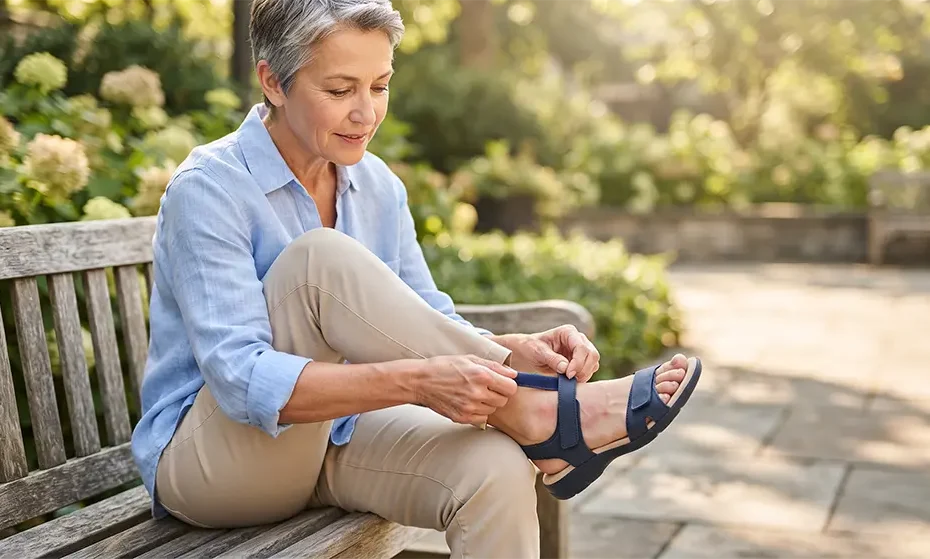
Sandals and flip-flops can trigger neuropathy flares and skin injuries because straps create friction, thin soles increase pressure, and reduced sensation can hide blisters until they become serious. In hot, humid climates like Miami and the Florida Keys, sandal-related foot problems are common. Better footwear choices and daily foot checks can reduce risk.
- Sandal straps can create blisters and hot spots that neuropathy patients may not feel early.
- Thin soles increase pressure and instability, especially on sidewalks, sand, and tile.
- Footwear protection and nerve-focused care help reduce flare risk and skin breakdown.
Last updated: April 14, 2026
Reviewed by: Neuropathy Relief Center of Miami team
In South Florida, sandals are everywhere. Flip-flops, slides, beach sandals, and open-toe shoes are part of daily life in Miami, Fort Lauderdale, Miami-Dade County, Broward County, and the Florida Keys. But for neuropathy patients, summer footwear can create real risk.
Patients often say:
- “My sandals rubbed a blister and I didn’t feel it.”
- “Flip-flops make my feet burn later.”
- “The strap marks are worse by the end of the day.”
- “I feel unstable walking in sandals now.”
- “My toes grip the sandal and cramp.”
At the Neuropathy Relief Center of Miami, we see this pattern in locals and in visitors from the USA, Colombia, Chile, Argentina, Mexico, and the Caribbean. Travel, beach days, hotel walking, and hot weather make sandal issues even more common.
This blog is educational. If you have an open blister, drainage, spreading redness, fever, or diabetes-related foot risk, seek medical care promptly.
Why sandals can be risky with neuropathy
Sandals are convenient, but many are not protective. Neuropathy changes how your feet respond to pressure, friction, and surface changes.
Straps create focal friction
A sandal strap concentrates pressure in one narrow area. If you have normal sensation, you feel the rubbing and adjust. With neuropathy, you may not feel it until the skin is already irritated.
Common strap injury areas include:
- top of the foot
- between the toes
- side of the big toe
- outer edge of the foot
- heel strap area
Thin soles increase pressure
Thin sandals do not absorb much impact. Hard sidewalks, tile, parking lots, and boardwalks transfer more force into the foot. Sensitive nerves may respond with burning, tingling, or stabbing pain.
Loose sandals increase toe gripping
Flip-flops often make the toes grip to keep the shoe on. That can fatigue the foot muscles and increase cramping, arch pain, and toe curling.
Open footwear exposes skin
Open shoes leave the foot more vulnerable to hot pavement, shells, rocks, and debris. If sensation is reduced, injuries can go unnoticed.
Why sandal injuries are worse in humid climates
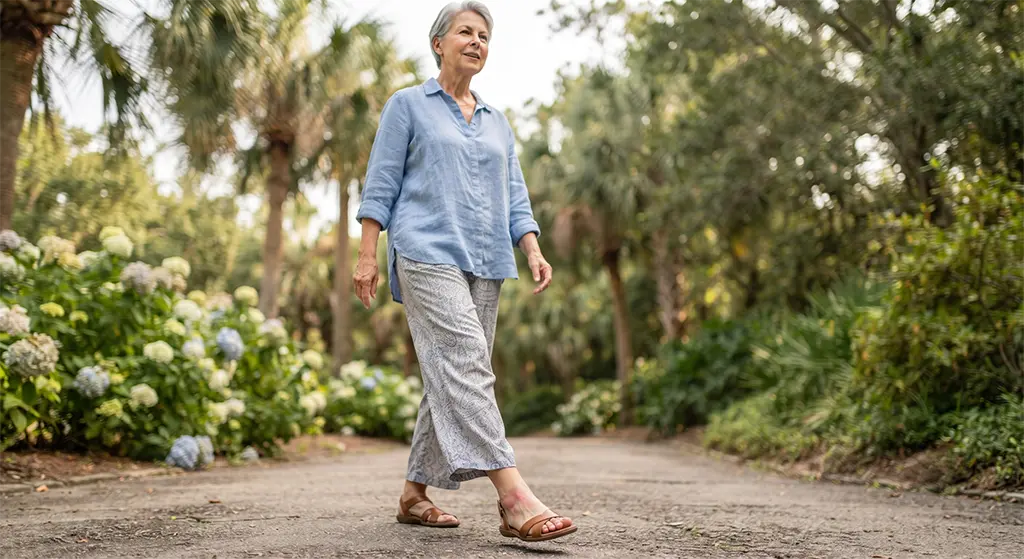
Humidity softens skin. Sweat increases friction. Heat increases swelling. A sandal that fits in the morning may rub badly later.
In the Florida Keys, beach walking, docks, boats, and wet surfaces increase risk. In Miami and Fort Lauderdale, long walks on hot pavement or parking lots can produce pressure and heat exposure.
The delayed sandal flare pattern
A common sequence:
- Sandals feel fine at first
- Feet swell during the day
- Straps tighten and rub
- Thin soles increase pressure
- Skin irritation forms
- Burning flares at night
- A blister is found later
The delay is common because neuropathy reduces early warning signals.
How to choose safer sandals
If you wear sandals, look for:
- secure heel strap
- cushioned stable sole
- adjustable straps
- smooth strap edges
- roomy fit
- good traction
- no toe-gripping requirement
Avoid long walking in thin flip-flops, especially if you already have numbness, calluses, wounds, or balance issues.
Daily foot checks after sandal use
After wearing sandals, inspect:
- strap contact areas
- between toes
- heel edges
- ball of foot
- callus areas
- toenails
- any red or shiny skin
A red mark that does not fade quickly may be a pressure warning.
Practical prevention tips
- Break in sandals slowly
- Avoid new sandals on long travel days
- Use protective shoes for long errands
- Keep feet dry when possible
- Do not ignore strap marks
- Carry backup footwear if walking a lot
- Avoid hot pavement barefoot or in thin soles
How the Dr. Alfonso Neuropathy Treatment Protocol helps
The Dr. Alfonso Neuropathy Treatment Protocol supports:
- 🩸 Microcirculation and tissue resilience
- ⚡ Nerve signaling stability and repair support
- 🌿 Inflammation and oxidative stress reduction
- 🧠 Metabolic foundations that influence healing
Improving nerve function may help restore better protective feedback. But footwear choices matter immediately because skin risk exists now.
When to seek medical care
Seek care if:
- a blister opens
- redness spreads
- drainage or odor appears
- swelling increases
- skin becomes warm or painful
- you have diabetes or poor circulation
- a wound is not improving quickly
Do not wait for pain. Neuropathy can hide pain even when the injury is serious.
FAQs
Are sandals bad for neuropathy?
Not all sandals are bad, but thin flip-flops and strap-heavy sandals can increase friction, pressure, and instability.
Why do sandals make my feet burn?
Thin soles, heat, swelling, and strap pressure can amplify nerve irritation.
What sandals are safer?
Choose cushioned, stable sandals with secure heel support, smooth adjustable straps, and good traction.
Can sandal blisters be dangerous with neuropathy?
Yes. Reduced sensation can hide blisters until they open or become infected.
References
- CDC: Foot care and daily inspection guidance for reduced sensation
- NINDS: Peripheral Neuropathy overview
Clinic: Neuropathy Relief Center of Miami
Address: 8585 Sunset Drive, Suite 104, Miami, FL 33143
Call: 305-274-7475
Learn more: Neuropathy Treatment Miami
Book your consultation today: Appointments

Sincerely Yours for Health,
Dr. Rodolfo Alfonso, D.C.
8585 Sunset Drive,
STE 104
Miami, FL 33143
Ph: 305-275.7475
www.neuropathyreliefmia