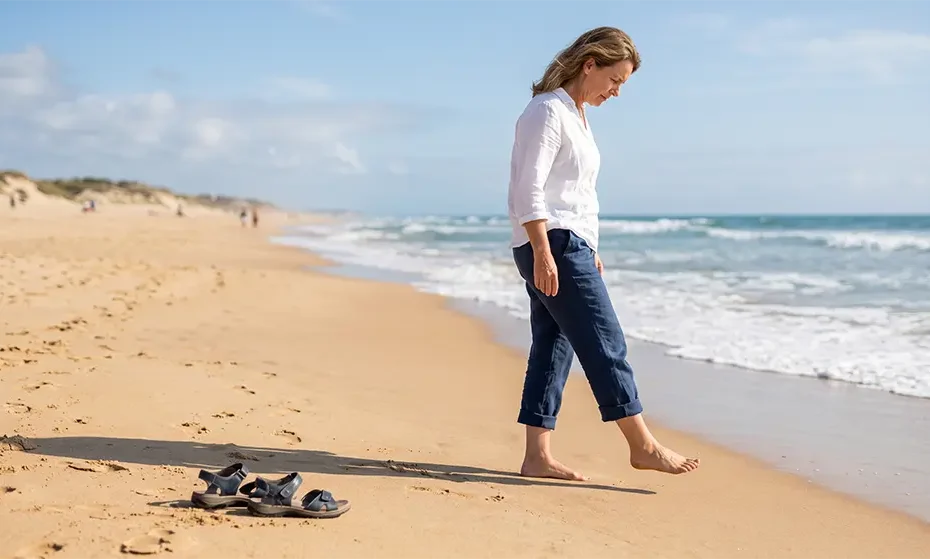
Beach days can trigger neuropathy flares because sand, heat, barefoot walking, saltwater, swelling, and long standing all stack stress on sensitive nerves. In Miami, Fort Lauderdale, and the Florida Keys, patients often feel fine during the outing but experience burning, tingling, or numbness later that night. A safer beach strategy can reduce flare intensity while protecting skin and mobility.
- Sand and barefoot walking increase pressure, friction, and balance demand.
- Heat and swelling can amplify burning, buzzing, and “tight sock” sensations.
- Foot protection, pacing, hydration, and nerve-focused care can improve beach-day tolerance.
Last updated: April 14, 2026
Reviewed by: Neuropathy Relief Center of Miami team
Beach days are part of life in South Florida. From Miami Beach and Key Biscayne to Fort Lauderdale and the Florida Keys, many patients want to stay active and enjoy the ocean. But neuropathy can make a simple beach day turn into a painful nighttime flare.
Patients often describe the same pattern:
- “My feet burn after walking in the sand.”
- “I feel okay at the beach, then my feet light up at night.”
- “Hot sand bothers me more than it used to.”
- “I almost lose my balance when the sand shifts.”
- “My sandals rub and I don’t notice until later.”
At the Neuropathy Relief Center of Miami, we see this in patients across Miami, Fort Lauderdale, Miami-Dade County, Broward County, and the Florida Keys, and also in visitors from the USA, Colombia, Chile, Argentina, Mexico, and the Caribbean who come to Florida expecting relaxing beach time but end up with nerve symptoms.
This blog is educational. If you have wounds, severe swelling, sudden one-sided symptoms, infection signs, or rapidly worsening numbness, seek medical evaluation.
Why beach days trigger neuropathy symptoms
Beach environments stack multiple neuropathy triggers at once: uneven surfaces, heat, friction, moisture, and long walking. Any one of these can be manageable. Together, they can push irritated nerves past their threshold.
Sand increases balance demand
Sand shifts under the feet. That means your brain needs constant feedback from the soles, ankles, knees, and hips to stay stable. Neuropathy reduces that feedback. If your feet already feel numb, “cottony,” or disconnected from the ground, sand can make walking feel unpredictable.
Barefoot walking increases pressure and friction
Many people assume barefoot walking is natural and therefore better. But with neuropathy, barefoot walking can be risky. Without shoe protection, the skin absorbs heat, shells, rocks, rough sand, and pressure points. If sensation is reduced, you may not feel irritation early enough to stop.
Heat amplifies nerve sensitivity
Hot sand, sun exposure, and warm air can increase burning sensations. Heat can also increase swelling, which raises tissue pressure around sensitive nerves.
Saltwater and moisture affect skin
Saltwater itself is not automatically bad, but repeated wet-dry cycles can dry skin and increase cracking. Moisture between toes can increase fungal risk, especially in humid climates.
The delayed beach flare pattern
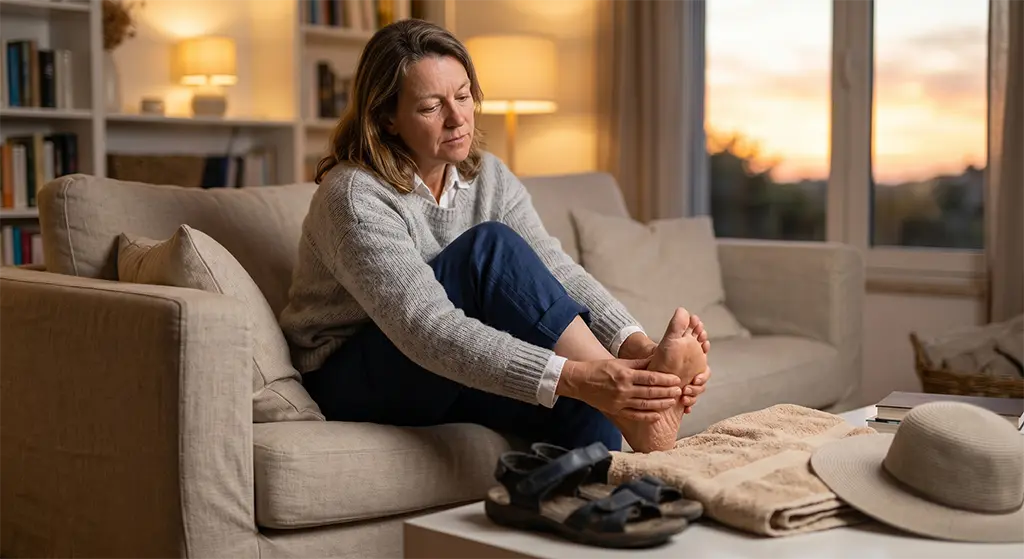
Many patients feel fine during the beach day because they are distracted and moving. Later, the flare appears:
- Long walking or standing in sand
- Heat and sun exposure
- Increased swelling in feet/ankles
- Friction from sandals or bare feet
- Nighttime stillness
- Burning, buzzing, or stabbing pain in bed
This delayed response is common in neuropathy. The flare does not mean you “imagined it.” It means the total load exceeded your nerve tolerance.
Beach safety rules for neuropathy patients
Wear protective footwear
Use stable sandals or water shoes with a secure fit. Thin flip-flops are usually not enough for long walks because they increase toe gripping, friction, and instability.
Avoid hot sand barefoot
Hot sand can burn skin quickly. With reduced sensation, you may not feel the burn until damage has occurred.
Inspect feet after the beach
Check the soles, heels, toes, and between toes for redness, cuts, blisters, shells, splinters, or strap marks. Use a phone camera or mirror if needed.
Rinse and dry carefully
Rinse off salt and sand. Dry well, especially between the toes. Moisture trapped between toes can increase skin breakdown and fungal risk.
Pace walking
Walking in sand is more demanding than walking on a sidewalk. Start with shorter distances and build tolerance gradually.
What to do after a beach day
A simple recovery routine can reduce night flares:
- Elevate feet for 5–10 minutes before symptoms peak
- Drink fluids earlier in the day rather than “catching up” at night
- Use lighter bedding if heat triggers burning
- Inspect skin before bed
- Avoid tight socks if swelling is present
How the Dr. Alfonso Neuropathy Treatment Protocol helps
The Dr. Alfonso Neuropathy Treatment Protocol is designed to support the nerve environment by improving:
- Microcirculation to the feet and legs
- Nerve signaling stability and repair support
- Inflammation and oxidative stress reduction
- Metabolic foundations that influence nerve sensitivity
As nerve function improves, many patients report better tolerance to walking, heat, and activity. The goal is not to stop living—it is to improve nerve resilience so beach days do not automatically become flare nights.
When to seek evaluation
Seek evaluation if:
- Beach days cause symptoms that last more than 24–48 hours
- You develop blisters, wounds, or cracks you did not feel
- Balance is worse on sand or uneven surfaces
- Numbness is spreading upward
- Burning is becoming more constant
FAQs
Can walking on sand worsen neuropathy?
Yes. Sand increases balance demand, pressure changes, and friction, which can flare sensitive nerves.
Should neuropathy patients go barefoot at the beach?
Use caution. Protective footwear is usually safer because reduced sensation increases burn, cut, and blister risk.
Why do my feet burn at night after the beach?
Heat, swelling, friction, and delayed nerve irritation often peak after activity when you finally rest.
Can treatment improve beach walking tolerance?
Many patients improve as nerve signaling, microcirculation, and tissue resilience improve.
References
- NINDS: Peripheral Neuropathy overview
- CDC: Foot care and daily inspection guidance for reduced sensation
Clinic: Neuropathy Relief Center of Miami
Address: 8585 Sunset Drive, Suite 104, Miami, FL 33143
Call: 305-274-7475
Learn more: Neuropathy Treatment Miami
Book your consultation today: Appointments

Sincerely Yours for Health,
Dr. Rodolfo Alfonso, D.C.
8585 Sunset Drive,
STE 104
Miami, FL 33143
Ph: 305-275.7475
www.neuropathyreliefmia