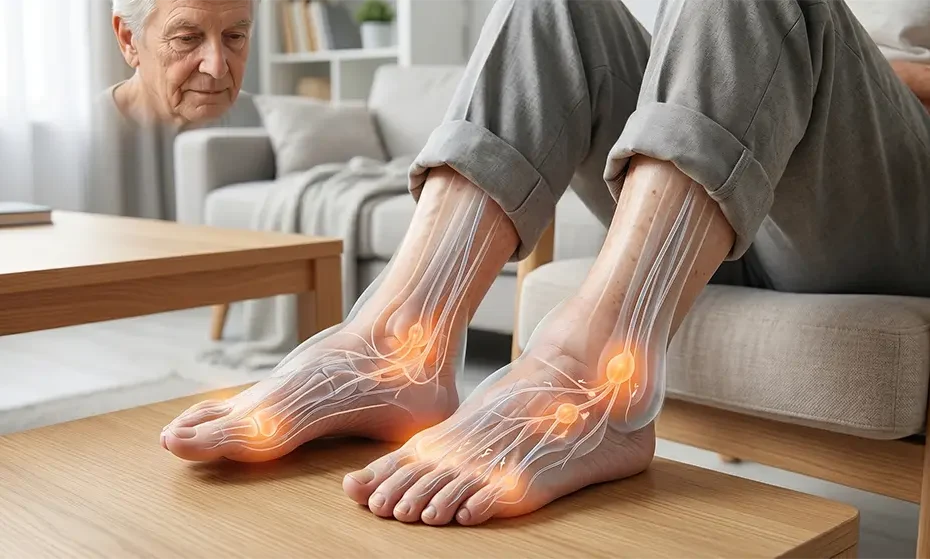
Foot and ankle swelling can amplify neuropathy symptoms by increasing tissue pressure around sensitive nerves. In hot climates like Miami and the Florida Keys, swelling often rises later in the day from standing, heat, and long sitting (cars/planes), then neuropathy flares at night. Reducing swelling triggers and improving circulation support can lower symptom intensity.
- Swelling increases tissue pressure and can worsen burning, tingling, and numbness.
- Heat, standing still, and long sitting are common swelling triggers in South Florida.
- Best results come from treating nerve health and managing swelling timing and footwear pressure.
Last updated: April 14, 2026
Reviewed by: Neuropathy Relief Center of Miami team
Many neuropathy patients focus on the nerves (burning, tingling, numbness), but miss a powerful amplifier: swelling. If your feet puff up, your shoes feel tighter late in the day, or socks leave deeper marks than they used to, swelling may be the “volume knob” turning your neuropathy up.
At the Neuropathy Relief Center of Miami, we see this pattern in patients across Miami, Fort Lauderdale, Miami-Dade County, Broward County, and the Florida Keys, and also in visitors from the USA, Colombia, Chile, Argentina, Mexico, and the Caribbean especially during travel weeks and warm weather.
This article is educational. Swelling can have medical causes that require evaluation. If swelling is sudden, severe, one-sided, or accompanied by shortness of breath or chest pain, seek medical care urgently.
Why swelling makes neuropathy feel worse
Neuropathy symptoms are often driven by nerve sensitivity and altered signaling. Swelling adds a second layer: pressure.
1) Tissue pressure irritates sensitive nerves
When fluid accumulates, tissue pressure rises. For already sensitive nerves, that pressure can translate into:
- more burning
- more tingling
- more “tight sock” sensation
- more cramping
- more nighttime discomfort
2) Swelling increases friction and “hot spots”
Swollen feet rub more inside shoes. Straps and seams create pressure points. If sensation is reduced, you may not feel the hot spot forming until later.
3) Swelling stacks with heat and stillness
Swelling tends to be worst at the end of the day exactly when you finally sit down, stop moving, and try to sleep. That’s why many people report:
- “My symptoms are always worse at night.”
- “My feet burn after dinner.”
- “If I’m swollen, I can’t sleep.”
The most common swelling triggers (especially in South Florida)
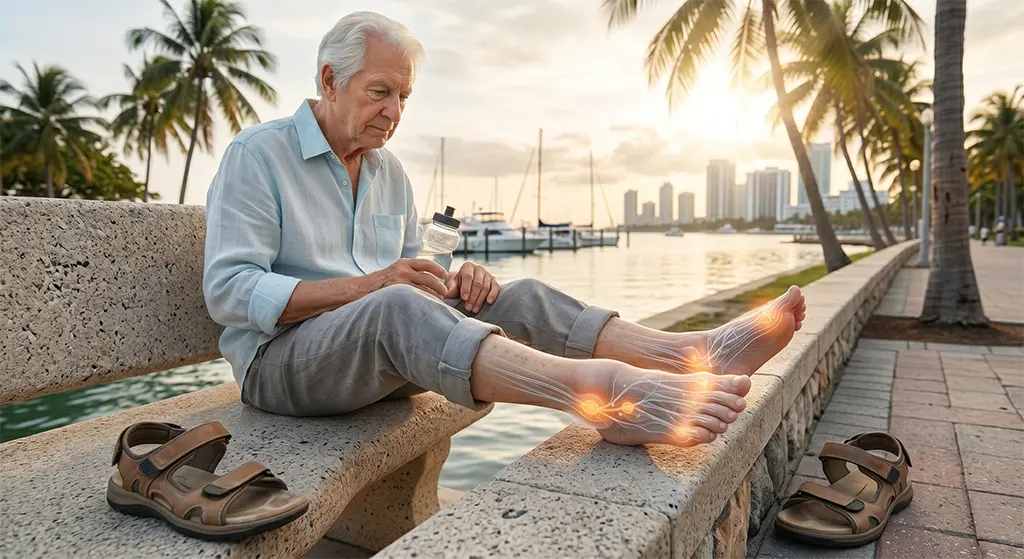
Swelling is often predictable once you know what to look for.
Standing still on hard floors
Standing in one place (kitchen, lines, events) is often worse than walking because pressure doesn’t redistribute.
Heat and humidity
Miami heat + humidity increases fluid retention and friction. The Florida Keys adds long walking days, sandals, and sun exposure.
Long sitting (driving, flights)
Cars, planes, and long meetings reduce calf pumping and increase pooling.
Footwear pressure later in the day
Shoes that feel fine in the morning can compress late-day swollen feet and trigger symptoms.
High-sodium processed meals
Some people swell more after processed food. It’s not “salt is bad” for everyone it’s the pattern that matters.
The “swelling predicts flare” pattern
Many patients have a consistent timeline:
- Long standing day / heat exposure / travel
- Swelling builds in late afternoon
- Shoes feel tighter
- Burning and tingling spike after dinner
- Bedtime symptoms worsen (heat + stillness + pressure)
If this fits you, swelling control is a high-leverage strategy.
What to do this week (general guidance)
Step 1: Track swelling timing
For 7 days, note:
- swelling severity 0–3 (none/mild/moderate/severe)
- time of day swelling begins
- what you did that day (standing still vs walking, heat exposure, long sitting)
- neuropathy symptoms at bedtime (1–10)
Step 2: Move swelling management earlier
Many people wait until night to elevate. Often better:
- elevate briefly before symptoms peak
- use micro-walk breaks in the late afternoon
- do ankle pumps after long sitting
Step 3: Footwear rules that reduce pressure
- choose shoes with a roomy toe box
- avoid tight sock bands
- test shoes in the late afternoon when swelling is highest
- avoid thin sandals for long walking days
Step 4: “Standing still” modifications
In the kitchen or line:
- ankle pumps
- gentle calf raises
- shift weight side to side
Even 20–30 seconds helps.
How the Dr. Alfonso Neuropathy Treatment Protocol helps
The Dr. Alfonso Neuropathy Treatment Protocol supports the nerve environment by focusing on:
- 🩸 microcirculation support (tissue resilience)
- ⚡ nerve signaling stability and repair support
- 🌿 inflammation and oxidative stress reduction
- 🧠 metabolic foundations that influence swelling and nerve sensitivity
As nerve stability improves and circulation support improves, many patients report that swelling triggers less severe burning and their “late-day crash” becomes less dramatic.
Warning signs: when swelling needs medical evaluation
Seek medical evaluation promptly if:
- swelling is sudden and one-sided
- swelling is accompanied by redness/warmth and significant pain
- you have chest pain or shortness of breath
- swelling is rapidly worsening
- you have known heart/kidney/liver disease
FAQs
Can swelling make neuropathy worse?
Yes. Swelling increases tissue pressure and can amplify burning, tingling, and numbness.
Why is swelling worse at the end of the day?
Gravity, long standing/sitting, heat, and reduced calf pumping increase pooling late in the day.
Do compression socks help?
Some people benefit, but not everyone. Ask your provider especially if circulation issues exist or socks worsen symptoms.
What’s the fastest way to reduce swelling-related flares?
Earlier elevation, movement breaks, and footwear that accommodates swelling often reduce symptom spikes.
References
- NINDS: Peripheral neuropathy overview
- CDC: Foot care and prevention principles for reduced sensation
Clinic: Neuropathy Relief Center of Miami
Address: 8585 Sunset Drive, Suite 104, Miami, FL 33143
Call: 305-274-7475
Learn more: Neuropathy Treatment Miami
Book your consultation today: Appointments

Sincerely Yours for Health,
Dr. Rodolfo Alfonso, D.C.
8585 Sunset Drive,
STE 104
Miami, FL 33143
Ph: 305-275.7475
www.neuropathyreliefmia