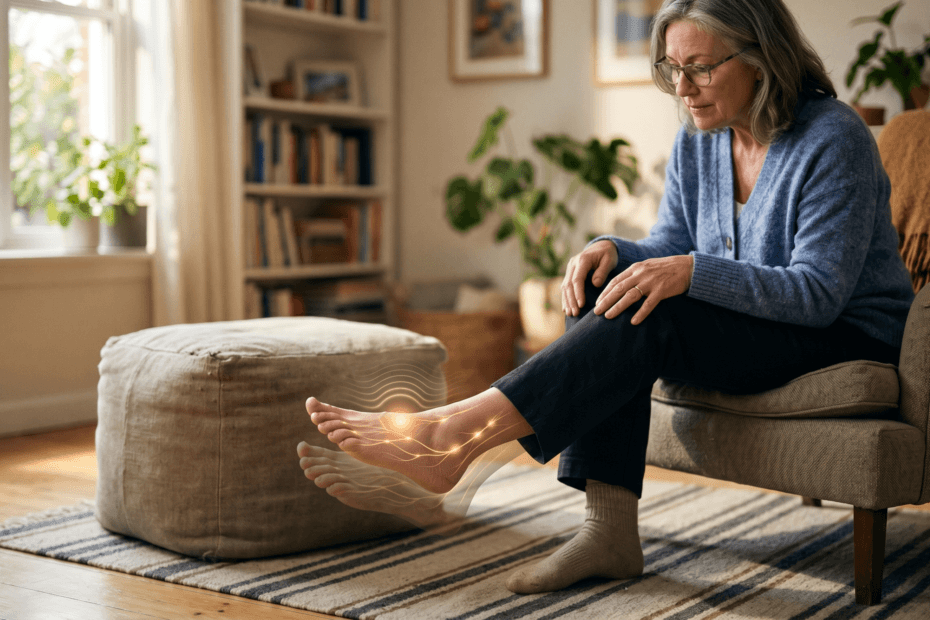
Sharp, stabbing pains in the feet can be neuropathy-related “nerve misfires,” especially
when symptoms come in waves or spike at night. Heat, swelling, friction, and blood sugar
swings can amplify these flares, and early evaluation helps prevent progression.
● Stabbing pains are often abnormal nerve firing, not a random injury.
● Nighttime stillness, heat, swelling, and metabolic stress can intensify sharp flares.
● Best results come from nerve-focused care plus fixing daily triggers (pressure, footwear,
meals, and sleep).
Last updated: April 14, 2026
Reviewed by: Neuropathy Relief Center of Miami team
Many people associate neuropathy with numbness or burning. But a very common pattern is
different: sharp, stabbing pain that comes in waves.
Patients describe it as:
● “It feels like a needle stabbing my foot.”
● “I get a sudden spear of pain in a toe, then it disappears.”
● “It hits at night when I’m finally resting.”
● “It’s worse after a long day on my feet.”
At the Neuropathy Relief Center of Miami, we see this pattern in patients throughout Miami,
Fort Lauderdale, Miami-Dade County, Broward County, and the Florida Keys, and we also
see it in visitors traveling to South Florida from the USA, Colombia, Chile, Argentina, Mexico,
and the Caribbean. The key point is this: sharp pains can be a classic neuropathy
symptom even when the foot looks normal.
Why neuropathy can feel sharp instead of numb
1) Nerves misfire when they’re irritated
Peripheral nerves are electrical pathways. When they’re inflamed, stressed, or damaged, they
can fire “spikes” that the brain interprets as sudden stabbing pain. Think of it like a frayed wire
sending intermittent shocks.
2) Small fiber irritation often produces sharp sensations
Neuropathy can involve different nerve fiber types. Many “stabbing,” “zapping,” and “pin-prick”
sensations are associated with sensory fibers that carry pain and temperature signals. That’s
why symptoms can feel intense even when you don’t have obvious swelling or visible injury.
3) The brain reacts strongly to unpredictable pain
Burning can be constant. Sharp pain is sudden so it grabs attention and triggers a stronger
stress response. That stress response can tighten muscles, alter gait, and increase overall
sensitivity.
Why sharp pain often gets worse at night
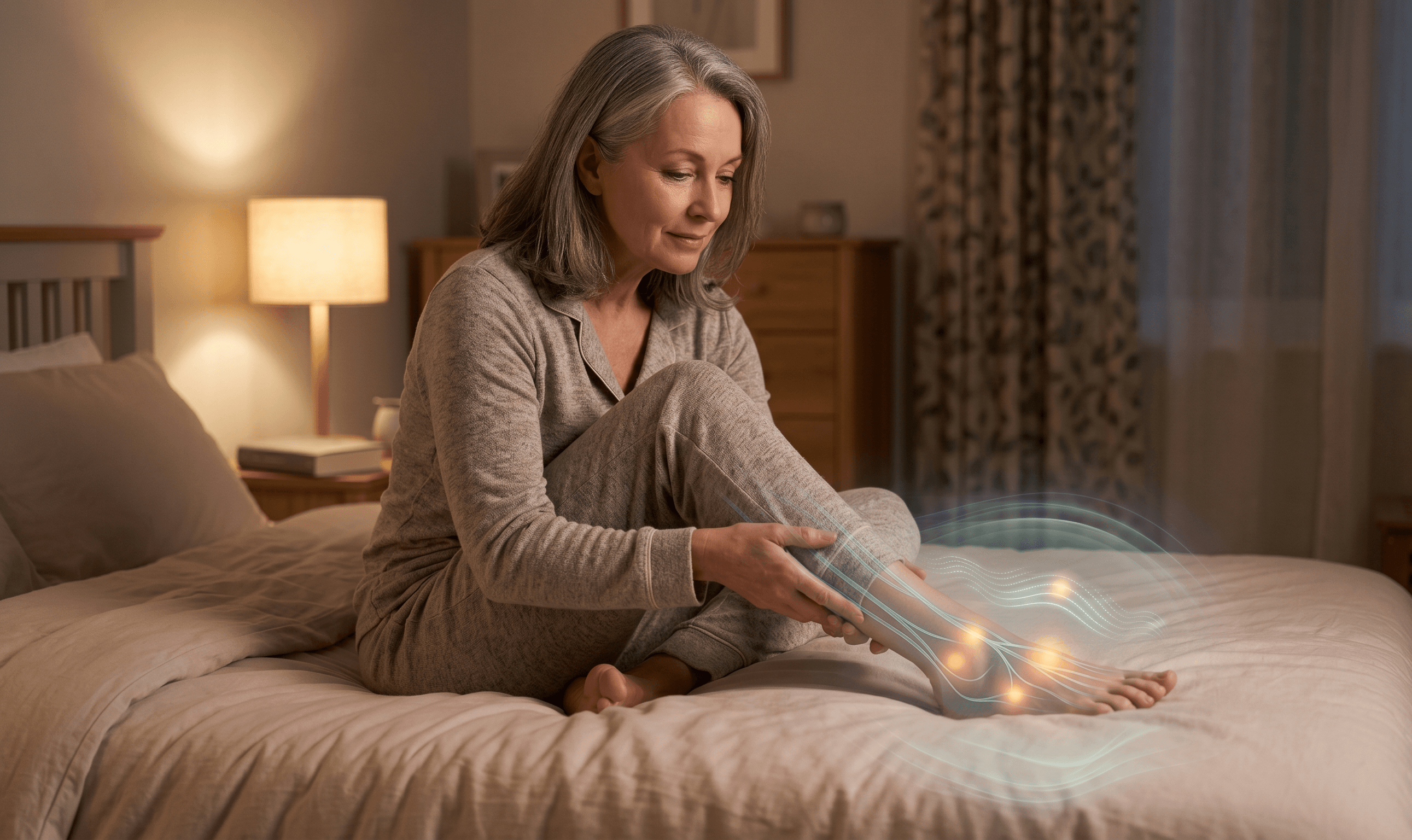
Nighttime flares are common because several triggers stack together:
Stillness makes symptoms louder
When you stop moving, your brain has fewer competing signals to process. Abnormal nerve
signals rise to the top.
Swelling often peaks later in the day
After hours of standing, walking, heat exposure, and gravity, many people have more fluid in the
feet and ankles at night. Increased tissue pressure can irritate sensitive nerves and amplify
sharp “needle” pains.
Heat from bedding can intensify nerve sensitivity
Warmth helps some conditions, but with neuropathy it can worsen burning and stabbing
sensations in certain people especially if feet feel hot under blankets.
Common triggers that make stabbing pain flare
● Long standing on hard floors (kitchen, lines, events).
● Hot weather and humidity (more swelling + more friction).
● Tight socks or narrow shoes, especially late day.
● Footwear rubbing (straps, seams, “hot spots”).
● Late meals or sweets (especially with insulin resistance).
● Poor sleep and stress (higher pain sensitivity).
● Dehydration (more cramping and nerve irritability).
Not every trigger applies to every patient. The win is identifying your top 2–3 triggers so you can
reduce flare frequency.
The two-week clarity plan (general guidance)
For 10-14 days, track:
- Time of flare: morning / afternoon / night.
- Location: toe / ball / heel / outer edge.
- What happened before: standing, walking, driving, hot shower.
- Dinner details: time, carbs/sweets, alcohol.
- Intensity: 1-10.
Patterns become obvious quickly.
Practical steps that often reduce sharp flares (general
guidance)
Reduce pressure spikes
If standing still is your trigger, add micro-movement:
● ankle pumps.
● gentle calf raises.
● shifting weight side-to-side.
Even 20–30 seconds every few minutes helps.
Fix footwear hot spots
Choose shoes with:
● stable sole.
● roomy toe box.
● secure heel.
● minimal internal seams/rubbing points.
If a strap or seam creates a hot spot, that area can become a flare generator.
Cool smart avoid extremes
If heat worsens pain, use lighter bedding and a cooler room. Avoid extreme temps on numb
skin.
Consider dinner timing and carb load
If sharp pain spikes after dinner, try earlier dinners and reduce desserts or late-night carbs
(coordinate changes if on diabetes meds).
How the Dr. Alfonso Neuropathy Treatment Protocol helps
The protocol is designed to support the nerve environment by aiming to improve:
● 🩸 microcirculation.
● ⚡ nerve signaling stability and repair support.
● 🌿 inflammation and oxidative stress reduction.
● 🧠 metabolic stability (especially when glucose/insulin issues are involved).
Many patients report fewer sharp spikes, less night flaring, and better sleep continuity as nerve
stability improves.
When stabbing pain needs prompt evaluation
Seek evaluation if:
● sharp pains increase week to week.
● symptoms spread up the foot/leg.
● numbness or balance changes appear.
● you develop skin breakdown you didn’t feel.
● you have diabetes/pre-diabetes risk factors.
FAQs
Can neuropathy cause stabbing foot pain?
Yes sharp “needle” pains can reflect abnormal
nerve firing.
Why do stabbing pains flare at night?
Stillness, heat, and end-of-day swelling amplify nerve
irritation.
Can blood sugar spikes worsen sharp nerve pain?
In some people, yes.
Can sharp pains improve with treatment?
Many patients improve when nerve health and
triggers are addressed.
References
● National Institute of Neurological Disorders and Stroke (NINDS): Peripheral Neuropathy
overview
● American Diabetes Association (ADA): Neuropathy education and metabolic factors
Clinic: Neuropathy Relief Center of Miami
Address: 8585 Sunset Drive, Suite 104, Miami, FL 33143
Call: 305-274-7475
Learn more: Neuropathy Treatment Miami
Book your consultation today: Appointments

Sincerely Yours for Health,
Dr. Rodolfo Alfonso, D.C.
8585 Sunset Drive,
STE 104
Miami, FL 33143
Ph: 305-275.7475
www.neuropathyreliefmia