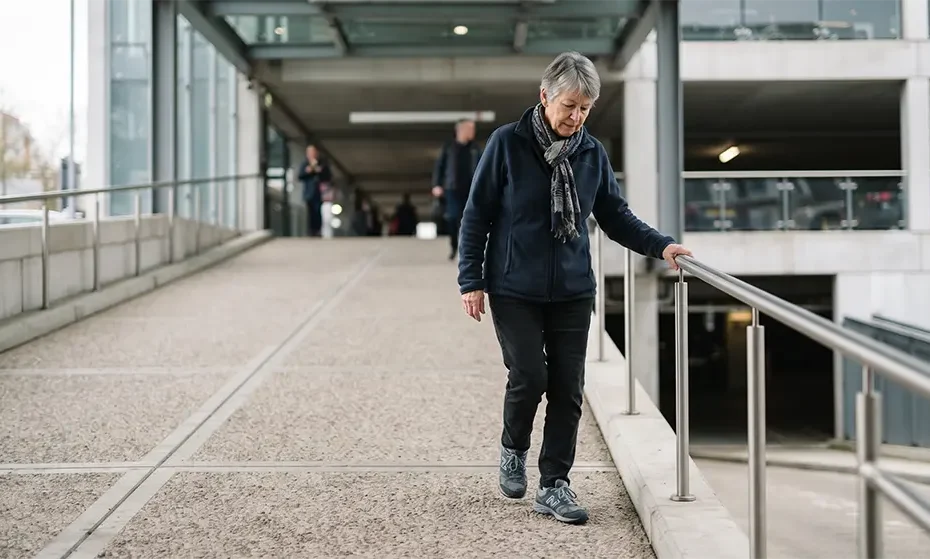
Walking uphill, climbing ramps, or moving through parking garages can trigger neuropathy because inclines increase calf demand, forefoot pressure, balance work, and nerve signaling load. If your toes go numb, feet burn, or calves cramp on hills, the problem may be a mix of nerve irritation, swelling, footwear, and reduced ground feedback.
- Inclines shift more pressure toward the toes and ball of the foot.
- Neuropathy reduces feedback from the feet, making ramps and hills feel unstable.
- Better footwear, pacing, calf recovery, and the Dr. Alfonso Neuropathy Treatment Protocol can improve walking tolerance.
Last updated: April 14, 2026
Reviewed by: Neuropathy Relief Center of Miami team
In flat areas like Miami, Fort Lauderdale, Miami-Dade County, Broward County, and the Florida Keys, many people do not think about hills. But neuropathy patients still run into inclines every day: parking garages, bridges, ramps, hotel entrances, condo driveways, boat ramps, and beach walkways. Even a small incline can trigger symptoms.
Patients often tell us:
- “My toes go numb when I walk uphill.”
- “Ramps make my calves cramp.”
- “Parking garages make my feet burn.”
- “Walking flat is okay, but inclines flare me.”
- “The ball of my foot gets pressure and tingling.”
At the Neuropathy Relief Center of Miami, we see this pattern in local patients and in visitors from the USA, Colombia, Chile, Argentina, Mexico, and the Caribbean who travel to South Florida and end up walking more ramps, bridges, docks, and uneven surfaces than expected.
This blog is educational. If you have chest pain, shortness of breath, one-sided calf swelling, sudden weakness, or rapidly worsening numbness, seek medical evaluation promptly.
Why inclines trigger neuropathy symptoms
Walking uphill is not just “harder walking.” It changes how the foot loads and how the nerves respond.
More pressure shifts to the forefoot
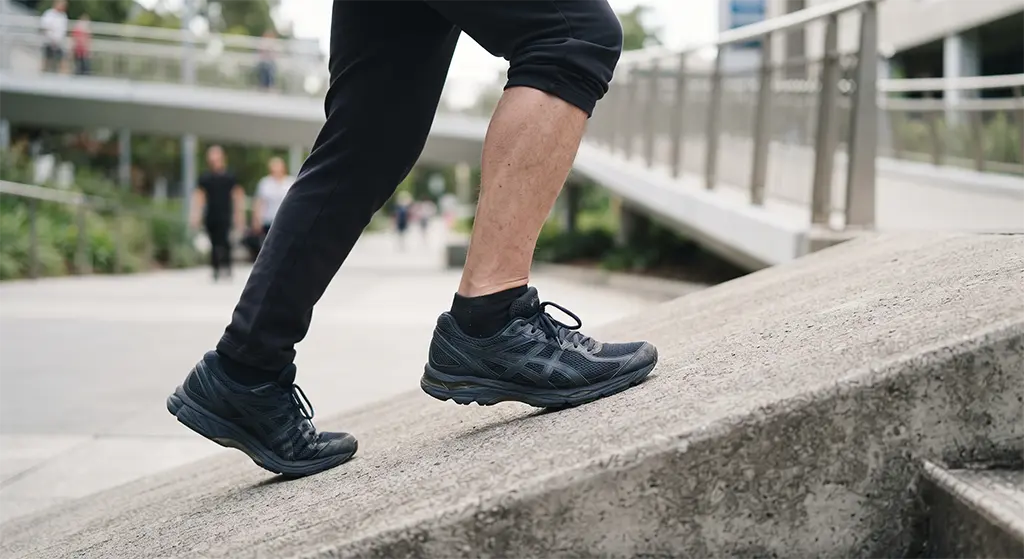
On an incline, your body naturally shifts forward. That increases pressure through the ball of the foot and toes. If your neuropathy symptoms are strongest in the toes, forefoot, or “tight sock” area, inclines can make symptoms louder.
Calves work harder
Uphill walking demands more calf activity. If nerves are irritated or muscle timing is altered, the calves may fatigue faster and cramp more easily.
Balance feedback becomes more important
Inclines require constant small balance corrections. Neuropathy reduces the quality of feedback from the soles, toes, and ankles. That can make ramps feel unstable even if they look easy.
Shoes matter more on ramps
Loose sandals, thin flip-flops, and worn-out shoes often force the toes to grip. Toe gripping increases fatigue and can worsen cramping, burning, and forefoot pressure.
Why symptoms may show up later
Many patients feel okay during the ramp or hill but flare later that night. This delayed pattern is common. The incline increases pressure and fatigue, swelling builds through the day, and then nighttime stillness makes nerve signals louder.
A typical flare sequence may look like this:
- Ramp, bridge, parking garage, or incline walking
- More forefoot pressure and calf demand
- Swelling increases later in the day
- Shoes feel tighter
- Burning, buzzing, or cramps appear at night
Delayed symptoms do not mean the incline was unrelated. The nervous system often reacts after the load has accumulated.
South Florida incline triggers
Even though South Florida is relatively flat, common triggers include:
- Parking garage ramps
- Bridge walkways
- Condo and hotel ramps
- Boat ramps in the Florida Keys
- Beach access paths
- Inclined driveways
- Airport ramps and terminals
- Long ramps at stadiums or events
For travelers from Colombia, Chile, Argentina, Mexico, and the Caribbean, long airport walks and hotel ramps can stack with dehydration, sitting, and different footwear.
How to reduce incline-related flares
Shorten the incline dose
If ramps trigger symptoms, do not start with long incline walks. Build tolerance gradually. A short ramp done repeatedly may be enough training at first.
Use stable footwear
Choose shoes with:
- stable sole
- secure heel
- roomy toe box
- good traction
- enough cushioning for forefoot pressure
Avoid thin flip-flops for long ramp or bridge walks.
Use handrails when available
A handrail reduces balance demand. It is not a weakness; it is a smart way to reduce nervous system load.
Slow the pace
Fast incline walking increases calf demand and pressure. Slower steps reduce overload.
Use recovery before symptoms peak
After incline walking, do gentle ankle pumps, short flat walking, and brief elevation later in the day before burning becomes severe.
How the Dr. Alfonso Neuropathy Treatment Protocol helps
The Dr. Alfonso Neuropathy Treatment Protocol is designed to support:
- 🩸 Microcirculation to the feet and legs
- ⚡ Nerve signaling stability and repair support
- 🌿 Inflammation and oxidative stress reduction
- 🧠 Metabolic foundations that influence nerve sensitivity and recovery
As nerve function improves, many patients report better walking tolerance, fewer delayed flares, and improved confidence on ramps, bridges, and uneven surfaces.
When to seek evaluation
Seek evaluation if:
- toe numbness is spreading
- incline walking causes frequent cramps
- balance is worse on ramps
- you catch your toes or stumble
- symptoms last more than 24–48 hours after normal walking
- you develop wounds, hot spots, or swelling
FAQs
Why do my toes go numb walking uphill?
Inclines shift pressure toward the forefoot and toes, which can amplify neuropathy symptoms and compression sensitivity.
Why do ramps make my calves cramp?
Ramps require more calf work. Neuropathy can alter nerve-muscle timing, increasing fatigue and cramping.
Are inclines bad for neuropathy?
Not always. They may be useful if progressed gradually, but footwear, pacing, and safety matter.
Can treatment improve incline walking tolerance?
Many patients improve as nerve signaling, microcirculation, and muscle coordination improve.
References
- NINDS: Peripheral Neuropathy overview
- CDC: Foot care and fall-prevention principles for reduced sensation
Clinic: Neuropathy Relief Center of Miami
Address: 8585 Sunset Drive, Suite 104, Miami, FL 33143
Call: 305-274-7475
Learn more: Neuropathy Treatment Miami
Book your consultation today: Appointments

Sincerely Yours for Health,
Dr. Rodolfo Alfonso, D.C.
8585 Sunset Drive,
STE 104
Miami, FL 33143
Ph: 305-275.7475
www.neuropathyreliefmia