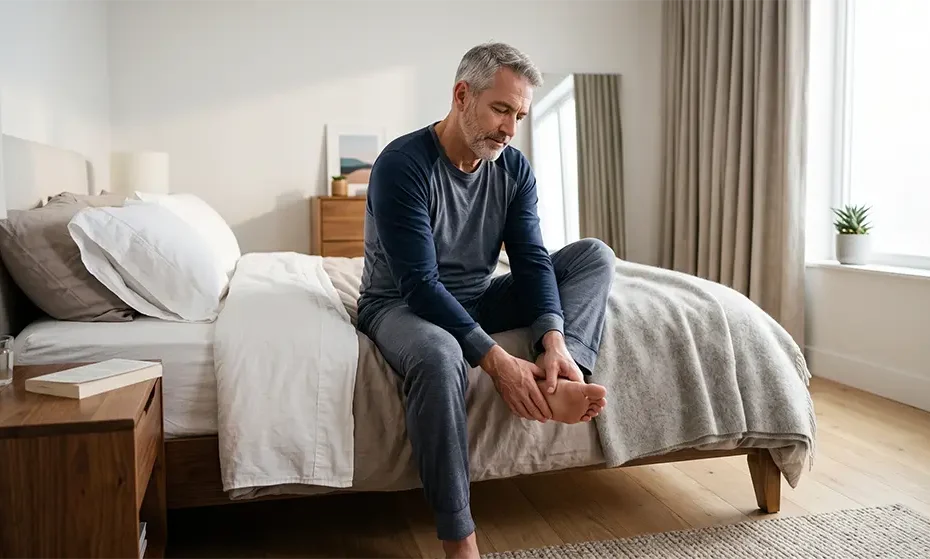
Poor sleep can make neuropathy symptoms louder because the nervous system becomes more sensitive when recovery is reduced. A bad night can increase burning, tingling, cramps, pain sensitivity, and stress reactivity the next day. Improving sleep timing, nighttime heat control, and nerve stability can break the flare-sleep-flare cycle.
- Sleep loss increases pain sensitivity and nervous system reactivity.
- Neuropathy symptoms often worsen at night, then poor sleep worsens symptoms again.
- A structured evening plan and the Dr. Alfonso Neuropathy Treatment Protocol can help reduce the cycle.
Last updated: April 14, 2026
Reviewed by: Neuropathy Relief Center of Miami team
Neuropathy and sleep problems often feed each other. Burning feet make it hard to sleep. Then poor sleep makes the burning feel worse the next day. Over time, patients feel trapped in a cycle.
They say:
- “If I sleep badly, my neuropathy is worse.”
- “My feet burn when I finally lie down.”
- “I wake up and can’t fall back asleep.”
- “One bad night ruins the next day.”
- “Stress makes my feet buzz more.”
At the Neuropathy Relief Center of Miami, we see this pattern in patients across Miami, Fort Lauderdale, Miami-Dade County, Broward County, and the Florida Keys, and in visitors from the USA, Colombia, Chile, Argentina, Mexico, and the Caribbean. Travel, late dinners, alcohol, heat, and broken routines often worsen sleep and symptoms.
This blog is educational. Severe insomnia, sleep apnea symptoms, depression, medication side effects, or rapidly worsening neurological symptoms should be evaluated by the appropriate clinician.
Why sleep affects neuropathy
Sleep is not passive. It is recovery time for the nervous system. When sleep is short or fragmented, the brain becomes more sensitive to pain signals. A symptom that might be tolerable after good sleep can feel intense after poor sleep.
The flare-sleep-flare cycle
A common neuropathy cycle looks like this:
- Feet burn at night
- Sleep becomes fragmented
- Pain sensitivity increases
- The next day symptoms are louder
- Stress and fatigue increase
- Nighttime symptoms worsen again
Breaking this cycle is one of the most important goals in neuropathy care.
Why neuropathy is often worse at night
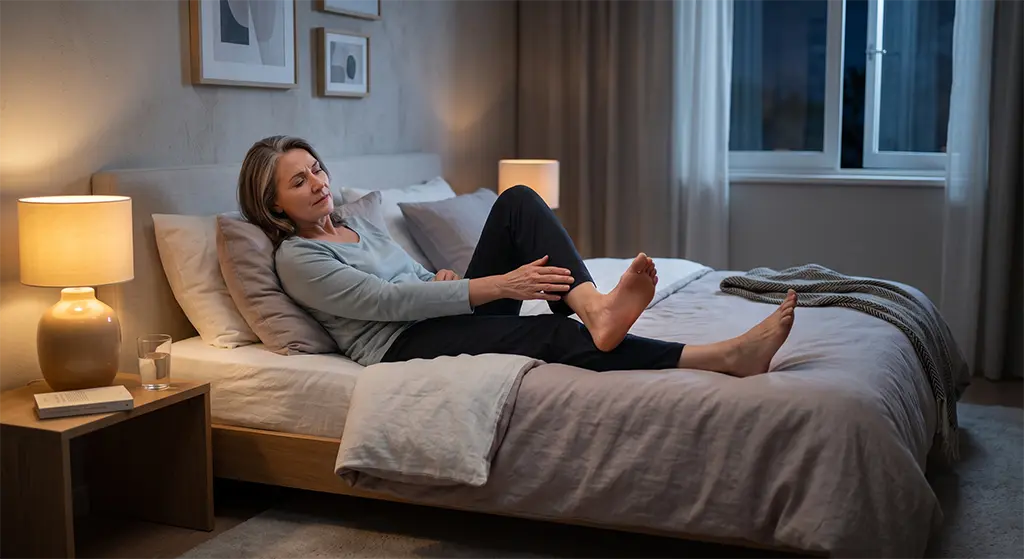
Nighttime creates several triggers:
Stillness
When you stop moving, abnormal nerve signals are easier to notice.
Heat from bedding
Warmth can amplify burning, allodynia, and hot/cold confusion.
End-of-day swelling
Swelling often peaks after hours of standing, sitting, heat exposure, and gravity.
Late meals or sugar swings
In some patients, late dinners, desserts, or alcohol worsen nighttime symptoms.
Stress downshift failure
If the nervous system stays activated into bedtime, symptoms may feel louder.
Why one bad night matters
After a poor night of sleep, patients often notice:
- More burning
- More cramps
- More tingling
- Lower stress tolerance
- More fatigue
- Worse balance confidence
- More food cravings
- Less motivation to move
This does not mean the neuropathy permanently worsened overnight. It means the nervous system is more sensitive that day.
A 7-night sleep and symptom map
Track:
- Bedtime
- Wake time
- Number of wakeups
- Burning score at bedtime
- Burning score when waking
- Room temperature
- Bedding thickness
- Dinner time
- Alcohol/caffeine timing
- Stress level
This helps identify the biggest controllable trigger.
Practical sleep strategies for neuropathy
Reduce nighttime heat
Use lighter bedding, adjust room temperature, and avoid direct heating pads unless your provider approves.
Move swelling management earlier
Elevate briefly before bedtime if swelling predicts flares. Do not wait until symptoms are severe.
Create a nervous system downshift
Use a consistent routine: dim lights, reduce screen intensity, gentle breathing, and avoid stressful tasks right before bed.
Shift stimulants earlier
Caffeine later in the day can worsen sleep even if you fall asleep normally.
Avoid late heavy meals if they flare symptoms
If you notice dinner-related flares, test earlier dinners for 10 days.
How the Dr. Alfonso Neuropathy Treatment Protocol helps
The Dr. Alfonso Neuropathy Treatment Protocol supports:
- Microcirculation
- Nerve signaling stability and repair support
- Inflammation and oxidative stress reduction
- Metabolic foundations that influence nerve sensitivity and sleep quality
As nerve signaling becomes calmer, many patients report fewer wakeups, less intense nighttime burning, and better recovery the next day.
When to seek additional evaluation
Seek evaluation if:
- Sleep disruption is severe
- You snore heavily or suspect sleep apnea
- Night pain is rapidly worsening
- Numbness or balance changes are progressing
- Mood or anxiety symptoms are worsening
- You have wounds or reduced protective sensation
FAQs
Can poor sleep make neuropathy worse?
Yes. Poor sleep increases pain sensitivity and nervous system reactivity.
Why do my feet burn more at night?
Stillness, heat, swelling, and late-day metabolic triggers can amplify nerve signals.
Can improving sleep reduce neuropathy symptoms?
Many patients report lower symptom intensity when sleep quality improves.
What is the first sleep change to try?
Track your symptoms for 7 nights, then address the biggest trigger: heat, swelling, late meals, caffeine, or stress.
References
- NINDS: Peripheral Neuropathy overview
- NIH/MedlinePlus: Sleep and pain sensitivity education
Clinic: Neuropathy Relief Center of Miami
Address: 8585 Sunset Drive, Suite 104, Miami, FL 33143
Call: 305-274-7475
Learn more: Neuropathy Treatment Miami
Book your consultation today: Appointments

Sincerely Yours for Health,
Dr. Rodolfo Alfonso, D.C.
8585 Sunset Drive,
STE 104
Miami, FL 33143
Ph: 305-275.7475
www.neuropathyreliefmia