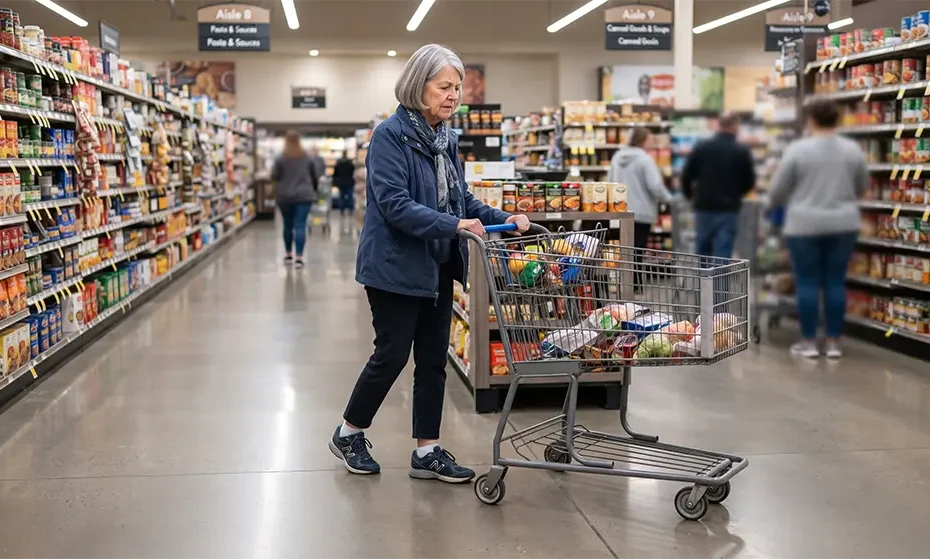
Grocery shopping can trigger neuropathy symptoms because it combines hard floors, long aisles, standing still, turning corners, pushing a cart, and delayed fatigue. Patients may feel burning, numbness, tingling, heavy legs, or balance insecurity during or after shopping. A better footwear plan, pacing strategy, and nerve-focused care can improve tolerance.
- Grocery stores expose neuropathy patients to hard floors, long standing, turning, and crowds.
- Symptoms may flare later at night, not only while shopping.
- The Dr. Alfonso Neuropathy Treatment Protocol supports nerve signaling, microcirculation, and walking confidence.
Last updated: April 14, 2026
Reviewed by: Neuropathy Relief Center of Miami team
Many neuropathy patients do not realize how physically demanding grocery shopping can be. It seems like a simple errand, but it often triggers burning feet, numb toes, calf tightness, balance concerns, and fatigue.
Patients often say:
- “My feet burn after grocery shopping.”
- “The hard floors make my legs feel heavy.”
- “I lean on the cart because I don’t trust my balance.”
- “Standing in the checkout line makes my feet go numb.”
- “I feel fine in the store, then my feet burn at night.”
At the Neuropathy Relief Center of Miami, we see this in patients throughout Miami, Fort Lauderdale, Miami-Dade County, Broward County, and the Florida Keys, as well as visitors from the USA, Colombia, Chile, Argentina, Mexico, and the Caribbean. In South Florida, large stores, polished floors, heat, humidity, parking lots, and long errands can stack together.
This blog is educational. If grocery shopping causes severe weakness, repeated near-falls, wounds, chest symptoms, or rapidly worsening numbness, seek medical evaluation.
Why grocery stores trigger neuropathy
Grocery shopping combines several neuropathy triggers at once:
- hard floors
- long standing
- slow walking
- turning corners
- reaching for items
- pushing a cart
- standing in checkout lines
- carrying bags
- walking through parking lots
- heat and humidity before or after shopping
For someone with healthy nerve feedback, this may only feel tiring. For someone with neuropathy, it can create a flare.
Hard floors and foot pressure
Most grocery stores have hard tile or polished concrete floors. These surfaces do not absorb much impact. Every step sends pressure through the feet, ankles, knees, hips, and lower back.
Neuropathy patients may notice:
- heel pain
- forefoot burning
- toe numbness
- arch cramping
- “walking on bones” sensation
- increased fatigue after long aisles
Supportive shoes matter. Thin sandals or worn-out shoes often make grocery-store symptoms worse.
Standing still may be worse than walking
Many neuropathy patients say checkout lines are worse than walking. Standing still keeps pressure in one place. The calf pump is less active. Swelling may increase, and the feet may feel tight inside the shoes.
Symptoms may include:
- burning under the toes
- “tight sock” feeling
- calf heaviness
- numbness spreading into the forefoot
- balance insecurity
This is why small movement in line can help. Shift weight, move ankles, or take gentle steps when possible.
Why pushing a cart can help and hurt
A grocery cart may feel helpful because it gives balance support. But pushing a cart can also change posture and gait.
Some patients lean forward heavily on the cart. This may reduce balance fear but can increase shoulder, neck, back, and foot strain over time.
The goal is to use the cart for light support, not collapse into it.
Delayed nighttime flares
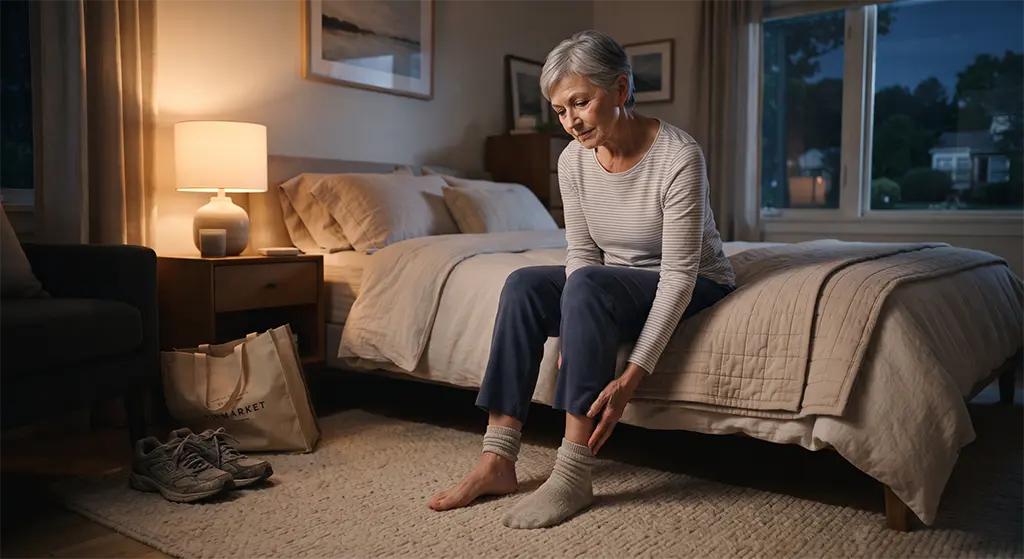
A common pattern looks like this:
- Grocery shopping feels manageable
- Feet are exposed to hard floors and standing
- Shoes become tighter as swelling builds
- Patient carries bags or walks through the parking lot
- Symptoms increase later while resting
- Burning or buzzing peaks at bedtime
Delayed flares are common in neuropathy. The trigger may be earlier in the day.
Safer grocery-shopping strategies
- Wear proven supportive shoes
- Avoid brand-new shoes for long errands
- Shop at lower-traffic times
- Use a cart for light balance support
- Break large trips into smaller trips
- Avoid standing still for long periods
- Use delivery or pickup during flare periods
- Inspect feet after shopping
- Rest before symptoms peak
How the Dr. Alfonso Neuropathy Treatment Protocol helps
The Dr. Alfonso Neuropathy Treatment Protocol supports:
- 🩸 Microcirculation to the feet and legs
- ⚡ Nerve signaling stability and repair support
- 🌿 Inflammation and oxidative stress reduction
- 🧠 Metabolic foundations that influence walking tolerance and recovery
As nerve function improves, many patients report better tolerance for errands, fewer delayed flares, and more confidence walking through stores.
When to seek evaluation
Seek evaluation if:
- grocery shopping consistently triggers burning
- balance feels worse in stores
- you rely heavily on the cart
- symptoms last more than 24–48 hours
- numbness is spreading
- wounds or hot spots appear after errands
FAQs
Why do grocery stores make my neuropathy worse?
Hard floors, long standing, slow walking, and checkout lines can increase pressure, swelling, and nerve irritation.
Why do my feet burn after shopping, not during?
Neuropathy flares can be delayed as swelling, fatigue, and nerve sensitivity build through the day.
Should I use a cart for balance?
A cart can help with confidence, but do not lean heavily on it as your only balance strategy.
Can treatment improve shopping tolerance?
Many patients improve as microcirculation, nerve signaling, and recovery capacity improve.
References
- NINDS: Peripheral Neuropathy overview
- CDC: Foot care and fall-prevention guidance
Clinic: Neuropathy Relief Center of Miami
Address: 8585 Sunset Drive, Suite 104, Miami, FL 33143
Call: 305-274-7475
Learn more: Neuropathy Treatment Miami
Book your consultation today: Appointments

Sincerely Yours for Health,
Dr. Rodolfo Alfonso, D.C.
8585 Sunset Drive,
STE 104
Miami, FL 33143
Ph: 305-275.7475
www.neuropathyreliefmia