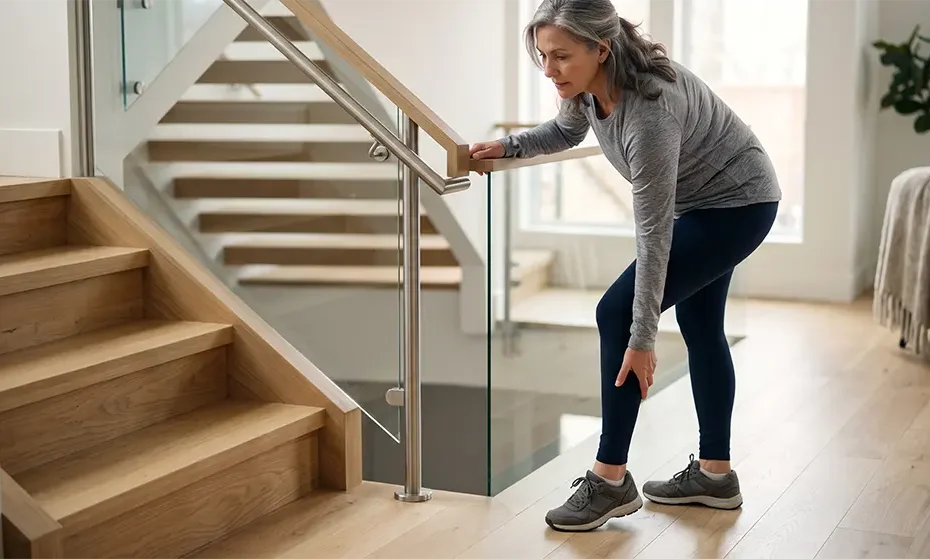
Stair climbing can trigger foot, calf, and toe cramps in neuropathy patients because stairs demand more muscle control, circulation, balance feedback, and nerve signaling than flat walking. Cramping after stairs may reflect nerve irritation, fatigue, dehydration, swelling, or altered gait mechanics. A targeted plan can improve stair tolerance and reduce nighttime cramping.
- Stairs increase demand on calf, foot, hip, and balance systems.
- Neuropathy can disrupt muscle timing and increase cramp tendency.
- Better footwear, pacing, hydration, and nerve-focused care can improve stair confidence.
Last updated: April 14, 2026
Reviewed by: Neuropathy Relief Center of Miami team
Stairs are a simple daily activity until neuropathy makes them feel unpredictable. Some patients report burning or numbness on stairs. Others report cramps after stairs—especially in the toes, arches, or calves.
They may say:
- “My toes curl after stairs.”
- “My calves cramp later that night.”
- “Going up stairs makes my feet buzz.”
- “I feel unstable coming down.”
- “My legs feel heavy after stairs.”
At the Neuropathy Relief Center of Miami, we see this in patients across Miami, Fort Lauderdale, Miami-Dade County, Broward County, and the Florida Keys, including patients who live in condos, use parking garages, walk beach access stairs, or climb stairs during daily errands. We also see visitors from the USA, Colombia, Chile, Argentina, Mexico, and the Caribbean who flare during travel because they walk more stairs than usual.
This blog is educational. If cramping is sudden, one-sided, associated with swelling/redness, or linked to weakness, seek medical evaluation.
Why stairs trigger neuropathy cramps
Stairs are harder than flat walking because they increase load and coordination demand.
More calf and foot work
Going up stairs requires the calves, feet, and hips to push the body upward. Going down stairs requires braking control. Both can fatigue muscles quickly.
More balance demand
Stairs require accurate foot placement. Neuropathy reduces feedback from the feet. If the brain does not clearly sense the step, the body may brace harder. That bracing can increase fatigue and cramping.
More nerve signaling demand
Muscles contract based on nerve input. If nerves are irritated or damaged, muscle timing can be less efficient. That may show up as cramping, twitching, tightness, or toe curling.
More swelling after load
Stairs can increase tissue stress and swelling. Swelling increases pressure around sensitive nerves, which can amplify cramps and burning later.
Why cramps often show up later
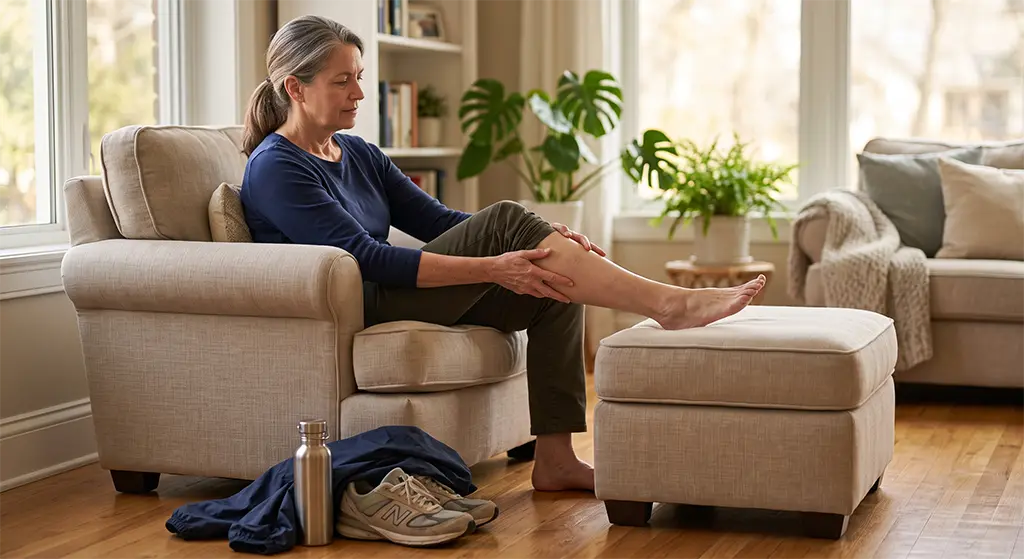
Many people do not cramp during the stairs. They cramp later after sitting down or at night. This delayed pattern happens because:
- Fatigue builds during activity
- Swelling increases after load
- Dehydration may become noticeable later
- Stillness makes nerve signals louder
- Nighttime heat can amplify symptoms
If cramps appear after stair-heavy days, the stairs may be the trigger even if the cramp occurs hours later.
Stairs going up vs going down
Going up stairs
Going up usually demands more strength and calf push-off. If your calves cramp after climbing, fatigue and muscle timing may be involved.
Going down stairs
Going down requires control and braking. If descending feels unstable, balance feedback and protective sensation may be the main issue.
Both patterns matter because they point to different needs in the care plan.
South Florida stair triggers
In Miami Beach, Fort Lauderdale, and the Florida Keys, common stair situations include:
- Condo stairs
- Parking garages
- Beach access steps
- Boat docks
- Hotel stairs
- Outdoor stairs after heat exposure
Heat and humidity can add dehydration and swelling, making stair-related symptoms worse.
What to track for 10 days
Track:
- Number of flights climbed
- Whether symptoms occur going up or down
- Where cramps occur: toes, arch, calf, foot
- Time delay before cramps begin
- Hydration and sweating that day
- Footwear used
- Nighttime burning score
This information helps separate fatigue, footwear, swelling, and nerve irritation patterns.
Practical strategies
Use the handrail
This reduces balance demand and allows the legs to work with less fear and bracing.
Slow the pace
Fast stair climbing increases fatigue and instability. Controlled steps reduce cramp risk.
Wear stable shoes
Thin sandals or flip-flops make the foot work harder. A stable shoe reduces toe gripping and foot fatigue.
Add micro-recovery
After stairs, do gentle ankle pumps or a short walk rather than immediately sitting still.
Hydrate earlier
Do not wait until night to correct dehydration. Heavy sweating days require earlier fluid planning.
How the Dr. Alfonso Neuropathy Treatment Protocol helps
The Dr. Alfonso Neuropathy Treatment Protocol supports:
- Microcirculation
- Nerve signaling stability and repair support
- Inflammation and oxidative stress reduction
- Metabolic foundations that influence muscle and nerve irritability
As nerve function improves, many patients report better stair confidence, less cramping, and better recovery after activity.
When to seek evaluation
Seek evaluation if:
- Cramping is worsening
- You feel weak on stairs
- You have near-falls
- Numbness is spreading
- One calf becomes swollen, red, or painful
- Foot slapping or toe catching appears
FAQs
Can neuropathy cause cramps after stairs?
Yes. Nerve irritation can disrupt muscle timing and increase cramping, especially after load.
Why do cramps happen later at night?
Fatigue, swelling, dehydration, and stillness can make nerve and muscle irritability show up after the activity.
Are stairs bad for neuropathy?
Not always. Stairs can be useful activity, but pacing, footwear, and safety matter.
Can treatment improve stair tolerance?
Many patients improve as nerve signaling, microcirculation, and muscle coordination improve.
References
- NINDS: Peripheral Neuropathy overview
- CDC: Fall prevention and foot safety principles
Clinic: Neuropathy Relief Center of Miami
Address: 8585 Sunset Drive, Suite 104, Miami, FL 33143
Call: 305-274-7475
Learn more: Neuropathy Treatment Miami
Book your consultation today: Appointments

Sincerely Yours for Health,
Dr. Rodolfo Alfonso, D.C.
8585 Sunset Drive,
STE 104
Miami, FL 33143
Ph: 305-275.7475
www.neuropathyreliefmia