Neuropathy can reduce protective sensation, making it easier to miss cuts, blisters, burns, and pressure wounds. A small skin change can become serious when pain signals are reduced and healing is impaired. Daily foot checks, protective footwear, and nerve-focused care are essential for preventing complications.
- Neuropathy can hide early warning signs like pain, heat, and pressure.
- Small wounds may worsen if they are not discovered quickly.
- Daily inspection, proper footwear, and the Dr. Alfonso Neuropathy Treatment Protocol help protect long-term foot health.
Last updated: April 14, 2026
Reviewed by: Neuropathy Relief Center of Miami team
One of the most serious parts of neuropathy is not the burning or tingling. It is the loss of protective warning signals. Pain is supposed to alert you when something is wrong. When neuropathy reduces that warning system, a small blister, cut, hot spot, or burn can go unnoticed.
Patients often say:
- “I didn’t know I had a blister until I saw it.”
- “My shoe rubbed a sore and I never felt it.”
- “I stepped on something and didn’t notice.”
- “I thought it was just dry skin, then it opened.”
At the Neuropathy Relief Center of Miami, we see this in patients across Miami, Fort Lauderdale, Miami-Dade County, Broward County, and the Florida Keys, and also in visitors from the USA, Colombia, Chile, Argentina, Mexico, and the Caribbean. In warm, humid climates, skin can break down faster because moisture, friction, heat, sandals, and barefoot walking are common.
This blog is educational. If you have an open wound, spreading redness, drainage, fever, odor, black skin, or rapidly worsening swelling, seek medical care promptly.
Why neuropathy makes wounds dangerous
Protective sensation is reduced
Healthy nerves help you feel pain, pressure, temperature, vibration, and texture. These signals protect you. If a shoe is rubbing, you shift your foot. If pavement is hot, you move away. If a blister is forming, you stop walking.
Neuropathy interferes with those signals. That means damage can develop before you feel it.
Skin damage can start small
A wound does not always begin as a dramatic injury. It may start as:
- A red area under a toe
- A blister from a sandal strap
- A crack in dry heel skin
- A callus with pressure underneath
- A small cut from trimming nails
- A burn from hot pavement or hot water
When sensation is reduced, the first warning sign may be visible, not painful.
Healing can be slower in high-risk patients
People with diabetes, circulation problems, swelling, or immune issues may heal more slowly. That makes early detection even more important.
Why South Florida increases risk
In Miami, Fort Lauderdale, Miami-Dade, Broward, and the Florida Keys, patients often deal with:
- Hot pavement
- Sand and shells
- Humid skin
- Flip-flops and sandals
- Barefoot tile floors
- Long beach or boat days
- Wet shoes or damp socks
These are normal lifestyle factors, but with neuropathy they can become wound triggers.
Daily foot inspection: the non-negotiable habit
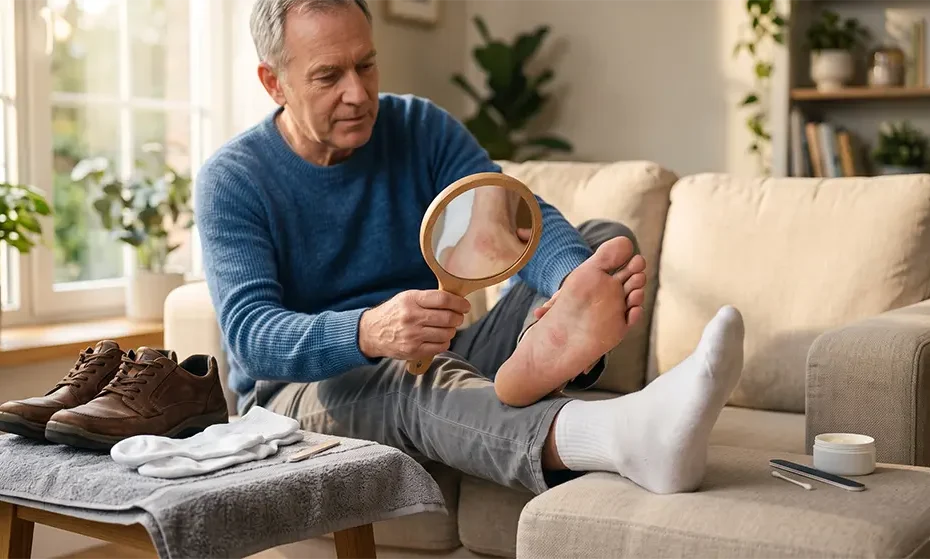
A daily foot check is one of the most important habits for neuropathy patients.
Check:
- Soles
- Heels
- Between toes
- Tops of toes
- Around toenails
- Ball of the foot
- Areas where shoes rub
Look for redness, swelling, blisters, cracks, drainage, dark spots, calluses, cuts, or skin color changes.
If you cannot see the bottom of your feet easily, use a mirror or phone camera. Ask a family member for help if needed.
Footwear rules that prevent wounds
Never assume barefoot is safe
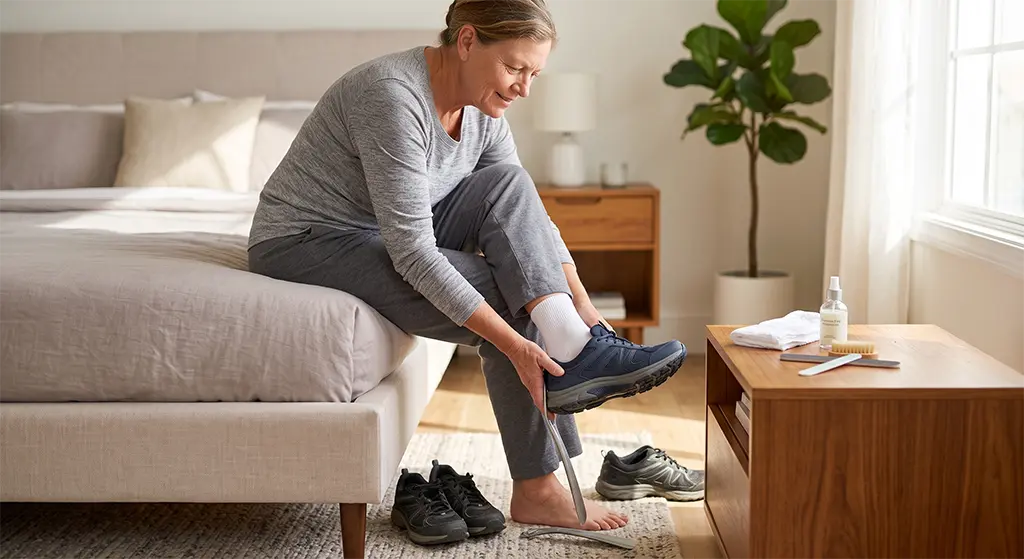
Barefoot walking indoors may seem harmless, but tile, small debris, and heat can cause injuries. Outdoors, hot pavement and beach surfaces add risk.
Choose shoes based on protection
Look for:
- Roomy toe box
- Secure heel
- Stable sole
- Minimal internal seams
- Breathable material
- No tight straps
Test shoes later in the day
Feet swell later. A shoe that fits in the morning may create pressure at night.
Check inside shoes
Before putting shoes on, check for sand, stones, rough seams, or foreign objects.
Why calluses matter
A callus is a pressure sign. It is not just hard skin. A thick callus can hide tissue irritation beneath it. If sensation is reduced, you may not feel the pressure building.
Do not cut calluses aggressively yourself. Professional foot care is safer for patients with neuropathy or diabetes risk.
How the Dr. Alfonso Neuropathy Treatment Protocol helps
The Dr. Alfonso Neuropathy Treatment Protocol supports the nerve environment by focusing on:
- Microcirculation and tissue resilience
- Nerve signaling stability and repair support
- Inflammation and oxidative stress reduction
- Metabolic foundations that influence healing and nerve function
Improving nerve function may help restore better protective feedback over time. But foot protection must begin immediately because wound risk exists now.
When to seek medical care quickly
Seek care if you notice:
- Open skin
- Drainage
- Odor
- Redness spreading
- Warmth and swelling
- Black or blue skin
- Fever
- Increasing pain or pressure
- A wound that is not improving
Do not wait for pain. With neuropathy, pain may not appear even when the wound is serious.
FAQs
Can neuropathy cause wounds I don’t feel?
Yes. Reduced protective sensation can make cuts, blisters, burns, and pressure wounds painless at first.
How often should I check my feet?
Daily. Check even if your feet feel fine.
Should I walk barefoot with neuropathy?
Usually no. Protective footwear reduces the risk of cuts, burns, and pressure injuries.
Can treatment reduce wound risk?
Improved nerve function and microcirculation may help, but daily foot care and pressure reduction remain essential.
References
- CDC: Diabetes foot care and daily inspection guidance
- NINDS: Peripheral Neuropathy overview
Clinic: Neuropathy Relief Center of Miami
Address: 8585 Sunset Drive, Suite 104, Miami, FL 33143
Call: 305-274-7475
Learn more: Neuropathy Treatment Miami
Book your consultation today: Appointments

Sincerely Yours for Health,
Dr. Rodolfo Alfonso, D.C.
8585 Sunset Drive,
STE 104
Miami, FL 33143
Ph: 305-275.7475
www.neuropathyreliefmia