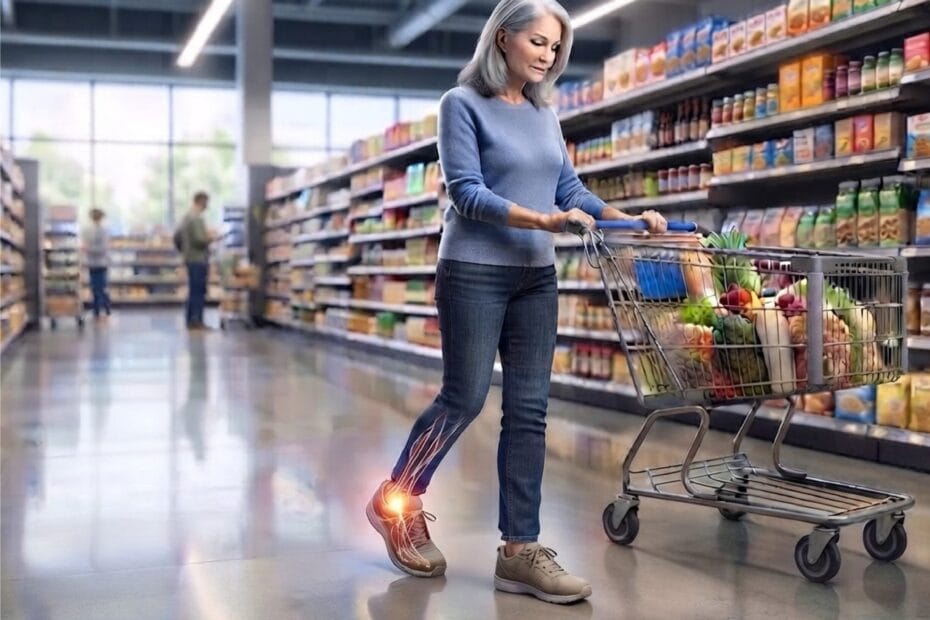
Grocery stores can trigger neuropathy flares because they combine hard floors, standing still, slow walking, cold air conditioning, and long checkout lines. These factors increase pressure, swelling, and nerve sensitivity. A few practical strategies can reduce flares and help you complete errands with less burning and fatigue.
- Grocery store flares are usually caused by load, stillness, hard floors, and temperature changes.
- Standing still in checkout lines can be worse than walking because pressure stays in one place.
- Supportive footwear, movement breaks, and nerve-focused care improve tolerance over time.
Last updated: April 14, 2026
Reviewed by: Neuropathy Relief Center of Miami team
Many neuropathy patients are surprised that a simple errand can trigger a major flare. They say:
- “My feet burn after Publix.”
- “The checkout line kills me.”
- “I can walk outside, but stores make my feet feel numb and hot.”
- “I’m okay when I go in, but I pay for it later that night.”
Grocery stores seem harmless, but they create a perfect neuropathy trigger stack.
At the Neuropathy Relief Center of Miami, we see this pattern in patients across Miami, Fort Lauderdale, Miami-Dade County, Broward County, and the Florida Keys. We also see visitors from the USA, Colombia, Chile, Argentina, Mexico, and the Caribbean who flare during travel weeks because they walk more, stand in lines, and spend time in cold air-conditioned stores.
Why grocery stores trigger neuropathy
Hard floors increase pressure
Grocery store floors are hard. Hard floors amplify pressure through the heel, ball of the foot, toes, and arches. If nerves are already sensitive, that repetitive pressure can increase burning and tingling.
Standing still is worse than slow walking
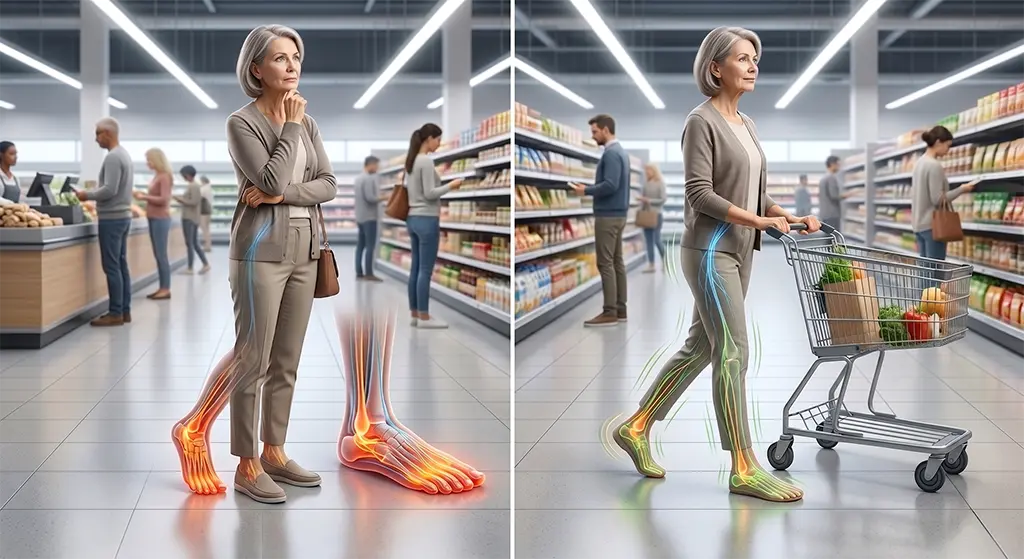
Walking redistributes pressure. Standing in one place locks pressure into the same areas. Checkout lines are often where symptoms spike because you are not moving enough to pump fluid, but you are still loading the feet.
Air conditioning can worsen numbness
Many stores are cold. If cold triggers your neuropathy, numbness and tingling may increase in the aisles. Some people feel cold and numb first, then burn later after returning home.
Shopping carts change posture
Leaning on the cart may help temporarily, but it can also change posture, increase shoulder and neck tension, and reduce natural gait. If you shuffle or grip the cart tightly, the entire body becomes more guarded.
Errands happen after other stressors
Many people shop after work, after long sitting, or after a hot day. By then, swelling and nerve sensitivity are already higher.
The typical grocery-store flare pattern
A common sequence looks like this:
- Feet feel okay entering the store.
- Aisles feel tolerable at first.
- Standing in line increases burning or numbness.
- Shoes feel tighter by the end.
- Symptoms spike at home or at bedtime.
Delayed flares are common because swelling, friction, and nerve irritation may peak after the activity is done.
Why this is worse in South Florida
In Miami-Dade, Broward, and the Florida Keys, grocery-store flares are often more intense because of the climate. Heat and humidity increase swelling. Sandals and thin shoes increase friction. Air conditioning creates a temperature shift that can confuse already sensitive nerves.
Travelers from Colombia, Chile, Argentina, Mexico, and the Caribbean often do more walking and standing during visits to Florida, which can make symptoms flare even if they are normally controlled at home.
How to reduce grocery store flares
Choose shoes for errands, not style
Use stable shoes with a supportive sole and roomy toe box. Avoid thin flip-flops or unsupportive sandals for long shopping trips, especially in Miami heat.
Time errands strategically
If symptoms are worst late day, shop earlier when swelling is lower. If cold AC is the trigger, avoid lingering in stores when you are already fatigued.
Use micro-movements in line
While standing:
- Shift weight side to side
- Do small ankle pumps
- Lift heels gently
- Change stance every minute
This keeps the calf pump active.
Break one big errand into two smaller trips
A 45-minute errand may flare you while two 20-minute errands may be tolerable. Tolerance building matters.
Inspect feet after errands
Look for redness, hot spots, blisters, and strap marks. Reduced sensation can hide friction damage.
How the Dr. Alfonso Neuropathy Treatment Protocol helps
The Dr. Alfonso Neuropathy Treatment Protocol supports:
- Microcirculation to the feet and legs
- Nerve signaling stability and repair support
- Inflammation and oxidative stress reduction
- Metabolic foundations that influence nerve irritation
As nerve function improves, many patients report better errand tolerance, fewer delayed flares, and less fear around normal daily activities.
Why this matters for independence
Errands are not optional. When neuropathy makes grocery stores difficult, people begin avoiding normal life. That can reduce walking capacity, confidence, and social independence. Improving errand tolerance is a meaningful functional goal.
When to seek evaluation
Get evaluated if:
- Errands are becoming harder month to month
- Balance worsens in stores
- Numbness spreads upward
- You develop wounds or hot spots
- Pain disrupts sleep after errands
FAQs
Why do grocery stores make my feet burn?
Hard floors, standing still, cold AC, and long lines can increase pressure, swelling, and nerve sensitivity.
Why is standing in line worse than walking?
Standing locks pressure into the same areas and reduces the calf pump that helps circulation.
What shoes are best for errands with neuropathy?
Supportive shoes with a stable sole, secure heel, and roomy toe box are usually better than thin sandals.
Can treatment improve errand tolerance?
Many patients improve as nerve signaling and microcirculation become more stable.
References
- NINDS: Peripheral Neuropathy overview
- CDC: Foot care and daily inspection guidance for reduced sensation
Clinic: Neuropathy Relief Center of Miami
Address: 8585 Sunset Drive, Suite 104, Miami, FL 33143
Call: 305-274-7475
Learn more: Neuropathy Treatment Miami
Book your consultation today: Appointments

Sincerely Yours for Health,
Dr. Rodolfo Alfonso, D.C.
8585 Sunset Drive,
STE 104
Miami, FL 33143
Ph: 305-275.7475
www.neuropathyreliefmia