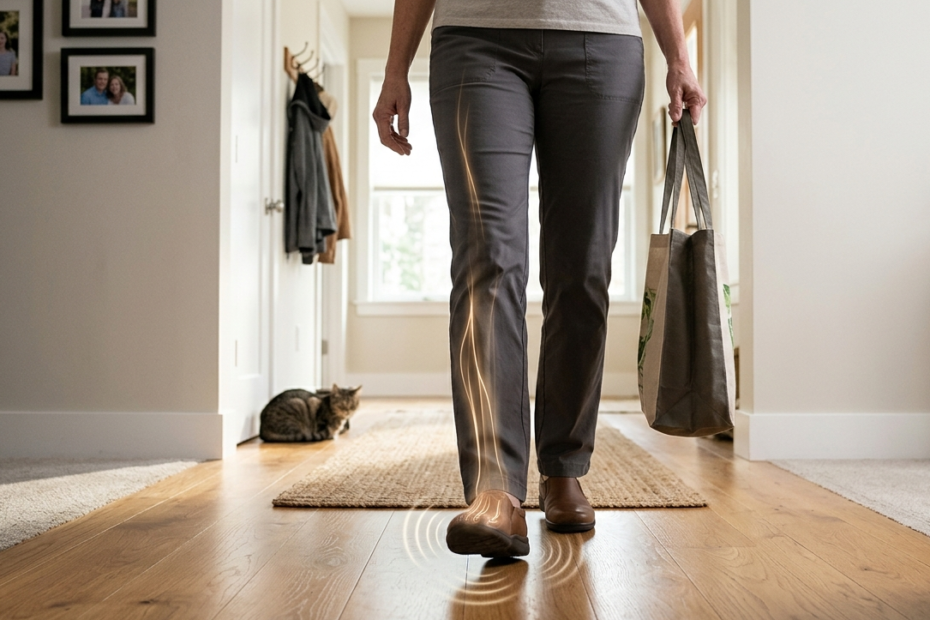
If your foot “slaps” when you walk or you catch your toes more often, it may signal
weakness or altered nerve control. Early evaluation matters because gait changes increase fall
risk and can progress if the underlying drivers aren’t addressed.
● Foot slapping/toe catching can be a warning sign of motor involvement.
● Gait changes increase fall risk, especially on stairs and uneven ground.
● Early diagnosis + nerve-focused care can protect long-term mobility.
Last updated: April 14, 2026
Reviewed by: Neuropathy Relief Center of Miami team
Neuropathy discussions usually focus on pain and numbness, but walking changes can be even more important. Some patients notice:
● “My foot slaps the ground.”
● “I catch my toes on rugs or curbs.”
● “Stairs feel less safe.”
● “I trip more than I used to.”
We see this in patients across Miami, Fort Lauderdale, Miami-Dade, Broward, and the
Florida Keys, and in visitors traveling from the USA, Colombia, Chile, Argentina, Mexico,
and the Caribbean.
What foot slapping can mean
Foot slapping often happens when the muscles that lift the front of the foot (dorsiflexors) don’t
activate strongly or quickly enough. That can lead to:
● loud foot contact.
● toe catching.
● compensations like lifting the knee higher.
This can occur for many reasons. The key is: don’t ignore it, especially if it’s new or worsening.
Why neuropathy can change your gait
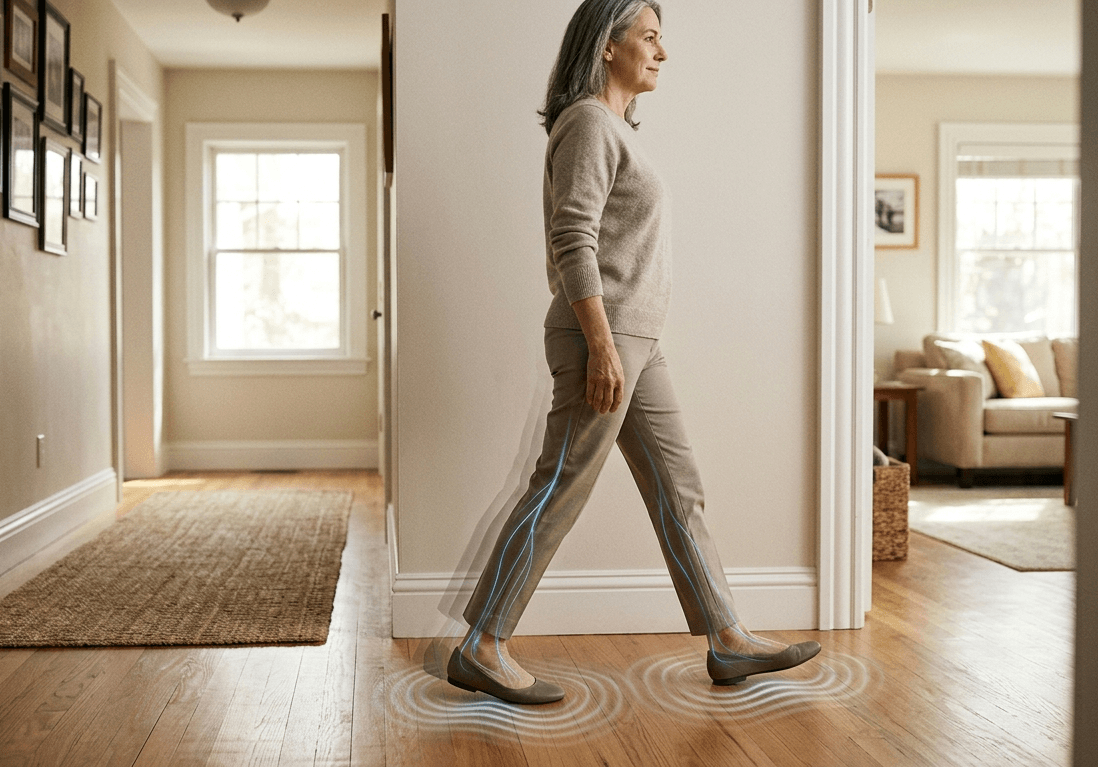
Sensory loss changes balance strategy
When your brain gets less feedback from the soles, it compensates with vision and muscle
bracing. That compensation can fatigue and change walking mechanics.
Motor control can become less precise
If nerve signaling is impaired, muscles may not fire with the same timing. Even mild timing
changes can show up as toe catching.
People subconsciously “guard”
If your feet feel unstable, you may stiffen your legs to feel safer, which can paradoxically make
gait less smooth.
Why this matters in South Florida lifestyle
In Miami and the Keys, common fall-risk environments include:
● tile floors.
● wet pool decks.
● stairs and boardwalks.
● sand and uneven surfaces.
● dim hallways at night.
If you have reduced sensation plus toe catching, the risk of falls increases.
What to do this week (general guidance)
Make a safety upgrade
● supportive footwear (secure heel, stable sole)
● night lights
● clear pathways (no loose rugs/cables)
● non-slip indoor footwear
Track the pattern
Is slapping worse:
● after fatigue?
● at night?
● after long walks or stairs?
● on uneven ground?
Don’t wait for a fall
If gait changes are new, early evaluation is important.
How the Dr. Alfonso Neuropathy Treatment Protocol helps
The protocol supports nerve function by improving:
● 🩸 microcirculation.
● ⚡ nerve signaling stability and repair support.
● 🌿 inflammation and oxidative stress reduction.
● 🧠 metabolic stability.
As nerve function improves, many patients report better walking confidence and fewer
near-misses.
When to seek evaluation promptly
● new or worsening weakness.
● frequent tripping.
● falls or near-falls.
● symptoms spreading quickly.
● loss of balance confidence.
FAQs
Is foot slapping a neuropathy symptom?
It can be, especially if nerve control to foot-lifting
muscles is impaired.
Does this mean permanent damage?
Not necessarily, but it needs evaluation early.
What increases fall risk with neuropathy?
Reduced sensation, weakness, and low-light
instability.
Can gait improve with treatment?
Many patients improve with targeted care and safety
upgrades.
References
● NINDS: Peripheral Neuropathy overview.
● CDC: Fall prevention guidance.
Clinic: Neuropathy Relief Center of Miami
Address: 8585 Sunset Drive, Suite 104, Miami, FL 33143
Call: 305-274-7475
Learn more: Neuropathy Treatment Miami
Book your consultation today: Appointments

Sincerely Yours for Health,
Dr. Rodolfo Alfonso, D.C.
8585 Sunset Drive,
STE 104
Miami, FL 33143
Ph: 305-275.7475
www.neuropathyreliefmia