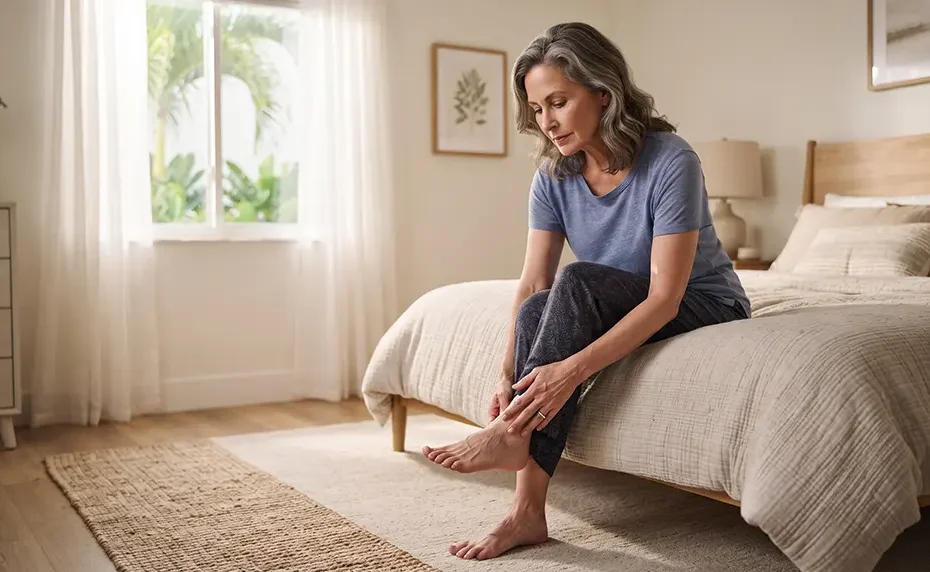
Some infections can affect peripheral nerves directly, while others may trigger an immune response that affects nerves after the infection itself has improved. Persistent tingling, burning, pain or altered sensation after an illness deserves evaluation especially if symptoms are spreading or accompanied by weakness. Rapidly progressive weakness can signal a neurological emergency and should not be treated as routine neuropathy.
Last updated: October 7, 2026
Reviewed by: Neuropathy Relief Center of Miami clinical team
The fever is gone.
The cough is gone.
You are back at work.
But your feet still tingle.
Or burn.
Or feel strangely numb.
That creates an understandable question:
“Can a viral infection affect my nerves even after I recover?”
Can infections cause peripheral neuropathy?
Yes, some infections can.
NINDS explains that infections can sometimes directly affect nerve tissue, while infections can also trigger autoimmune peripheral neuropathies. Viral and bacterial illnesses are among the recognized acquired causes of peripheral nerve problems. NINDS
But persistent tingling after an infection does not automatically mean post-infectious neuropathy.
What symptoms should be evaluated?
Patients may report:
- tingling in both feet
- burning sensations
- electric sensations
- increased touch sensitivity
- numbness
- altered temperature sensation
- weakness
- balance difficulty
Peripheral neuropathy symptoms can develop over days, weeks or longer depending on the cause. NINDS
Mobile CTA
If an illness is over but your nerve symptoms are not, Neuropathy Relief Center of Miami can evaluate the sensory and functional problem and help determine whether additional medical or neurological testing is warranted. Call 305-274-7475.
Why this article does not replace our existing infection-and-virus article
The site’s existing “Neuropathy After Infections and Viruses” article is already a Search Console winner.
We should protect it as the broad authority hub.
This page has a different job:
help the patient decide when persistent symptoms need evaluation.
That distinction reduces cannibalization and creates a logical next click from the existing winner.
How can an infection affect nerves?
There are several possible pathways.
Direct effects
Certain infections can affect sensory or peripheral nerve tissue.
Immune-mediated effects
Sometimes the immune response triggered by an infection becomes part of the problem.
NINDS notes that infections can trigger immune-mediated peripheral neuropathy even when the infectious organism itself is not directly attacking the nerves. NINDS
Other post-illness factors
Not every post-infection symptom is caused by nerve damage.
Other possibilities can include:
- prolonged inactivity
- nutritional changes
- medication effects
- metabolic problems
- vitamin deficiencies
- musculoskeletal nerve compression
- unrelated neuropathy that became noticeable during illness
That is why the history matters.
When is post-infectious tingling an emergency?
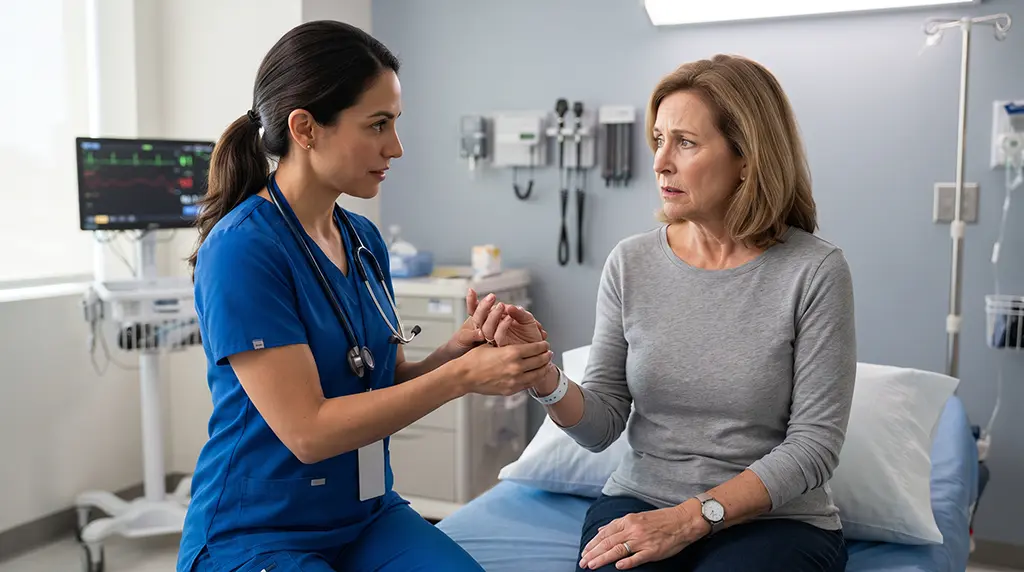
Rapidly worsening weakness is different from slowly lingering tingling.
Guillain-Barré syndrome (GBS) is a rare immune-mediated neurological disorder that often begins after infection. Weakness can progress over hours or days and may eventually affect breathing or swallowing. NINDS
Seek urgent medical attention for:
- rapidly increasing weakness
- difficulty walking that is progressing
- weakness moving upward through the legs
- facial weakness
- trouble swallowing
- trouble breathing
- major autonomic symptoms
These symptoms should not wait for a routine outpatient neuropathy appointment.
What may a non-emergency neuropathy evaluation consider?
For persistent sensory symptoms, clinicians may review:
- infection timeline
- onset of nerve symptoms
- whether symptoms started during or after the illness
- whether both feet are involved
- strength
- reflexes
- balance
- sensation
- medications used during illness
- metabolic and vitamin factors
When indicated, medical evaluation may include blood testing, nerve-conduction studies, EMG or other neurological testing. Mayo Clinic
How the Dr. Alfonso Neuropathy Treatment Protocol fits into recovery
Once serious or urgent causes have been excluded and the patient’s condition is appropriate for conservative care, the protocol focuses on the patient’s functional deficits.
Depending on findings, this may involve:
- microcirculation and tissue-oxygenation support
- photobiomodulation / low-level light therapy
- neuromuscular re-education
- sensory and balance training
- peripheral nerve stimulation strategies
- lifestyle and nutrition support
- coordination with medical specialists when necessary
The goal is to support function and symptom management. It is not a claim that an infection-damaged nerve can be guaranteed to regenerate.
Practical steps while symptoms are being evaluated
- Keep a timeline of the illness and neurological symptoms.
- Note whether symptoms are spreading.
- Monitor strength, not just pain.
- Avoid pushing through worsening weakness.
- Maintain nutrition and hydration appropriate to your medical condition.
- Protect numb feet from heat and injury.
- Seek medical attention if the neurological picture changes rapidly.
FAQs
Can tingling continue after a viral infection?
Yes. Certain infections and post-infectious immune responses can affect peripheral nerves, although many other causes are possible.
How long can post-viral tingling last?
There is no single normal duration. It depends on the cause, severity and type of nerve involvement.
Does persistent tingling mean I have neuropathy?
No. Neuropathy is one possibility, but metabolic, nutritional, structural and other neurological causes should also be considered.
When is tingling after an infection urgent?
Rapidly worsening weakness, trouble walking, swallowing difficulty or breathing problems require urgent medical evaluation.
Can post-infectious neuropathy improve?
Outcomes depend on the specific condition and cause. Some peripheral neuropathies improve substantially; others can persist and require ongoing management.
Clinic: Neuropathy Relief Center of Miami
Address: 8585 Sunset Drive, Suite 104, Miami, FL 33143
Call: 305-274-7475
Learn more: Neuropathy Treatment Miami
Book your consultation today: Appointments

Sincerely Yours for Health,
Dr. Rodolfo Alfonso, D.C.
8585 Sunset Drive,
STE 104
Miami, FL 33143
Ph: 305-275.7475
www.neuropathyreliefmia