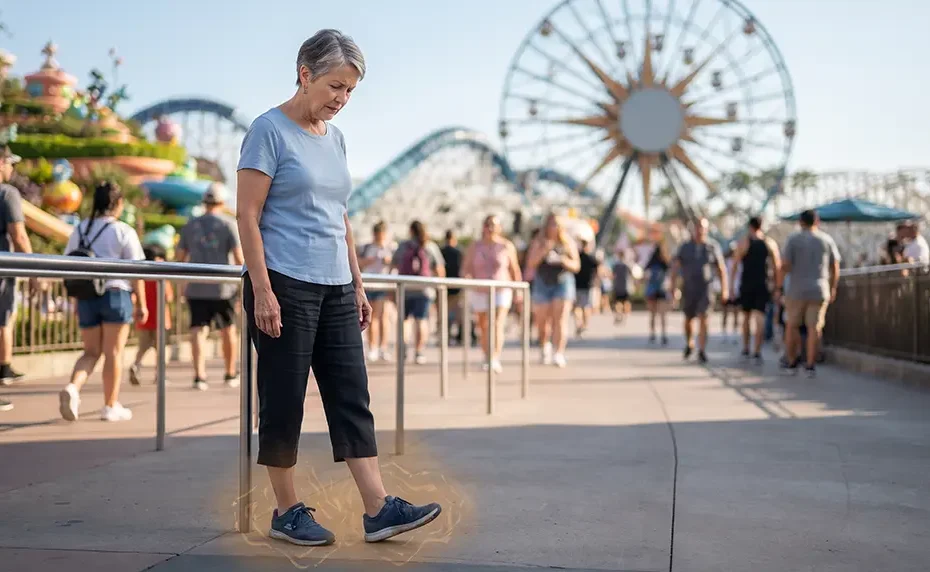
A theme-park day can combine thousands of extra steps, prolonged standing in lines, heat, hard pavement, swelling, unfamiliar shoes, stairs, crowds, and late-night fatigue. For someone with peripheral neuropathy, those stresses can accumulate into burning, numbness, swelling, blisters, balance problems, or a significant nighttime flare. Planning the day around foot protection and activity tolerance can make the experience safer and more enjoyable.
- Theme parks combine several common neuropathy triggers at once.
- Walking and standing demands may be far higher than normal daily activity.
- Swelling can make footwear progressively tighter.
- Reduced sensation can allow blisters or skin injuries to develop without much warning.
- Mobility assistance, rest periods, good footwear, and foot inspection can help preserve function.
Last updated: September 29, 2026
Reviewed by: Neuropathy Relief Center of Miami clinical team
Theme parks are designed to keep you moving.
A single day may involve:
- long parking walks
- security lines
- standing in queues
- stairs
- ramps
- hard concrete
- heat
- restaurants
- rides
- crowded exits
- another long walk back to the car
For a neuropathy patient, that can be a very different physical demand than a normal day.
Patients may say:
- “I was fine in the morning and burning by dinner.”
- “My feet swelled inside my shoes.”
- “The lines were worse than the walking.”
- “I developed a blister and barely felt it.”
- “My balance got worse after dark.”
- “My feet were on fire when I finally got into bed.”
This is exactly the type of cumulative trigger pattern our neuropathy blog strategy is designed to explain.
The Problem Is Not Just the Step Count
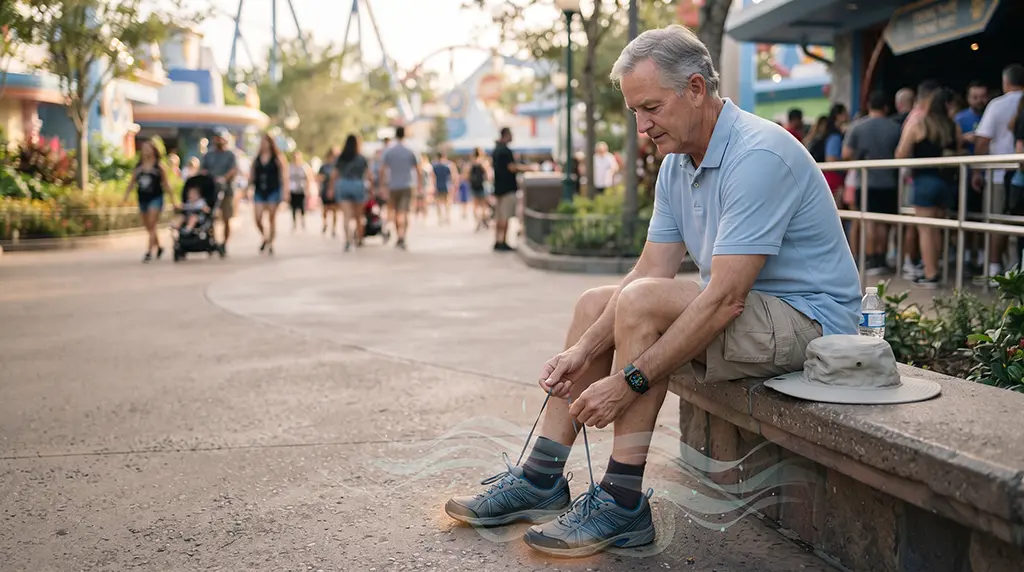
A theme park combines multiple stresses.
One by itself may be manageable.
Together they can become significant.
Walking
The patient may perform far more steps than usual.
Standing
Lines can involve long periods of relatively static standing.
Heat
Warm conditions may affect comfort, swelling and fatigue.
Hard Surfaces
Concrete provides little cushioning.
Crowds
The patient must repeatedly stop, start, turn and avoid other people.
Fatigue
By evening, balance and walking mechanics may be less reliable.
Footwear That Works at Home May Fail at a Theme Park
A shoe may feel excellent during a 20-minute walk.
That does not guarantee it will feel excellent after eight hours.
As the feet swell, pressure can increase around:
- toes
- heel
- top of the foot
- ball of the foot
This is not the day to test brand-new shoes.
CDC foot-care guidance recommends well-fitting footwear and breaking in new shoes gradually, particularly when nerve damage reduces protective sensation. CDC
Why Blisters Are More Important With Neuropathy
A person with normal sensation usually notices rubbing quickly.
A neuropathy patient may not.
CDC notes that nerve damage can reduce the ability to feel pain, heat and cold, allowing cuts, blisters and sores to go unnoticed. CDC
That makes foot inspection especially important after a high-mileage day.
Lines May Be Harder Than Walking
Some patients tolerate movement better than standing in one place.
In a line:
- pressure remains in similar areas
- the calf muscles are less active than during continuous walking
- feet may become more uncomfortable
- fatigue builds
The patient may repeatedly shift weight from side to side.
Use opportunities to sit when available.
Heat and Hydration
South Florida patients are familiar with hot-weather activity, but travel destinations such as Orlando can create long hours of heat exposure.
Take appropriate breaks.
Stay hydrated according to your medical needs.
Patients with heart, kidney, blood-pressure, or other medical conditions should follow their clinician’s guidance rather than generic hydration recommendations.
Balance After Dark
Theme parks look very different at night.
Lighting changes.
Crowds become dense.
Curbs and surface transitions may be harder to see.
If peripheral neuropathy has reduced foot sensation, vision may already be compensating for some of that loss.
Reduced lighting removes part of that compensation.
Mayo Clinic identifies coordination problems and falls as potential complications of peripheral neuropathy. Mayo Clinic
A Better Theme-Park Plan
Before going:
- wear proven shoes
- inspect your feet
- pack dry socks
- know your normal walking tolerance
- identify rest opportunities
- consider mobility assistance if appropriate
During the day:
- take breaks before severe symptoms appear
- inspect feet if you feel rubbing
- adjust footwear if swelling develops
- use handrails
- avoid rushing through crowds
- sit periodically
Afterward:
- remove shoes and socks
- inspect the entire foot
- look between toes
- check heels and pressure areas
- note any blister or redness
- monitor whether symptoms return toward baseline
Mobility Assistance Is a Tool
Some patients avoid wheelchairs, scooters or other mobility options because they believe using one means giving up.
That is not necessarily the case.
Using assistance strategically can allow a person to participate in an activity without exceeding safe walking tolerance.
The goal is participation.
Not proving how many steps you can endure.
How the Dr. Alfonso Neuropathy Treatment Protocol Fits In
Theme-park planning reduces external stress.
The Dr. Alfonso Neuropathy Treatment Protocol is designed to address the broader peripheral nerve environment through:
- microcirculation support
- nerve signaling support
- inflammatory and oxidative-stress considerations
- metabolic foundations affecting peripheral nerve health
Our broader objective is not to tell patients to stop traveling, exercising or enjoying life.
It is to improve function while identifying and reducing unnecessary risk.
When to Seek Evaluation
Schedule an evaluation if:
- walking tolerance is decreasing
- symptoms flare for days after activity
- blisters occur without much pain
- balance worsens when fatigued
- numbness is spreading
- weakness develops
- trips increasingly require mobility assistance
Safety Note
Seek prompt medical attention for open wounds, infection signs, rapidly increasing swelling, new significant weakness, severe unilateral leg symptoms, chest pain, shortness of breath, or sudden neurological changes.
FAQs
Can I go to a theme park if I have neuropathy?
Many patients can, but activity tolerance, balance, protective sensation, footwear and other medical conditions should guide planning.
Why do my feet burn more after a long walking day?
Repeated loading, heat, swelling, footwear pressure and the underlying nerve condition may all contribute.
Should I use a mobility scooter?
For some patients, strategic mobility assistance can reduce excessive walking and improve safety. The decision depends on individual function.
Should I check my feet during the day?
If protective sensation is reduced or footwear feels different, inspecting the feet can help identify problems before they become more serious.
References
- CDC: Your Feet and Diabetes CDC
- Mayo Clinic: Peripheral Neuropathy- Symptoms and Causes Mayo Clinic
- CDC: Tips for Healthy Feet CDC
Clinic: Neuropathy Relief Center of Miami
Address: 8585 Sunset Drive, Suite 104, Miami, FL 33143
Call: 305-274-7475
Learn more: Neuropathy Treatment Miami
Book your consultation today: Appointments

Sincerely Yours for Health,
Dr. Rodolfo Alfonso, D.C.
8585 Sunset Drive,
STE 104
Miami, FL 33143
Ph: 305-275.7475
www.neuropathyreliefmia