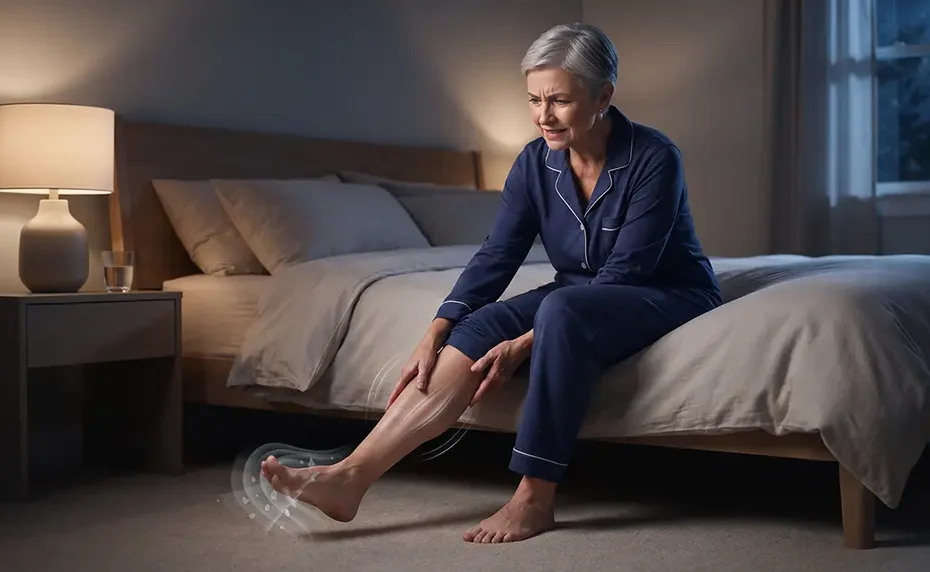
Night leg cramps are sudden involuntary muscle contractions that commonly affect the calves and can also involve the feet or thighs. Peripheral neuropathy can be associated with muscle cramping, but cramps have many other possible causes including muscle fatigue, dehydration, vascular disease, metabolic conditions, medications, and nerve compression. A patient with neuropathy should therefore avoid assuming every nighttime cramp comes from the neuropathy itself.
- Peripheral neuropathy can include muscle cramps.
- Night leg cramps have many possible causes.
- Restless legs syndrome is different from a true muscle cramp.
- Persistent cramping accompanied by weakness, muscle loss, swelling, or circulation symptoms deserves evaluation.
- The Dr. Alfonso Neuropathy Treatment Protocol addresses peripheral nerve health while other causes of cramping are evaluated when appropriate.
Last updated: September 29, 2026
Reviewed by: Neuropathy Relief Center of Miami clinical team
You are sleeping comfortably.
Suddenly the calf contracts.
The foot may point downward.
The muscle becomes hard and painful.
You jump out of bed.
For patients who already have neuropathy, the immediate question is:
“Is my neuropathy causing this?”
The answer is:
Possibly but not necessarily.
Mayo Clinic notes that night leg cramps commonly affect the calf but can involve the feet or thighs, and peripheral neuropathy is among several neurological conditions associated with night cramps. Mayo Clinic
Cleveland Clinic also lists muscle cramps among possible peripheral neuropathy symptoms. Cleveland Clinic
But there are many other possibilities.
What Is a Night Leg Cramp?
A true cramp is an involuntary tightening of a muscle.
It may last:
- several seconds
- a minute
- several minutes
The muscle can remain sore afterward.
Common locations include:
- calf
- arch of the foot
- toes
- thigh
Why Neuropathy Can Be Involved
Motor nerves help control muscles.
Peripheral neuropathy may affect:
- sensory nerves
- motor nerves
- autonomic nerves
If motor nerves are involved, patients may experience:
- weakness
- altered reflexes
- muscle loss
- cramping
But this does not mean every cramp indicates worsening nerve damage.
Other Causes Matter
Night cramps may also be associated with:
- muscle fatigue
- dehydration
- inactivity
- certain medications
- kidney disease
- thyroid disorders
- diabetes
- peripheral artery disease
- spinal stenosis
- other neurological conditions
Mayo Clinic emphasizes that most nighttime cramps do not have one obvious cause. Mayo Clinic
That is why evaluation matters when cramps become frequent or severe.
Cramp vs. Burning Neuropathy Pain
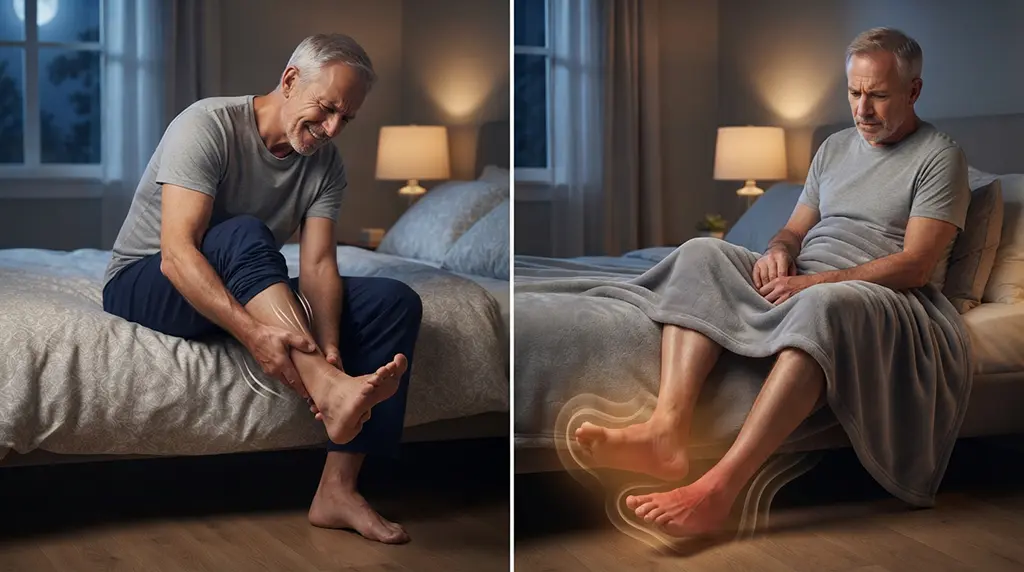
These symptoms feel different.
Neuropathic pain may feel like:
- burning
- electric shocks
- stabbing
- tingling
- pins and needles
A muscle cramp usually feels like:
- sudden tightening
- hard contraction
- pulling
- inability to relax the muscle
Patients can have both.
Cramp vs. Restless Legs
Restless legs syndrome is also different.
Restless legs commonly creates an urge to move the legs and uncomfortable sensations around bedtime.
A cramp is an actual involuntary muscle contraction.
The distinction can help the clinician understand what is happening.
What About Magnesium?
Many patients immediately assume a nighttime cramp means they are deficient in magnesium.
Electrolyte disturbances can contribute to cramps in some situations, but supplementation should not automatically be the first conclusion.
Frequent cramps may require review of:
- medications
- hydration
- kidney function
- vascular health
- metabolic conditions
- neurological findings
The correct intervention depends on the cause.
What You Can Do During a Cramp
Mayo Clinic recommends stretching the affected muscle; walking or moving the leg may also help some people. Mayo Clinic
If cramps happen frequently, keep track of:
- time
- location
- duration
- activity that day
- hydration
- medications
- alcohol
- associated weakness or numbness
Patterns can be useful.
How the Dr. Alfonso Neuropathy Treatment Protocol Fits In
When peripheral nerve dysfunction is contributing to symptoms, the Dr. Alfonso Neuropathy Treatment Protocol is designed around:
- microcirculation support
- peripheral nerve signaling
- inflammatory and oxidative-stress factors
- metabolic foundations affecting nerve health
However, cramps should not automatically be treated as neuropathy if another cause is more likely.
The goal is accurate evaluation first.
When to Schedule an Evaluation
Consider evaluation if:
- cramps occur frequently
- they repeatedly wake you
- muscle weakness develops
- muscle size is decreasing
- numbness is progressing
- walking changes
- cramps are becoming more severe
- symptoms begin after a medication change
Mayo Clinic specifically advises medical evaluation when night cramps are associated with muscle weakness or loss of muscle mass. Mayo Clinic
Safety Note
New severe leg pain accompanied by marked swelling, redness, warmth, chest pain, or shortness of breath should receive prompt medical attention rather than being assumed to be a routine muscle cramp.
FAQs
Can neuropathy cause foot or calf cramps?
Peripheral nerve disorders can be associated with muscle cramping, but many other conditions can also cause cramps.
Are night cramps the same as restless legs?
No. A cramp is an involuntary muscle contraction. Restless legs usually causes an urge to move rather than a sustained painful contraction.
Does every leg cramp mean I need electrolytes?
No. Electrolyte problems are only one possible explanation.
Why do cramps happen at night?
The precise cause is often unclear. Muscle fatigue and nerve-related factors are among the possibilities.
References
- Mayo Clinic: Night Leg Cramps – Causes and Definition Mayo Clinic
- Cleveland Clinic: Peripheral Neuropathy Cleveland Clinic
- Mayo Clinic: Muscle Cramps Mayo Clinic
Clinic: Neuropathy Relief Center of Miami
Address: 8585 Sunset Drive, Suite 104, Miami, FL 33143
Call: 305-274-7475
Learn more: Neuropathy Treatment Miami
Book your consultation today: Appointments

Sincerely Yours for Health,
Dr. Rodolfo Alfonso, D.C.
8585 Sunset Drive,
STE 104
Miami, FL 33143
Ph: 305-275.7475
www.neuropathyreliefmia