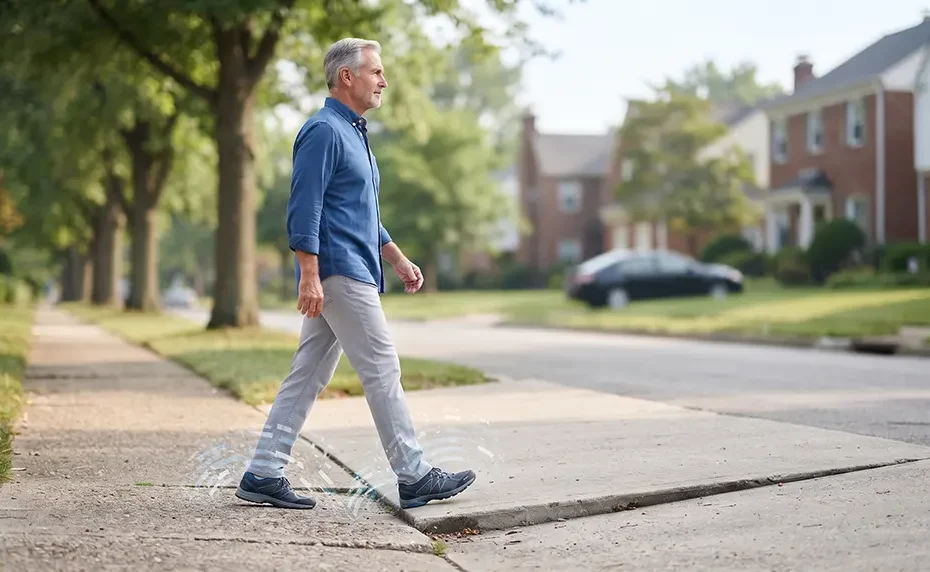
Peripheral neuropathy can reduce the sensory information the brain receives from the feet. Small changes in sidewalk height, cracked pavement, sloped driveways, curbs, and uneven bricks may therefore be harder to detect quickly. When reduced sensation is combined with weakness or poor balance, seemingly minor changes in the walking surface can become important fall hazards.
- Peripheral neuropathy may cause numbness, weakness, impaired coordination, and falls.
- Uneven terrain requires rapid adjustments in ankle and foot position.
- Reduced sensation can make small sidewalk changes harder to detect.
- Good lighting, stable footwear, visual awareness, and appropriate assistive support can reduce risk.
- Sudden new balance problems should not automatically be blamed on neuropathy.
Last updated: September 29, 2026
Reviewed by: Neuropathy Relief Center of Miami clinical team
A smooth hallway can feel easy.
Then the patient walks outside.
Suddenly there are:
- sidewalk cracks
- raised concrete edges
- curbs
- driveway slopes
- tree roots
- bricks
- grass transitions
- storm drains
- uneven pavement
Patients may tell us:
- “I trip over things other people don’t notice.”
- “I don’t feel the sidewalk change.”
- “Curbs make me nervous.”
- “I have to look at the ground constantly.”
- “My toe catches small cracks.”
- “I feel much safer indoors.”
This is an important neuropathy symptom pattern.
Your Feet Continuously Read the Ground
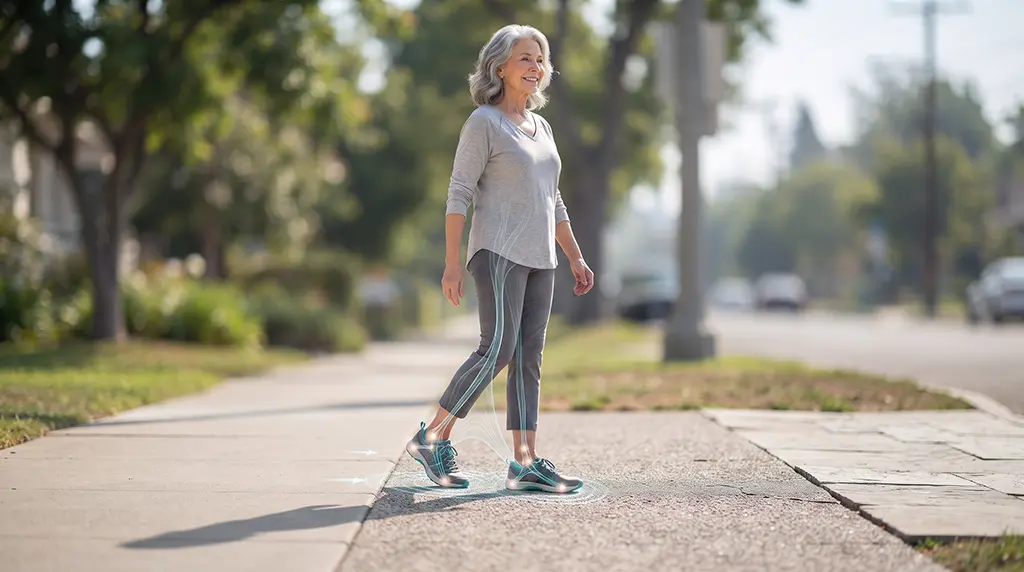
Normal walking depends on sensory information from the feet.
The nervous system constantly detects:
- pressure
- surface changes
- vibration
- weight distribution
- foot placement
Peripheral neuropathy can interfere with this sensory feedback.
Mayo Clinic lists lack of coordination and falling among possible neuropathy symptoms, while MedlinePlus notes walking problems and falls from impaired balance in sensorimotor polyneuropathy. Mayo Clinic
Why a Quarter-Inch Change Can Matter
A healthy nervous system can react to a small unexpected surface change almost instantly.
The ankle adjusts.
The toes lift.
The opposite leg changes position.
The arms react.
If sensation is reduced, the patient may recognize the obstacle later.
That fraction of a second can matter.
Toe Clearance
Some neuropathy patients begin walking with slightly reduced toe clearance.
They may notice:
- shoes scuffing
- toe catching
- shortened steps
- slower walking
- consciously lifting the feet higher
If motor nerves are affected, weakness can contribute as well.
New foot slapping or foot drop should be evaluated promptly.
Why Looking Down Helps
Many neuropathy patients compensate by watching the ground.
Vision begins providing information that the feet previously supplied automatically.
That can help but it also creates limitations.
You cannot continuously watch the sidewalk while also:
- crossing a street
- watching traffic
- talking to someone
- carrying groceries
- walking a dog
The goal should therefore include improving safety and function, not simply telling the patient to “watch your feet.”
Curbs Are Particularly Challenging
A curb requires the nervous system to estimate:
- height
- depth
- foot placement
- weight transfer
- balance
Stepping down can be particularly challenging because the surface lies below the body.
This is similar to why some neuropathy patients find descending stairs more difficult.
South Florida Walking Conditions
Patients throughout Miami, Miami Beach, Fort Lauderdale, Miami-Dade, Broward, and the Florida Keys regularly encounter:
- wet sidewalks
- cracked concrete
- beach-path transitions
- brick walkways
- condo entrances
- parking lots
- curbs
- construction areas
- rain-slick surfaces
For a patient with reduced protective sensation and balance, ordinary walking environments can become more demanding.
Footwear Matters
Stable footwear should provide:
- secure heel contact
- adequate traction
- proper sizing
- a stable base
- adequate toe room
Loose flip-flops can magnify the problem because the shoe itself moves relative to the foot.
Practical Walking Strategies
- Slow down on unfamiliar surfaces.
- Use handrails where available.
- Step over large cracks rather than directly onto them.
- Give curbs your full attention.
- Avoid texting while walking on uneven ground.
- Use adequate lighting.
- Wear stable footwear.
- Consider an appropriate assistive device if recommended.
How the Dr. Alfonso Neuropathy Treatment Protocol Fits In
Environmental changes reduce immediate fall risk.
The Dr. Alfonso Neuropathy Treatment Protocol is designed to support peripheral nerve health through attention to:
- 🩸 microcirculation
- ⚡ peripheral nerve signaling
- 🌿 inflammatory and oxidative stress factors
- 🧠 metabolic contributors
Depending on the patient’s condition, strength and balance rehabilitation may also be important.
When to Seek Evaluation
Schedule an evaluation if:
- toe catching is increasing
- you repeatedly trip
- balance is worsening
- you avoid outdoor walking because of instability
- one foot drags
- falls or near-falls are increasing
- walking becomes noticeably wider or slower
Safety Note
Sudden loss of balance, sudden weakness, facial drooping, speech changes, severe dizziness, or abrupt loss of coordination requires urgent medical evaluation.
FAQs
Why are uneven sidewalks harder with neuropathy?
Reduced sensation may make surface changes more difficult to detect quickly, while weakness or impaired coordination can reduce the ability to correct a misstep.
Why do I keep looking at my feet?
Vision may be compensating for reduced sensory feedback from the feet.
Does tripping mean I have foot drop?
Not necessarily. Many problems can cause tripping. Repeated toe catching or new weakness deserves evaluation.
Can balance improve?
Depending on the cause, addressing nerve health, strength, balance, footwear and environmental risk can improve function.
References
- Mayo Clinic: Peripheral Neuropathy – Symptoms and Causes Mayo Clinic
- MedlinePlus: Sensorimotor Polyneuropathy MedlinePlus
- Mayo Clinic: Balance Problems Mayo Clinic
Clinic: Neuropathy Relief Center of Miami
Address: 8585 Sunset Drive, Suite 104, Miami, FL 33143
Call: 305-274-7475
Learn more: Neuropathy Treatment Miami
Book your consultation today: Appointments

Sincerely Yours for Health,
Dr. Rodolfo Alfonso, D.C.
8585 Sunset Drive,
STE 104
Miami, FL 33143
Ph: 305-275.7475
www.neuropathyreliefmia