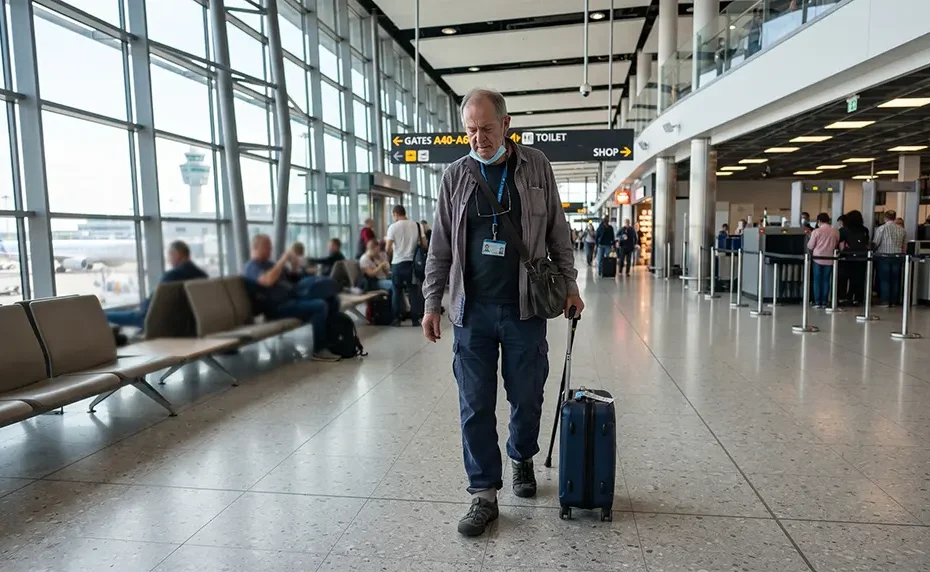
Airport travel can trigger neuropathy symptoms because it combines long walking distances, standing in TSA lines, hard floors, luggage carrying, sitting during flights, swelling, dehydration, tight shoes, and unfamiliar walking surfaces. Patients may feel burning, numbness, tingling, heavy legs, balance insecurity, or nighttime flares after travel. A better airport strategy can reduce foot risk and improve travel confidence.
- Airports combine long walking, standing, hard floors, swelling, luggage, and time pressure.
- Neuropathy can reduce protective sensation, making pressure marks and blisters harder to detect early.
- The Dr. Alfonso Neuropathy Treatment Protocol supports damaged peripheral nerves while safer travel habits reduce flare risk.
Last updated: September 9, 2026
Reviewed by: Neuropathy Relief Center of Miami team
Airport travel can be stressful for anyone. For neuropathy patients, it can be one of the most common travel-related symptom triggers.
Patients often say:
- “My feet burn after walking through the airport.”
- “Standing in the TSA line makes my toes go numb.”
- “My legs feel heavy by the time I reach the gate.”
- “My feet swell on flights.”
- “I feel unstable when rushing through terminals.”
- “My neuropathy flares that night after travel.”
At the Neuropathy Relief Center of Miami, we see this in patients from Miami, Fort Lauderdale, Miami-Dade County, Broward County, and the Florida Keys, as well as visitors from the USA, Colombia, Chile, Argentina, Mexico, and the Caribbean who travel through South Florida for care, family, business, cruises, and vacations.
This blog is educational. If you develop severe swelling, one-sided calf pain, chest pain, shortness of breath, wounds, sudden weakness, or rapidly worsening numbness while traveling, seek medical care promptly.
Why airport travel triggers neuropathy
Airports stack multiple neuropathy stressors into one day:
- long walking distances
- standing in security lines
- hard floors
- crowded terminals
- carrying luggage
- rushing to gates
- long sitting during flights
- dehydration
- salty airport food
- tight shoes
- travel stress
- unfamiliar surfaces
A patient may tolerate one of these factors. The flare often happens when several occur together.
Hard floors and long terminals
Airport floors are usually hard and unforgiving. Walking from parking, check-in, security, gates, restrooms, restaurants, and baggage claim can add up quickly.
Neuropathy patients may feel:
- burning under the feet
- heel pain
- toe numbness
- calf heaviness
- arch cramping
- “tight sock” sensation
- delayed nighttime buzzing
The problem may not be one long walk. It may be the repeated stop-start walking across the entire travel day.
TSA lines and standing still
Standing still can be worse than walking for many neuropathy patients. In TSA lines, the feet stay under pressure with little calf movement. Shoes may feel tighter. Swelling can build.
Patients may notice:
- numb toes
- burning forefoot
- foot pressure
- balance insecurity
- fatigue before boarding
Small movements in line may help. Gentle ankle motion, shifting weight, and avoiding locked knees can reduce stress.
Flight swelling and shoe pressure
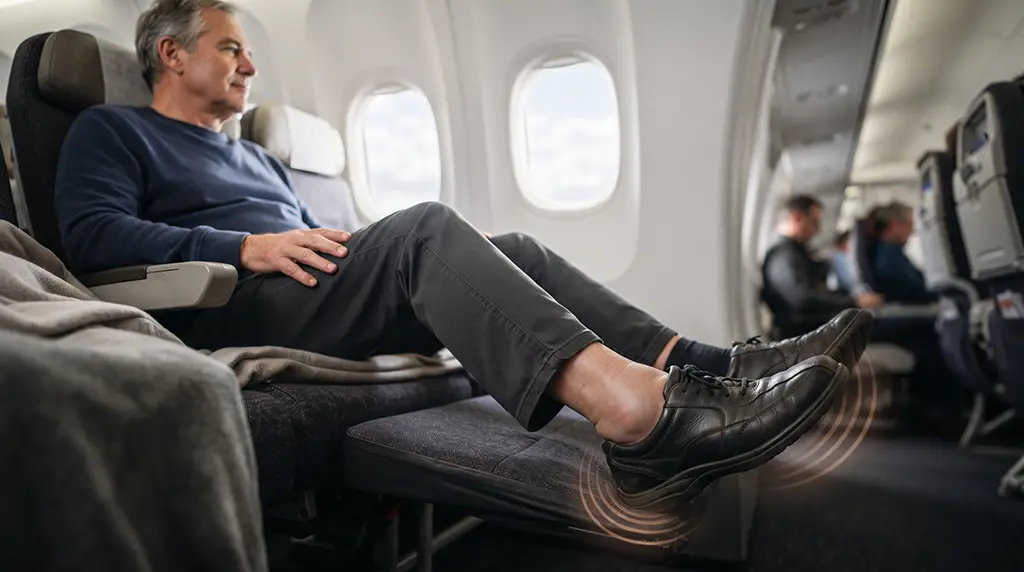
Flights can increase foot and ankle swelling because of long sitting and reduced movement. Swelling increases pressure inside shoes and socks. That pressure can worsen burning, numbness, and skin irritation.
This is especially important for patients who wear:
- tight dress shoes
- narrow toe boxes
- new travel shoes
- sandals with straps
- socks with tight bands
- compression socks that are not properly fitted
Travel shoes should be proven before the trip, not tested at the airport.
Luggage and balance
Rolling luggage may seem easy, but it can affect balance. Carry-on bags, backpacks, and shoulder bags shift posture and make quick corrections harder. When foot sensation is reduced, rushing with luggage increases fall risk.
Risk increases with:
- escalators
- moving walkways
- crowded gate areas
- curbs
- shuttle buses
- uneven sidewalks
- wet terminal entrances
- fatigue after long flights
Use assistance when needed. Airport wheelchair service, carts, elevators, and extra time are smart strategies, not signs of weakness.
Safer airport strategies
- Wear proven supportive shoes
- Avoid new shoes on travel days
- Give yourself extra time
- Use elevators instead of rushing stairs
- Move ankles during long sitting
- Hydrate before and during travel
- Avoid excessive alcohol before flights
- Inspect feet after travel
- Pack dry socks
- Use luggage that rolls smoothly
- Ask for assistance if walking distance is too much
How the Dr. Alfonso Neuropathy Treatment Protocol helps
Airport strategies reduce outside stress. The Dr. Alfonso Neuropathy Treatment Protocol supports the internal environment around damaged peripheral nerves.
The protocol focuses on:
- 🩸 Microcirculation to the feet and legs
- ⚡ Nerve signaling stability and repair support
- 🌿 Inflammation and oxidative stress reduction
- 🧠 Metabolic foundations that influence nerve recovery and walking confidence
As nerve signaling becomes more stable, many patients report better tolerance for errands, travel, walking, and daily activity.
When to seek evaluation
Seek evaluation if:
- airports consistently trigger burning
- foot swelling is worsening
- walking distance is declining
- balance feels unsafe in crowds
- blisters or pressure marks appear
- symptoms last several days after travel
- numbness is spreading
- you rely on luggage or walls for balance
FAQs
Why do airports make neuropathy worse?
Airports combine long walking, standing in lines, hard floors, luggage, dehydration, sitting, and swelling.
Why do my feet burn after flying?
Flight swelling, reduced movement, tight shoes, dehydration, and prior walking can irritate damaged peripheral nerves.
Should neuropathy patients request airport assistance?
Yes, when walking distance or balance is a concern. Assistance can reduce fall risk and symptom flares.
Can treatment improve travel tolerance?
Many patients improve as microcirculation, nerve signaling stability, and recovery capacity improve.
References
- NINDS: Peripheral Neuropathy overview
- CDC: Foot care and daily inspection guidance
- Mayo Clinic: Peripheral neuropathy symptom and safety education
Clinic: Neuropathy Relief Center of Miami
Address: 8585 Sunset Drive, Suite 104, Miami, FL 33143
Call: 305-274-7475
Learn more: Neuropathy Treatment Miami
Book your consultation today: Appointments

Sincerely Yours for Health,
Dr. Rodolfo Alfonso, D.C.
8585 Sunset Drive,
STE 104
Miami, FL 33143
Ph: 305-275.7475
www.neuropathyreliefmia