
Foot drop, toe catching, foot slapping, or dragging the front of the foot can be a serious functional warning sign. It may reflect nerve involvement, muscle weakness, spinal nerve irritation, or other neurological conditions that need evaluation. If you notice your toes catching curbs, stairs, rugs, or sidewalks, do not wait for a fall.
- Foot drop can increase fall risk and should be evaluated.
- Toe catching may be subtle at first and may appear only when tired.
- The Dr. Alfonso Neuropathy Treatment Protocol supports nerve function, but new or worsening weakness needs proper medical assessment.
Last updated: April 14, 2026
Reviewed by: Neuropathy Relief Center of Miami team
Neuropathy symptoms are often described as burning, tingling, numbness, buzzing, or pain. But weakness symptoms can be even more important from a safety standpoint.
Patients may say:
- “My toes catch when I walk.”
- “My foot slaps the ground.”
- “I trip on curbs.”
- “I feel like I have to lift my knee higher.”
- “My shoe scuffs on one side.”
- “I almost fall when I get tired.”
At the Neuropathy Relief Center of Miami, we see this in patients across Miami, Fort Lauderdale, Miami-Dade County, Broward County, and the Florida Keys, as well as visitors from the USA, Colombia, Chile, Argentina, Mexico, and the Caribbean.
This blog is educational. New, sudden, or worsening weakness should be medically evaluated promptly.
What is foot drop?
Foot drop means difficulty lifting the front of the foot. This can cause the toes to drag or catch during walking. Some patients compensate by lifting the knee higher than normal.
Signs may include:
- toe catching
- foot slapping
- dragging the front of the shoe
- stumbling on rugs
- tripping on curbs
- uneven shoe wear
- difficulty walking fast
- worse symptoms when tired
Foot drop may be mild at first, but it can still increase fall risk.
Why foot drop matters
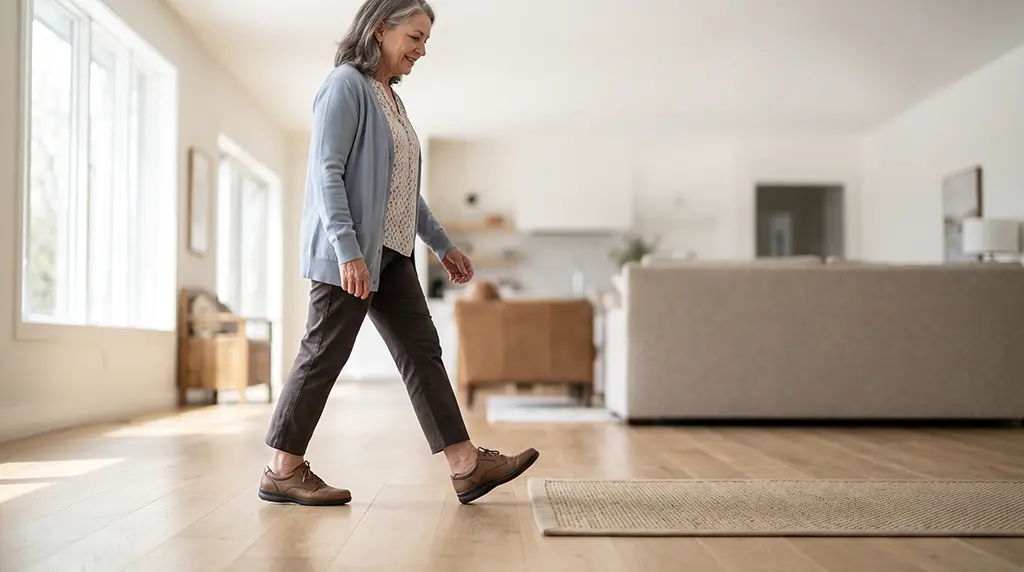
Foot drop is not just annoying. It can lead to falls. A small toe catch on a rug, curb, stair, or sidewalk can cause a serious injury.
Falls can lead to:
- wrist fractures
- hip injuries
- head injuries
- back injuries
- fear of walking
- loss of independence
The goal is to catch the problem early.
What can cause foot drop?
Foot drop can come from different sources, including:
- peripheral nerve involvement
- neuropathy affecting motor signals
- spinal nerve irritation
- peroneal nerve compression
- muscle weakness
- neurological disease
- trauma
- other medical conditions
Because causes vary, evaluation matters. Do not assume every toe-catching problem is “just neuropathy.”
Early warning signs
Seek evaluation if you notice:
- one foot slaps louder than the other
- toes catch when tired
- you trip on small obstacles
- one shoe scuffs more
- stairs feel harder
- curbs feel unsafe
- walking speed has changed
- balance worsens at night
These changes are functional clues.
Why fatigue reveals foot drop
Some patients walk normally at first, then symptoms appear later. As muscles and nerves fatigue, the foot may lift less reliably.
This is common during:
- long grocery trips
- airport walks
- beach walking
- stairs
- hot weather
- evening fatigue
- after poor sleep
- after long sitting
Fatigue-related toe catching still matters.
Safety strategies
- Use stable shoes with good toe clearance
- Remove loose rugs and clutter
- Use handrails on stairs
- Improve lighting at home
- Avoid rushing on curbs
- Consider assistive devices if recommended
- Seek professional gait evaluation
- Do not ignore one-sided weakness
Some patients may need bracing or specialized support depending on the cause and severity.
How the Dr. Alfonso Neuropathy Treatment Protocol helps
The Dr. Alfonso Neuropathy Treatment Protocol supports the nerve environment by focusing on:
- 🩸 Microcirculation to peripheral nerves and muscles
- ⚡ Nerve signaling stability and repair support
- 🌿 Inflammation and oxidative stress reduction
- 🧠 Metabolic foundations that influence nerve-muscle communication
However, foot drop or progressive weakness should be evaluated carefully to identify the cause and determine the safest plan.
When to seek urgent evaluation
Seek urgent evaluation if:
- weakness appears suddenly
- one foot drops unexpectedly
- numbness spreads rapidly
- back pain is severe with leg weakness
- bowel or bladder changes occur
- walking suddenly changes
- falls begin happening
FAQs
Is foot drop a neuropathy symptom?
It can be related to neuropathy, but it can also come from spinal, nerve compression, or neurological causes.
Why does my foot slap when I walk?
Foot slapping can occur when the muscles that lift the front of the foot are weak or poorly controlled.
Should I worry if my toes catch sometimes?
Yes. Toe catching can increase fall risk and should be evaluated, especially if it is new or worsening.
Can treatment improve foot control?
Improvement depends on the cause, but supporting nerve signaling, circulation, and muscle function may help many patients.
References
- NINDS: Peripheral Neuropathy overview
- NIH/MedlinePlus: Foot drop and nerve weakness education
Clinic: Neuropathy Relief Center of Miami
Address: 8585 Sunset Drive, Suite 104, Miami, FL 33143
Call: 305-274-7475
Learn more: Neuropathy Treatment Miami
Book your consultation today: Appointments

Sincerely Yours for Health,
Dr. Rodolfo Alfonso, D.C.
8585 Sunset Drive,
STE 104
Miami, FL 33143
Ph: 305-275.7475
www.neuropathyreliefmia