
Heating pads, electric blankets, warm foot wraps, and heated slippers may feel comforting at first, but they can be risky for neuropathy patients. Reduced sensation can make it harder to judge temperature, and too much heat may worsen burning, swelling, skin irritation, or delayed nighttime flares. If heat helps briefly but symptoms return stronger later, your nerves may be heat-sensitive.
- Neuropathy can reduce accurate temperature sensation, increasing burn risk.
- Heat may temporarily relax muscles but can worsen burning or swelling in some patients.
- The Dr. Alfonso Neuropathy Treatment Protocol supports nerve stability while patients reduce avoidable heat triggers.
Last updated: April 14, 2026
Reviewed by: Neuropathy Relief Center of Miami team
Many neuropathy patients use heat because their feet feel cold, stiff, tight, or uncomfortable. A heating pad may feel soothing. An electric blanket may help the feet relax. Heated slippers may feel good at first.
But neuropathy changes the safety rules.
Patients often say:
- “Heat feels good at first, then my feet burn later.”
- “My feet feel cold, so I use a heating pad.”
- “I cannot tell if the pad is too hot.”
- “My symptoms flare after using an electric blanket.”
- “My feet are numb but also burning.”
At the Neuropathy Relief Center of Miami, we see this pattern in patients throughout Miami, Fort Lauderdale, Miami-Dade County, Broward County, and the Florida Keys, as well as visitors from the USA, Colombia, Chile, Argentina, Mexico, and the Caribbean.
This blog is educational. If you have burns, blisters, open skin, wounds, severe redness, swelling, drainage, or infection signs, seek medical care promptly.
Why heat can be risky with neuropathy
Neuropathy can reduce protective sensation. That means your feet may not accurately tell you when something is too hot. The skin can become irritated or burned before the warning signal feels strong enough.
This is especially important with:
- heating pads
- electric blankets
- heated socks
- heated slippers
- hot water bottles
- warm foot baths
- space heaters near the feet
The issue is not that warmth is always bad. The issue is that reduced sensation makes heat harder to judge safely.
The “feels good, flares later” pattern
Some patients feel relief during heat exposure, then burning returns stronger later. This can happen because heat increases blood flow, swelling, and nerve sensitivity in some patients.
A common pattern looks like this:
- Feet feel cold or numb
- Patient applies heat
- Feet feel temporarily relaxed
- Tissue warms and swelling increases
- Nerves become more reactive
- Burning or buzzing worsens later at night
If this pattern repeats, heat may be a trigger.
Cold feet do not always need heat
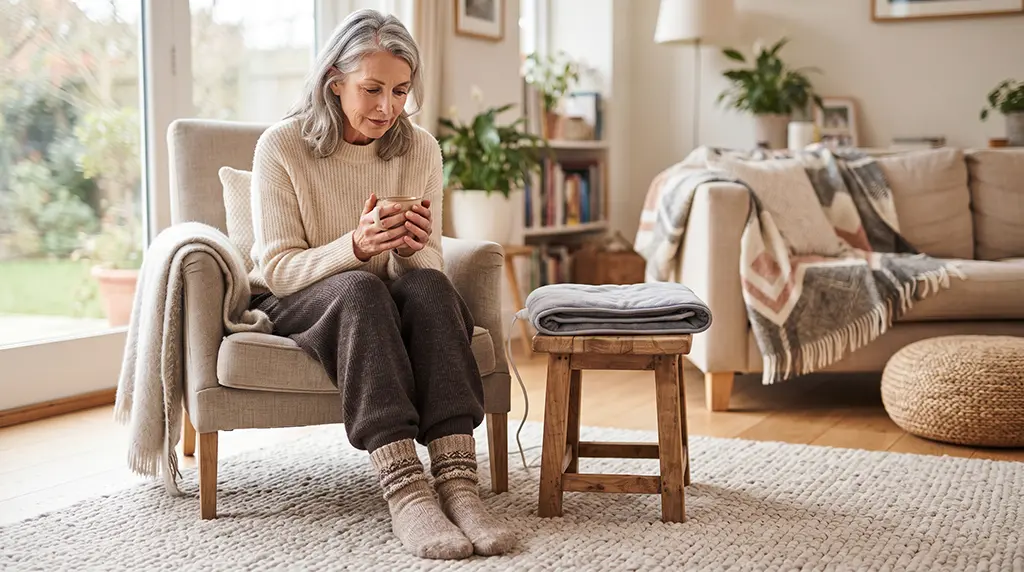
Neuropathy can create temperature confusion. A foot may feel cold internally even when the skin is not actually cold. This can lead patients to overheat the feet trying to fix a sensation that is coming from nerve signaling.
Before applying heat, check:
- Are the feet actually cold to the touch?
- Are both feet the same temperature?
- Is there color change?
- Is one foot suddenly colder than the other?
- Are there wounds or skin changes?
Sudden one-sided coldness, color change, severe pain, or loss of pulses should be medically evaluated.
Safer warming strategies
If warmth is appropriate for you, consider safer options:
- warm socks instead of direct heat
- room-temperature comfort rather than high heat
- limited exposure time
- never sleeping with a heating pad on the feet
- checking skin before and after warmth
- avoiding heat over numb areas
- asking a provider before using heated devices
Never use heat on wounds, infected skin, or areas where you cannot reliably feel temperature.
Why this matters in South Florida
Even in Miami, Fort Lauderdale, Miami-Dade, Broward, and the Florida Keys, patients may use heat because of strong air conditioning, cold tile floors, grocery store aisles, office settings, or nighttime symptoms.
Visitors from Colombia, Chile, Argentina, Mexico, and the Caribbean may also experience symptoms during travel when routines, footwear, and room temperature change.
How the Dr. Alfonso Neuropathy Treatment Protocol helps
The Dr. Alfonso Neuropathy Treatment Protocol supports:
- 🩸 Microcirculation to the feet and legs
- ⚡ Nerve signaling stability and repair support
- 🌿 Inflammation and oxidative stress reduction
- 🧠 Metabolic foundations that influence nerve sensitivity and recovery
As nerve function becomes more stable, many patients report less reactivity to heat, cold, pressure, and activity.
When to seek evaluation
Seek evaluation if:
- heat consistently worsens burning
- you cannot feel temperature accurately
- feet change color
- swelling worsens after heat
- skin becomes red, blistered, or irritated
- numbness is spreading
- nighttime burning is increasing
FAQs
Are heating pads safe with neuropathy?
They can be risky because reduced sensation may make it harder to detect burns or overheating.
Why do my feet burn after using heat?
Heat can increase nerve sensitivity and swelling in some patients, leading to delayed burning.
Is an electric blanket safer than a heating pad?
It still requires caution. Avoid direct heat over numb areas and do not sleep with intense heat on the feet.
Can treatment improve heat sensitivity?
Many patients improve as nerve signaling, circulation, and inflammation patterns become more stable.
References
- NINDS: Peripheral Neuropathy overview
- CDC: Foot inspection and skin safety guidance
Clinic: Neuropathy Relief Center of Miami
Address: 8585 Sunset Drive, Suite 104, Miami, FL 33143
Call: 305-274-7475
Learn more: Neuropathy Treatment Miami
Book your consultation today: Appointments

Sincerely Yours for Health,
Dr. Rodolfo Alfonso, D.C.
8585 Sunset Drive,
STE 104
Miami, FL 33143
Ph: 305-275.7475
www.neuropathyreliefmia