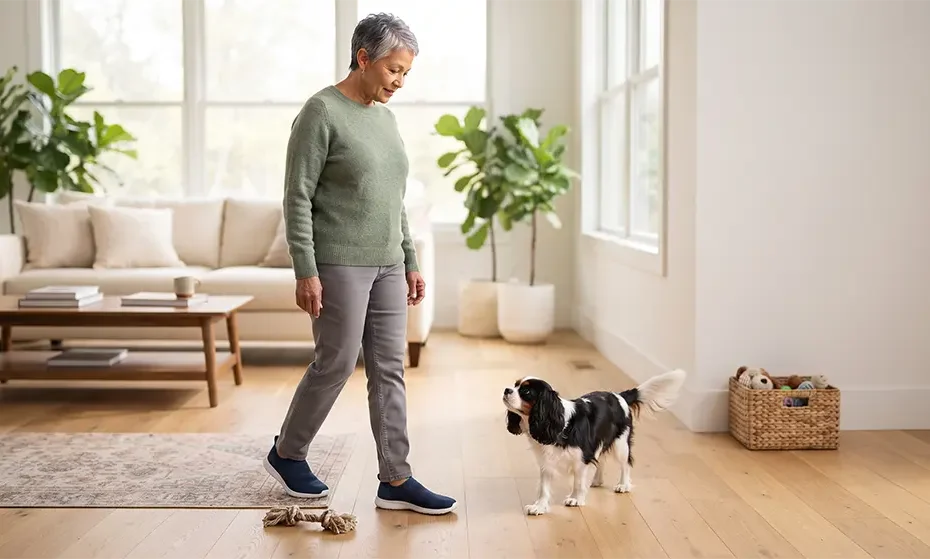
Pets bring comfort, but they can also increase fall risk for neuropathy patients. Small dogs, cats, food bowls, leashes, toys, beds, and sudden movement around the feet can be dangerous when numbness reduces ground feedback. A safer home setup can protect independence while keeping pets part of daily life.
- Neuropathy reduces foot feedback, making sudden pet movement more dangerous.
- Pet toys, bowls, beds, leashes, and nighttime walking paths can become trip hazards.
- Home safety changes and the Dr. Alfonso Neuropathy Treatment Protocol can improve walking confidence and reduce fall risk.
Last updated: April 14, 2026
Reviewed by: Neuropathy Relief Center of Miami team
Pets are family. Dogs and cats provide companionship, routine, movement, emotional support, and joy. But for neuropathy patients, pets can also create hidden fall risks inside the home.
Patients often say:
- “My dog gets under my feet.”
- “I almost tripped over the cat at night.”
- “The leash pulled me off balance.”
- “I stepped on a toy I did not feel.”
- “The food bowl area is slippery.”
- “I love my pet, but I am afraid of falling.”
At the Neuropathy Relief Center of Miami, we see this in patients across Miami, Fort Lauderdale, Miami-Dade County, Broward County, and the Florida Keys, and in visitors from the USA, Colombia, Chile, Argentina, Mexico, and the Caribbean. Many patients live in condos or apartments where space is limited, tile floors are common, and pets move quickly through narrow walking paths.
This blog is educational. If you have frequent falls, sudden weakness, severe dizziness, or rapidly worsening balance, seek medical evaluation.
Why pets increase fall risk with neuropathy
Neuropathy reduces the quality of feedback from the feet. That means the body may not sense small obstacles quickly enough. Pets add unpredictability.
A dog or cat may:
- walk between your feet
- stop suddenly
- sleep in a walkway
- leave toys on the floor
- spill water near bowls
- pull on a leash
- move quickly in low light
- jump near your legs
For someone with normal sensation and fast balance reactions, this may be manageable. For someone with numb feet, it can be risky.
Small pets can be harder to see
Small dogs and cats are often below the normal line of sight. Neuropathy patients may already look down more to compensate for poor foot feedback. But in low light, with clutter, or during urgency, small pets can still be missed.
This is especially risky:
- at night
- during bathroom trips
- when carrying laundry
- when feeding pets
- near doorways
- in kitchens
- on tile floors
- around leashes
Pet toys and bowls
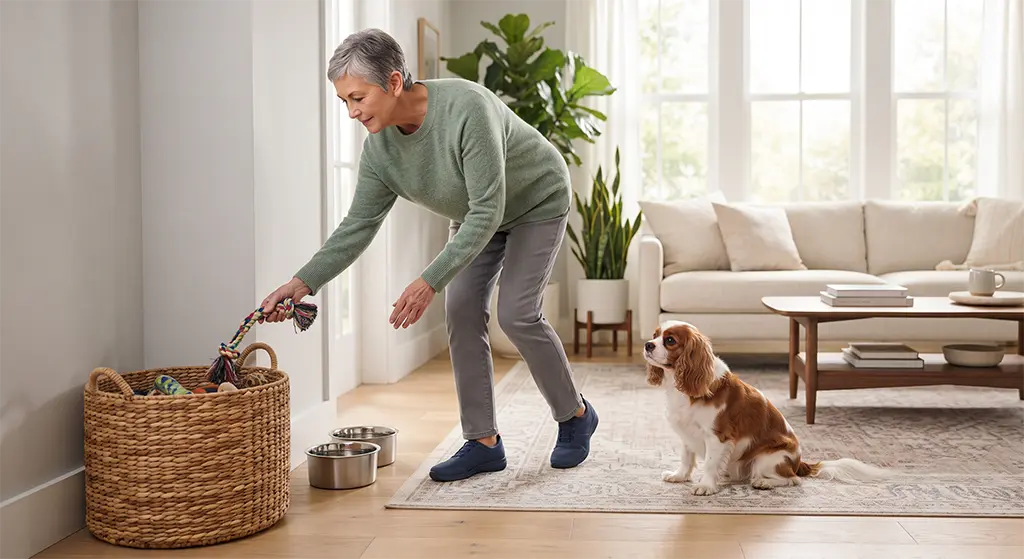
Pet toys can act like small trip hazards. Water bowls can create wet spots on tile. Food bowls can shift under the foot. Pet beds can block walking paths.
A safer setup includes:
- keeping toys in one area
- using non-slip mats under bowls
- placing bowls away from main walkways
- avoiding dark-colored toys on dark floors
- picking up toys before bedtime
- keeping pet beds out of hallways
Leash walking and neuropathy
Walking a dog can be healthy, but leash pulling can challenge balance. Sudden pulling may create a fall risk on sidewalks, curbs, ramps, grass, or wet surfaces.
Consider:
- shorter controlled leashes
- harness training
- avoiding slippery areas
- walking during good lighting
- using stable shoes
- avoiding distractions
- asking for help with strong dogs during flares
If your dog pulls hard, balance safety must come first.
Nighttime pet hazards
Nighttime is a high-risk time because vision is reduced and feet may feel numb after lying still. A pet sleeping near the bed or walking path can increase risk.
Safety steps:
- use nightlights
- keep footwear by the bed
- clear the path to the bathroom
- train pets to sleep away from walkways
- keep toys picked up
- avoid rushing
- pause before standing
Home layout matters
In condos and apartments common throughout Miami Beach, Miami-Dade, Broward, Fort Lauderdale, and the Florida Keys, space can be tight. Narrow hallways, tile floors, rugs, and pet items can crowd walking paths.
Look at your home like a fall-prevention map. Ask:
- Where do I walk most often?
- Where does the pet usually lie?
- Where are bowls and toys?
- Where do I walk at night?
- What area gets wet or slippery?
- Where do I carry laundry or groceries?
Then simplify those paths.
How the Dr. Alfonso Neuropathy Treatment Protocol helps
Home safety reduces outside risk. The Dr. Alfonso Neuropathy Treatment Protocol supports the internal nerve environment by focusing on:
- 🩸 Microcirculation to the feet and legs
- ⚡ Nerve signaling stability and repair support
- 🌿 Inflammation and oxidative stress reduction
- 🧠 Metabolic foundations that influence balance, nerve function, and walking confidence
As nerve signaling improves, many patients report better ground awareness and fewer moments where the feet feel disconnected from the floor.
When to seek evaluation
Seek evaluation if:
- you trip over pets or objects
- you have near-falls at home
- numbness is worsening
- balance is worse at night
- you need furniture support
- foot slapping or toe catching appears
- you avoid walking your dog due to instability
FAQs
Can pets increase fall risk with neuropathy?
Yes. Pets can move suddenly, block walking paths, leave toys out, or pull on leashes.
Why is neuropathy worse for fall risk at home?
Home often includes tile floors, low lighting, clutter, rugs, pet items, and nighttime walking.
Should neuropathy patients stop walking their dogs?
Not necessarily. Use safer leashes, stable shoes, good lighting, and avoid walking during severe flares.
Can treatment improve balance confidence?
Many patients improve as nerve signaling, microcirculation, and ground awareness improve.
References
- CDC: Fall prevention and foot safety guidance
- NINDS: Peripheral Neuropathy overview
Clinic: Neuropathy Relief Center of Miami
Address: 8585 Sunset Drive, Suite 104, Miami, FL 33143
Call: 305-274-7475
Learn more: Neuropathy Treatment Miami
Book your consultation today: Appointments

Sincerely Yours for Health,
Dr. Rodolfo Alfonso, D.C.
8585 Sunset Drive,
STE 104
Miami, FL 33143
Ph: 305-275.7475
www.neuropathyreliefmia