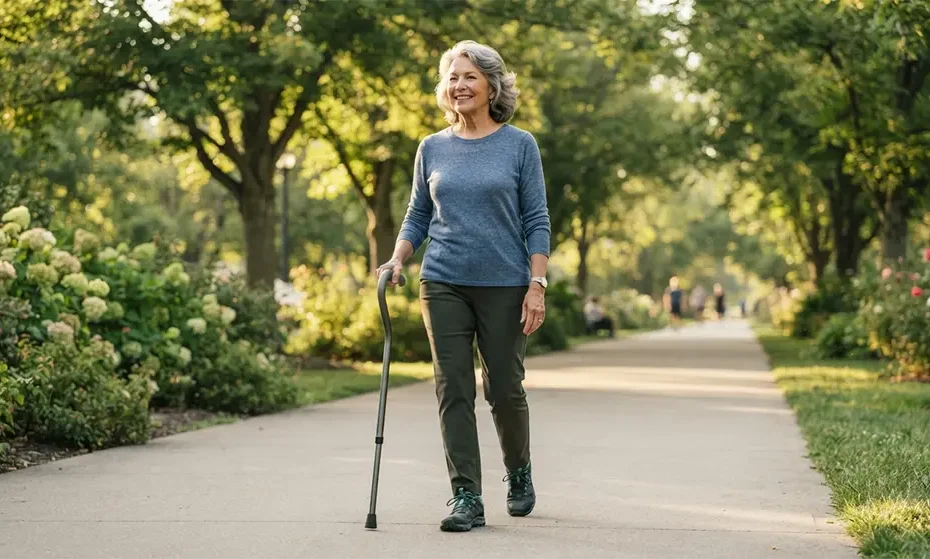
Using a cane, walking stick, or balance aid is not a sign of giving up. For neuropathy patients, the right support can reduce fall risk, improve confidence, and help the nervous system feel safer while nerve function is being addressed. If numbness, poor balance, curbs, stairs, or uneven sidewalks make walking feel unsafe, a walking aid may be a smart temporary or long-term strategy.
- Neuropathy can reduce ground feedback, making balance less reliable.
- A cane or walking stick can add stability and sensory input before a fall happens.
- The Dr. Alfonso Neuropathy Treatment Protocol supports nerve function while safety tools protect mobility.
Last updated: April 14, 2026
Reviewed by: Neuropathy Relief Center of Miami team
Many neuropathy patients resist using a cane. They worry it makes them look older, weaker, or less independent. But the opposite is often true. A walking aid can help patients stay active, avoid falls, and keep participating in normal life.
Patients often say:
- “I don’t want to use a cane.”
- “I only feel unstable at night or on curbs.”
- “I almost fell, but I caught myself.”
- “My feet don’t tell me where the ground is.”
- “I feel better holding onto something.”
At the Neuropathy Relief Center of Miami, we see this in patients across Miami, Fort Lauderdale, Miami-Dade County, Broward County, and the Florida Keys, and also in visitors from the USA, Colombia, Chile, Argentina, Mexico, and the Caribbean. Travel, airports, hotels, cruise terminals, beach paths, and uneven sidewalks often reveal balance problems.
This blog is educational. If you have repeated falls, sudden weakness, severe dizziness, or rapidly worsening numbness, seek evaluation promptly.
Why neuropathy affects balance
Your feet send constant information to your brain. They report pressure, surface changes, ankle position, temperature, and vibration. Neuropathy can reduce or distort those signals.
When the feet give less information, the brain relies more on:
- vision
- inner ear balance
- hip and trunk control
- muscle bracing
- hand support
This is why balance often becomes worse in the dark, on curbs, on sand, or on uneven surfaces.
Why a cane can help
A cane gives the body another point of contact with the environment. That extra contact provides both mechanical support and sensory information.
A cane can help with:
- balance confidence
- curb negotiation
- walking in crowds
- uneven sidewalks
- nighttime bathroom trips
- fatigue-related instability
- travel days
- recovery after flares
The goal is not dependence. The goal is safety and confidence.
The fall-risk mindset shift
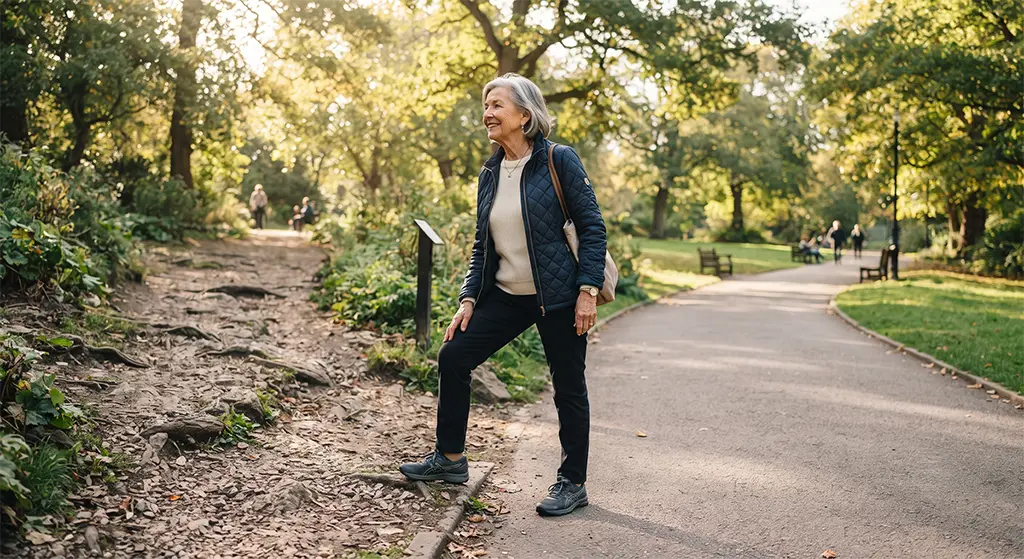
A near-fall is a warning. It should not be ignored.
Patients often say, “I almost fell, but I didn’t.” That sounds reassuring, but it means the balance system was stressed enough to fail temporarily. A cane may prevent the near-fall from becoming a real injury.
Falls can cause wrist fractures, hip injuries, head injuries, neck injuries, and loss of confidence. Preventing one fall is worth it.
When to consider a cane or walking stick
Consider walking support if you notice:
- you hold walls or furniture
- you avoid curbs
- you feel unsafe in low light
- you stumble on uneven sidewalks
- you feel worse after long errands
- you look down constantly while walking
- your balance declines when tired
- you have had a recent near-fall
A walking aid may be temporary, situation-specific, or part of a longer safety plan.
Cane vs walking stick vs trekking pole
Cane
A cane is best when you need consistent support. It can help with balance and reduce load on one side.
Walking stick
A walking stick may feel less medical and can help on outdoor walks, parks, or beach paths.
Trekking poles
Two poles can improve rhythm and confidence for some patients, especially during outdoor walking, but they require coordination.
The right choice depends on symptoms, strength, balance, and environment.
Proper fit matters
A cane that is too tall or too short can create shoulder, wrist, or back strain. A professional should help fit and train you when possible.
General goals include:
- relaxed shoulder
- slight elbow bend
- stable grip
- cane tip fully contacting the ground
- correct side use based on symptoms and balance pattern
Do not guess if you are using it because of fall risk.
South Florida walking hazards
Patients in Miami, Fort Lauderdale, Miami-Dade, Broward, and the Florida Keys commonly face:
- uneven sidewalks
- wet tile
- beach sand
- parking garages
- curbs
- boat docks
- hotel entrances
- crowded restaurants
- poorly lit pathways
Visitors from Colombia, Chile, Argentina, Mexico, and the Caribbean may walk more during travel and face unfamiliar surfaces.
Emotional resistance is normal
Using a cane can feel frustrating. But avoiding support because of pride can lead to less activity, more fear, and greater fall risk.
A better mindset:
“I am using support so I can keep moving safely.”
That is independence.
How the Dr. Alfonso Neuropathy Treatment Protocol helps
The Dr. Alfonso Neuropathy Treatment Protocol supports:
- 🩸 Microcirculation to the feet and legs
- ⚡ Nerve signaling stability and repair support
- 🌿 Inflammation and oxidative stress reduction
- 🧠 Metabolic foundations that influence nerve function and balance confidence
As nerve signaling improves, many patients report better ground awareness and less fear with walking. Safety tools can protect independence while nerve recovery is addressed.
When to seek evaluation
Seek evaluation if:
- you have fallen
- you have repeated near-falls
- numbness is worsening
- foot slapping appears
- balance is worse in the dark
- you are avoiding normal walking
- you need furniture support at home
FAQs
Does using a cane mean my neuropathy is severe?
Not necessarily. It may simply mean you are making a smart fall-prevention choice.
Can a cane help neuropathy balance?
Yes. A cane adds support and sensory input, which may improve confidence and reduce fall risk.
Should I use a cane all the time?
Some patients use it only in risky settings, such as curbs, nighttime walking, travel, or uneven surfaces.
Can neuropathy treatment reduce the need for support?
Many patients improve ground awareness and confidence as nerve signaling and circulation improve.
References
- CDC: Fall prevention and foot safety principles
- NINDS: Peripheral Neuropathy overview
Clinic: Neuropathy Relief Center of Miami
Address: 8585 Sunset Drive, Suite 104, Miami, FL 33143
Call: 305-274-7475
Learn more: Neuropathy Treatment Miami
Book your consultation today: Appointments

Sincerely Yours for Health,
Dr. Rodolfo Alfonso, D.C.
8585 Sunset Drive,
STE 104
Miami, FL 33143
Ph: 305-275.7475
www.neuropathyreliefmia