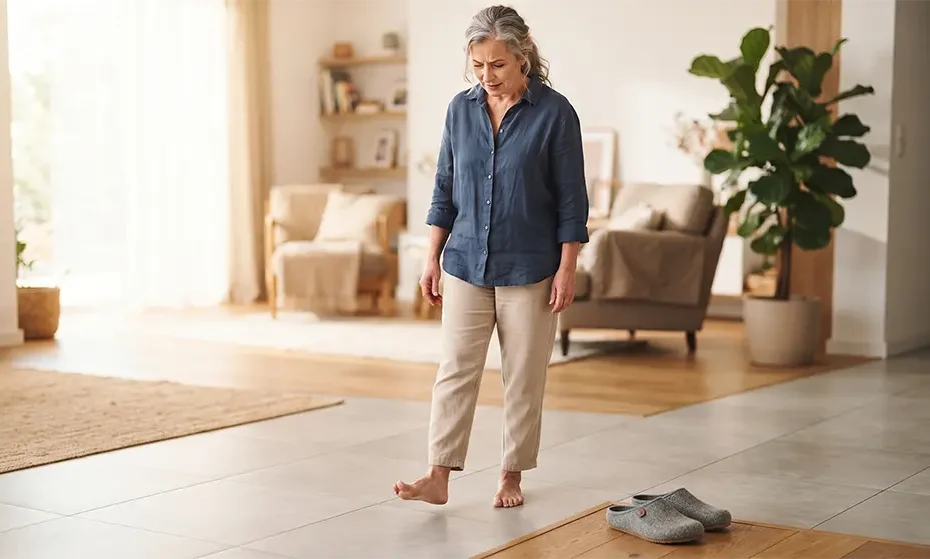
Barefoot walking on tile floors can trigger neuropathy symptoms because tile is hard, cold, slippery, and unforgiving. Reduced foot sensation makes small debris, temperature changes, and pressure points harder to detect. Supportive indoor footwear can reduce burning, numbness, falls, and hidden skin injuries.
- Tile floors increase pressure through the heel, forefoot, and toes.
- Neuropathy reduces protective sensation, making barefoot indoor walking risky.
- Supportive house shoes and nerve-focused care can improve comfort and safety.
Last updated: April 14, 2026
Reviewed by: Neuropathy Relief Center of Miami team
In South Florida, tile floors are everywhere. Condos, apartments, hotels, beach rentals, and homes in Miami, Fort Lauderdale, Miami-Dade County, Broward County, and the Florida Keys often have hard tile throughout. Tile is practical for heat and humidity, but it can be hard on neuropathy patients.
Patients often say:
- “My feet burn walking barefoot at home.”
- “Cold tile makes my toes numb.”
- “I feel unstable on tile.”
- “I stepped on something and didn’t feel it.”
- “My feet hurt more at home than outside.”
At the Neuropathy Relief Center of Miami, we see this in local patients and in visitors from the USA, Colombia, Chile, Argentina, Mexico, and the Caribbean staying in hotels or rentals with tile floors.
This blog is educational. If you have wounds, frequent falls, severe numbness, or balance changes, seek evaluation.
Why tile floors trigger neuropathy
Tile is hard. Unlike carpet, grass, or cushioned flooring, tile does not absorb much impact. Every step sends pressure back into the heel, ball of the foot, toes, and arches.
For neuropathy patients, that matters because nerves are already sensitive.
Pressure without protection
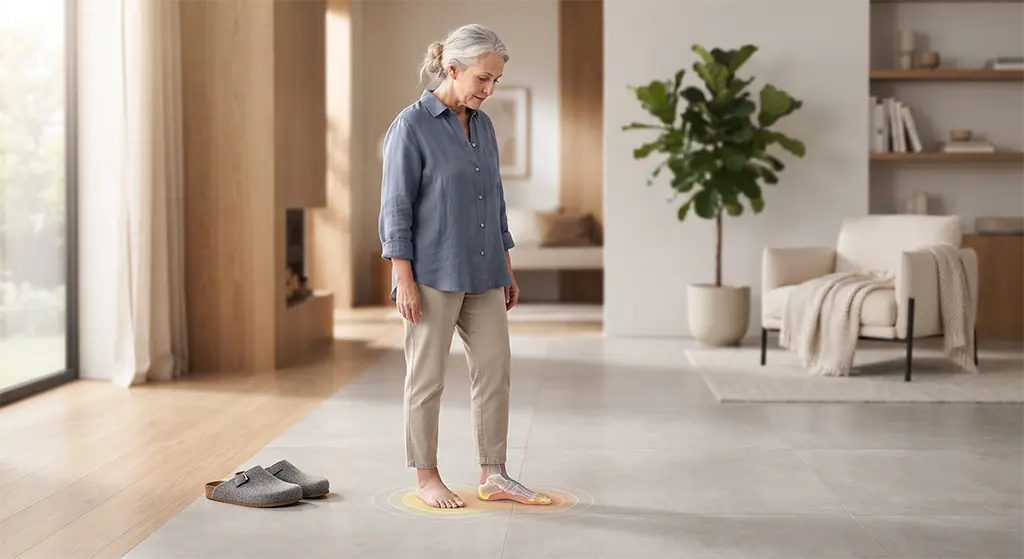
Barefoot walking removes the protective layer between your foot and the floor. With neuropathy, you may not feel pressure clearly until symptoms flare later.
Hard tile can trigger:
- heel pain
- forefoot burning
- toe numbness
- arch cramping
- stabbing sensations
- “walking on bones” feeling
Cold tile and numb toes
Tile often feels cold, especially with air conditioning. Cold can worsen numbness or hot/cold confusion in some neuropathy patients.
A common pattern:
- Walk barefoot on cold tile
- Toes feel numb or stiff
- Feet later feel hot or burning
- Symptoms increase at bedtime
This hot/cold swing is common in sensitive nerves.
Slipping risk
Tile can become slippery with water, sand, lotion, or humidity. If sensation is reduced, you may not detect subtle slipping early. This increases fall risk in bathrooms, kitchens, balconies, and entryways.
Hidden debris risk
Small objects on tile sand, glass, shell fragments, food crumbs, staples, or tiny stones can injure the foot. With normal sensation, you step away. With neuropathy, you may keep walking.
This is especially important after beach days, construction work, or walking in from outside.
Why indoor footwear matters
House shoes are not just comfort. For neuropathy patients, they are safety equipment.
Look for indoor footwear with:
- cushioned sole
- closed or protected toe area
- secure heel or back strap
- traction
- lightweight design
- roomy toe box
- no rough seams
Avoid loose slides or flip-flops that make toes grip or increase fall risk.
How to create a safer home floor routine
Keep floors clear
Sweep or vacuum frequently, especially near entryways and kitchen areas.
Use mats strategically
Use non-slip mats in bathrooms and kitchens. Avoid loose rugs that can bunch or slide.
Protect feet after beach days
Rinse sand off before walking indoors. Sand on tile increases slipping and friction.
Check feet nightly
Look for redness, cuts, blisters, or pressure marks.
Avoid barefoot bathroom trips at night
Nighttime walking combines darkness, numbness, and slippery tile. Keep safe footwear nearby.
How the Dr. Alfonso Neuropathy Treatment Protocol helps
The Dr. Alfonso Neuropathy Treatment Protocol supports:
- 🩸 Microcirculation
- ⚡ Nerve signaling stability and repair support
- 🌿 Inflammation and oxidative stress reduction
- 🧠 Metabolic foundations that influence nerve sensitivity and balance
As nerve function improves, many patients report better ground awareness and less reactivity to hard surfaces. But footwear protection should begin immediately.
When to seek evaluation
Seek evaluation if:
- barefoot walking is becoming painful
- balance is worse on tile
- you have near-falls
- numbness is spreading upward
- wounds or cuts appear without pain
- nighttime bathroom trips feel unsafe
FAQs
Is barefoot walking bad for neuropathy?
It can be risky, especially on hard tile, hot pavement, or surfaces with debris. Protective footwear is usually safer.
Why do tile floors make my feet burn?
Tile increases pressure and impact through the feet, which can amplify nerve irritation.
What kind of house shoes are best?
Choose cushioned, stable, non-slip house shoes with a secure heel and roomy toe box.
Can treatment make walking at home more comfortable?
Many patients improve as nerve signaling, microcirculation, and balance feedback improve.
References
- CDC: Foot care and fall-prevention principles
- NINDS: Peripheral Neuropathy overview
Clinic: Neuropathy Relief Center of Miami
Address: 8585 Sunset Drive, Suite 104, Miami, FL 33143
Call: 305-274-7475
Learn more: Neuropathy Treatment Miami
Book your consultation today: Appointments

Sincerely Yours for Health,
Dr. Rodolfo Alfonso, D.C.
8585 Sunset Drive,
STE 104
Miami, FL 33143
Ph: 305-275.7475
www.neuropathyreliefmia