
You do not always need a diabetes diagnosis to experience neuropathy symptoms. Some people with prediabetes, insulin resistance, or blood sugar swings develop burning feet, tingling, numbness, or nighttime flares before they are told they have diabetes. Early action matters because nerve symptoms are easier to address before balance and protective sensation decline.
- “Borderline” blood sugar does not always mean nerves are safe.
- Symptoms such as burning, tingling, and numbness can appear before severe lab abnormalities.
- A plan that addresses metabolic stability, nerve signaling, microcirculation, and foot safety can help protect long-term function.
Last updated: April 14, 2026
Reviewed by: Neuropathy Relief Center of Miami team
Many patients are confused because they are told, “You are not diabetic,” but their feet are burning, tingling, or going numb.
Others are told they have prediabetes and assume nerve symptoms cannot happen until full diabetes develops. Unfortunately, that is not always how neuropathy behaves.
At the Neuropathy Relief Center of Miami, we see this across Miami, Fort Lauderdale, Miami-Dade County, Broward County, and the Florida Keys, and in visitors from the USA, Colombia, Chile, Argentina, Mexico, and the Caribbean. Many patients have months or years of symptoms before receiving clear answers.
This blog is educational and not a diagnosis. If you have worsening symptoms, balance changes, or wounds, get evaluated.
Why “borderline” can still matter
Prediabetes and insulin resistance can create metabolic stress before a person meets the threshold for diabetes. Nerves are highly energy-dependent. They need healthy blood flow, stable metabolic input, and low inflammatory stress.
When those systems are strained, symptoms can begin early.
Common early neuropathy symptoms
Early symptoms may include:
- Burning in the feet at night
- Tingling in toes
- Buzzing or vibration sensations
- “Tight sock” feeling
- Hot/cold temperature confusion
- Numbness that comes and goes
- Increased sensitivity to sheets or socks
Many patients ignore these symptoms because they are intermittent. But intermittent symptoms still matter.
Why symptoms often flare after dinner
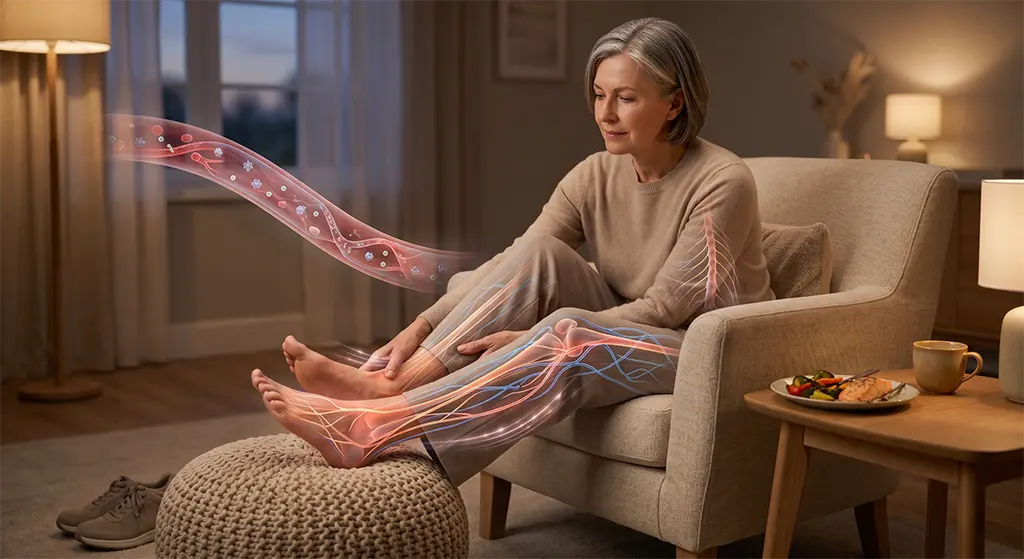
Some people notice a clear evening pattern:
- Symptoms mild during the day
- Burning increases after dinner
- Feet feel hotter in bed
- Sleep becomes disrupted
- Symptoms are worse after desserts, bread, rice, pasta, alcohol, or late meals
Late meals, large carb loads, desserts, and alcohol can amplify symptoms in some patients. This does not mean every patient must follow the same diet, but it does mean the pattern should be tracked.
The difference between lab diagnosis and nerve experience
Lab values are thresholds. Symptoms are lived experiences.
A person can be below a diagnostic threshold and still have metabolic stress that affects nerve function. That is why symptom tracking matters alongside laboratory evaluation.
A normal or borderline lab result should not automatically dismiss consistent symptoms such as burning, numbness, or balance changes.
What to track for 14 days
Track:
- Dinner time
- Carb/sugar intake
- Burning score 1–10 two hours after dinner
- Bedtime symptoms
- Sleep quality
- Morning numbness
- Standing/walking tolerance
- Swelling level at night
If symptoms consistently follow meals or late-night snacks, that is valuable information.
Why early action matters
Neuropathy becomes more dangerous when numbness reduces protective sensation. Early burning and tingling are warning signs. Later, people may develop:
- Less ground awareness
- Balance problems
- Wounds they do not feel
- Increased fall risk
- Reduced activity tolerance
Addressing symptoms early can protect independence.
Practical strategies
Improve meal timing consistency
Earlier dinners may reduce nighttime flares in some patients.
Reduce biggest spike triggers first
If desserts or late refined carbs clearly worsen symptoms, start there.
Add post-meal movement
A short walk after dinner may help circulation and metabolic handling.
Protect your feet now
Do not wait until numbness is severe. Inspect feet daily, wear protective shoes, and avoid barefoot walking on hot pavement or rough surfaces.
How the Dr. Alfonso Neuropathy Treatment Protocol helps
The Dr. Alfonso Neuropathy Treatment Protocol supports:
- Microcirculation
- Nerve signaling stability
- Inflammation and oxidative stress reduction
- Metabolic foundations that influence nerve recovery
For patients with prediabetes or insulin resistance patterns, this combined approach matters because nerves need both local support and systemic stability.
When to seek evaluation
Seek evaluation if:
- Symptoms are spreading
- Burning disrupts sleep
- Numbness is becoming constant
- Balance is declining
- You have foot wounds, hot spots, or reduced sensation
FAQs
Can prediabetes cause neuropathy symptoms?
Yes. Some people develop nerve symptoms before they meet criteria for diabetes, especially when insulin resistance or blood sugar swings are present.
Does normal A1C rule out neuropathy?
Not always. A1C is useful, but symptoms and other metabolic factors still matter.
Why are symptoms worse after dinner?
In some people, late meals, desserts, or blood sugar swings increase nerve sensitivity at night.
Can early neuropathy improve?
Many patients improve when metabolic patterns, microcirculation, and nerve signaling are addressed early.
References
- American Diabetes Association: Peripheral neuropathy and metabolic factors
- NINDS: Peripheral Neuropathy overview
Clinic: Neuropathy Relief Center of Miami
Address: 8585 Sunset Drive, Suite 104, Miami, FL 33143
Call: 305-274-7475
Learn more: Neuropathy Treatment Miami
Book your consultation today: Appointments

Sincerely Yours for Health,
Dr. Rodolfo Alfonso, D.C.
8585 Sunset Drive,
STE 104
Miami, FL 33143
Ph: 305-275.7475
www.neuropathyreliefmia