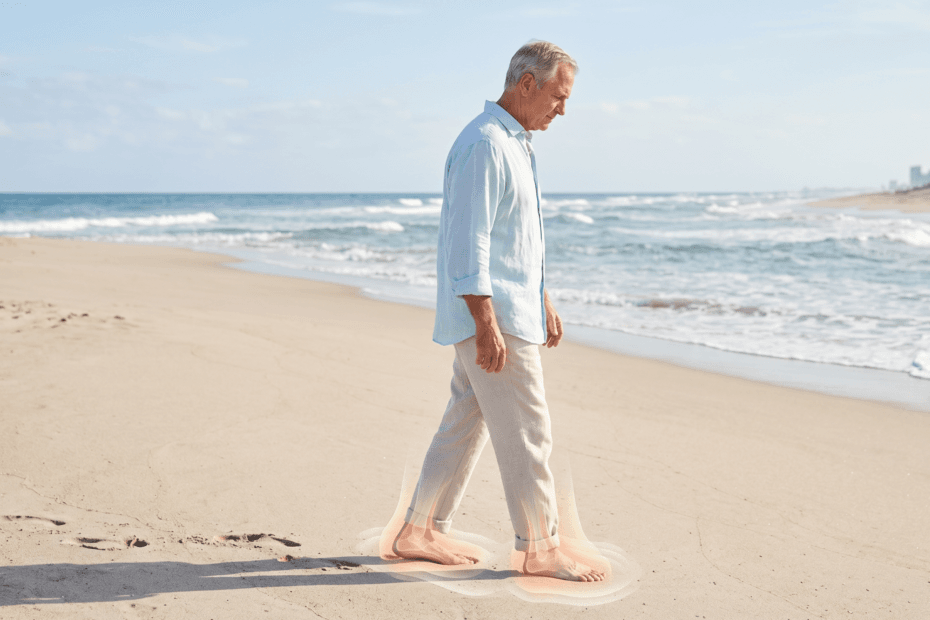
Walking on sand can challenge balance and irritate neuropathy symptoms because uneven surfaces require more foot sensation and stability. With the right protection, pacing, and nerve-focused care, many people can still enjoy beach life safely.
- Sand increases balance demand when foot sensation is reduced.
- Barefoot beach walking increases burn/cut risk with neuropathy.
- Protective footwear + smart pacing reduces flares and injury risk.
Last updated: April 14, 2026
Reviewed by: Neuropathy Relief Center of Miami team
In Miami, Fort Lauderdale, and the Florida Keys, beach walking is part of life. But neuropathy changes the rules. Uneven sand, heat, shells, and long walks can turn into a flare or a foot injury you don’t feel.
We see this not only in locals across Miami-Dade and Broward, but also in visitors traveling from the USA, Colombia, Chile, Argentina, Mexico, and the Caribbean who want to enjoy the beach without paying for it afterward.
Why Sand Is Harder With Neuropathy
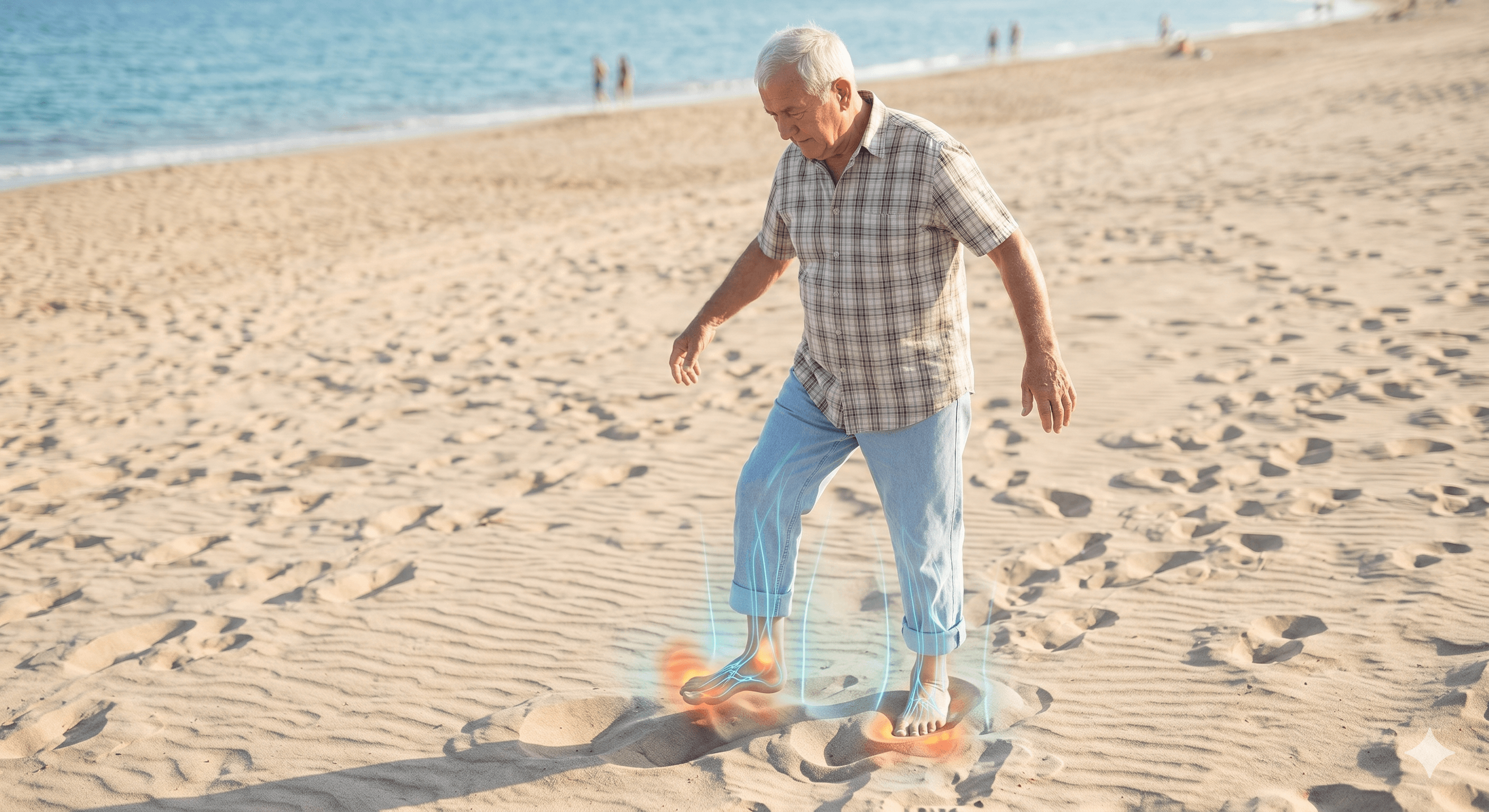
Uneven surfaces require strong sensation feedback
Sand shifts under your feet. If nerve feedback is reduced, your brain struggles to make quick balance corrections.
Calf and foot muscles fatigue faster
Sand requires more stabilizer work. Fatigue can increase cramping, burning, and soreness.
Heat and hidden hazards
Hot sand can burn. Shells, rocks, and debris can cut skin. With reduced sensation, you may not notice early damage.
Common Beach-Related Neuropathy Flares
- Burning that spikes later that night.
- Swelling after a long beach day.
- “Raw” soles even without visible injury.
- Increased balance anxiety in low light.
How to Enjoy the Beach More Safely (General Guidance)
Use protective footwear
Water shoes or secure-strap walking sandals (not flimsy flip-flops) can reduce burns, cuts, and friction.
Start with short distances
If you’re new to sand walking, start with 5–10 minutes and build up gradually.
Avoid peak heat hours
Hot pavement and sand can burn numb feet without warning.
Inspect feet after beach time
Look for redness, hot spots, cracks, and blisters.
How the Dr. Alfonso Neuropathy Treatment Protocol Helps
The Dr. Alfonso protocol is designed to support:
- 🩸 microcirculation and tissue resilience.
- ⚡ nerve signaling and protective sensation.
- 🌿 inflammation and oxidative stress reduction.
- 🧠 metabolic health that influences nerve recovery.
As nerve function improves, many patients feel steadier and tolerate outdoor activity better.
When Beach Walking Needs Caution
- You’ve had near-falls on uneven surfaces.
- You don’t feel hot surfaces normally.
- You’ve had blisters you didn’t notice forming.
- Balance is worsening over time.
FAQs
Is walking on sand good or bad for neuropathy?
It can be helpful for gentle conditioning, but it increases balance demand and can trigger flares if you do too much too soon.
Should neuropathy patients walk barefoot on the beach?
Usually no. Burns and cuts can happen without warning when sensation is reduced.
What shoes are best for beach days?
Water shoes or secure-strap footwear that prevents sliding and protects skin.
Can neuropathy treatment improve balance?
Many patients improve stability and confidence as nerve signaling improves.
References
- NINDS: Peripheral neuropathy overview.
- CDC: Foot care guidance (principles apply to reduced sensation safety).
Clinic: Neuropathy Relief Center of Miami
Address: 8585 Sunset Drive, Suite 104, Miami, FL 33143
Call: 305-274-7475
Learn more: Neuropathy Treatment Miami
Book your consultation today: Appointments

Sincerely Yours for Health,
Dr. Rodolfo Alfonso, D.C.
8585 Sunset Drive,
STE 104
Miami, FL 33143
Ph: 305-275.7475
www.neuropathyreliefmia